
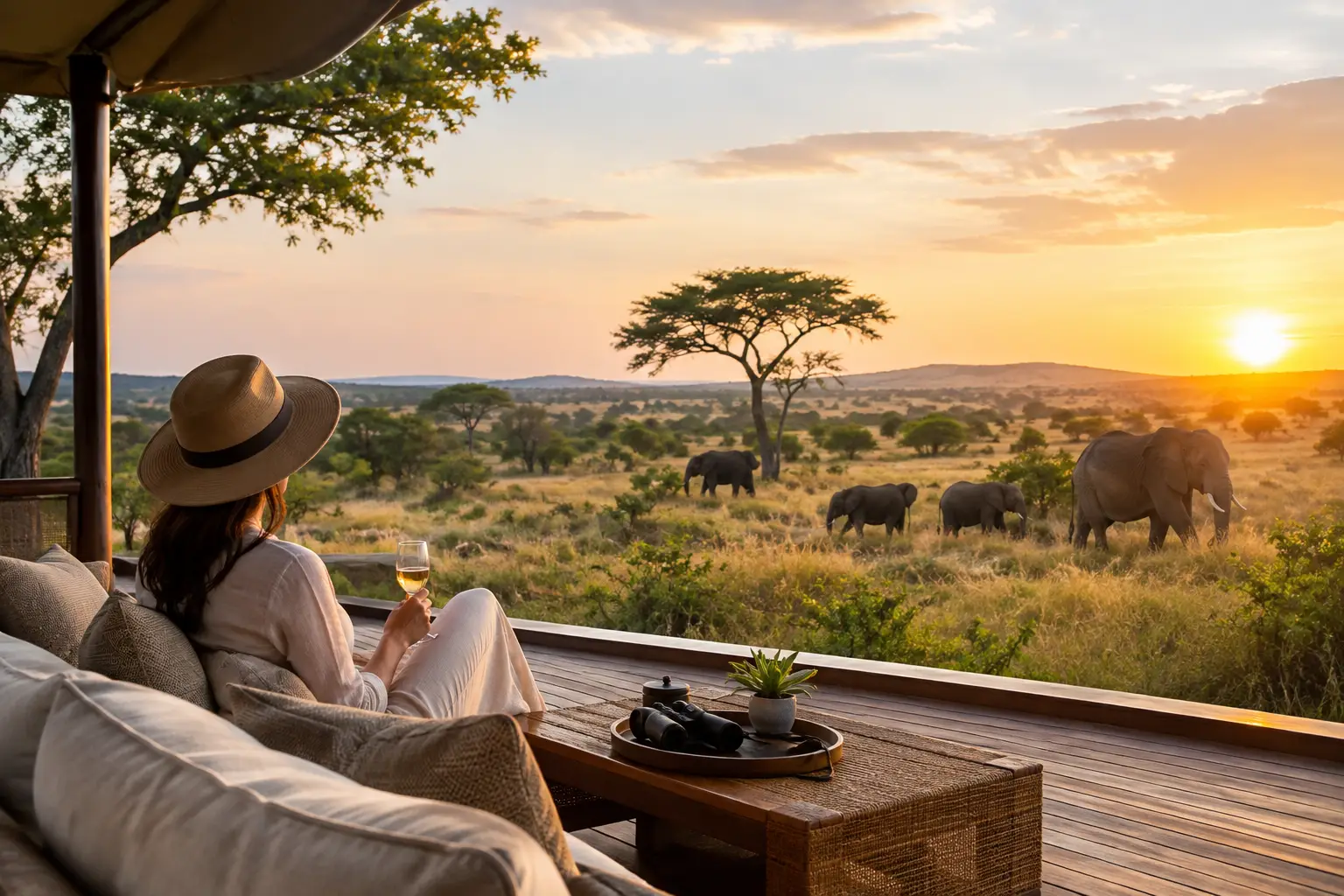
At first light, the bush has its own rhythm: francolins calling from the grass, a lion’s low roar carrying across the plain, coffee poured before the vehicle leaves camp. A luxury African safari is not simply about seeing remarkable wildlife from a more comfortable seat. It is about having the time, access, expertise, and thoughtful care to experience wild places with genuine presence.
The finest journeys balance the thrill of the unexpected with the reassurance that every essential detail has been anticipated. Your guide knows when elephants are likely to cross the riverbed. Your suite feels private even when it opens onto a busy waterhole. Your flights, transfers, meals, special interests, and downtime work together rather than competing for attention.
What Defines a Luxury African Safari?
Luxury on safari is personal. For one traveler, it is a private villa where a family can gather around its own pool after an afternoon game drive. For another, it is a tented camp with no crowds, no unnecessary formality, and an expert guide who can identify a distant bird by its call. For honeymooners, it may be a candlelit dinner beneath southern stars; for photographers, it may be the flexibility to remain with a leopard as the light changes.
Exceptional lodging matters, but it is only one part of the experience. Beautiful safari camps place guests close to nature while offering considered comforts: generous beds, open-air showers, excellent cuisine, attentive hosts, and spaces that invite you to pause between adventures. The best properties also have a distinct sense of place. A riverine lodge in Botswana should feel different from a stone-and-canvas retreat in the Serengeti or a forest hideaway near Rwanda’s gorillas.
Privacy and pace are equally important. A carefully planned itinerary avoids the feeling of racing through a checklist of parks. It allows enough nights in each location to notice the smaller details: hyena tracks at dawn, the changing color of the acacia woodland, or the individual habits of a resident elephant herd.
The guide changes everything
A superb guide does more than locate wildlife. They read behavior, explain ecology, share local knowledge with respect, and make each drive feel shaped by the moment rather than a fixed script. Their skill is particularly valuable when conditions shift. Rain can transform a dry landscape. A migration may arrive early. A quiet morning may become extraordinary because a guide recognizes a subtle alarm call.
For specialist interests, the right guiding team is essential. Photographers may need vehicles designed for clear sightlines, flexible departure times, and support with positioning. Bird-watchers benefit from guides who know regional endemics and seasonal movements. Anglers, wellness travelers, and families all need a journey designed around their priorities rather than adapted from a standard route.
Choosing the Right Luxury African Safari Destination
Africa is not one safari experience. Each region offers a different combination of wildlife, landscapes, seasons, and style. The right choice depends on what you want to feel when you return home, not only on which animals appear on a wish list.
East Africa is often ideal for travelers drawn to wide-open plains, dramatic migration scenes, and classic mobile or tented camps. Kenya and Tanzania can combine outstanding big-game viewing with rich cultural encounters, from Maasai communities to Swahili coastal extensions. Timing matters here: the Great Migration moves, and the most compelling location changes throughout the year.
Southern Africa is particularly strong for travelers who value refined lodges, varied ecosystems, and excellent guiding. Botswana offers water-based adventures in the Okavango Delta, private concessions, and a sense of remote exclusivity. South Africa can pair a safari with Cape Town, winelands, or a private reserve experience that works beautifully for first-time visitors and multigenerational families. Zambia appeals to guests who enjoy walking safaris and a more immersive, quietly adventurous rhythm.
Rwanda and Uganda offer a different kind of encounter: gorilla trekking in misty mountain forest. It is physically more demanding than a typical game drive, but deeply moving for those prepared for the terrain. Adding a few days of savanna safari or restorative lodge time creates a more balanced itinerary.
There is no single best country. A first safari may call for reliable wildlife viewing and straightforward connections. A returning guest may prefer a remote camp, a conservation-focused area, or an itinerary built around a particular species, landscape, or season. Good planning begins with that distinction.
How a Tailored Journey Feels Effortless
The work behind an effortless safari is precise. International flight schedules must align with regional connections. Luggage restrictions on light aircraft need to be handled before packing. Camp check-in times, road transfers, dietary preferences, and special occasions all need to fit the larger rhythm of the trip.
That is why bespoke planning is more valuable than simply reserving a collection of luxury hotels. A well-designed itinerary considers how you move between places and how each stay builds on the last. After several early game drives, a slower afternoon beside the Delta may be exactly right. After gorilla trekking, a spa treatment and a private fireside dinner can feel less like an indulgence and more like thoughtful recovery.
Chloorokop Travel and Tours brings this concierge approach to every stage, from IATA-accredited flight arrangements and premium accommodations to specialist guides, private transfers, and around-the-clock support. The purpose is not to over-schedule your time. It is to remove the friction that can distract from it.
Build in room for the unexpected
Wildlife does not run on a timetable, and that is part of its magic. A quality safari itinerary leaves space for an unplanned sighting, a long breakfast overlooking the bush, or a quiet afternoon in your suite. Trying to visit too many parks in too few days often means spending more time in transit and less time connected to each place.
For most luxury itineraries, two to four nights per safari camp offers a satisfying balance. Longer stays suit guests focused on photography, birding, walking, fishing, or pure restoration. Families may prefer fewer camp changes and private-use options, while couples might choose a journey that moves from high-energy wildlife areas to a secluded beach or wellness retreat.
Comfort With Purpose
The most memorable safaris create a deeper connection to the places that host them. Conservation fees can support protected landscapes, while community partnerships may create employment, fund education, or preserve cultural knowledge. These outcomes vary by property and region, so it is worth asking direct questions about how a camp operates and where its community or conservation contributions go.
Responsible travel also means being realistic about trade-offs. A very remote camp may offer profound privacy and low guest numbers, but it may require additional light-aircraft flights. A lodge near a popular wildlife area may offer easier access and broader facilities, but less solitude at peak times. Neither option is automatically better. The right choice reflects your values, travel style, and appetite for adventure.
Respectful cultural experiences deserve the same care. Meaningful visits are shaped by local hosts, allow for real exchange, and avoid treating communities as scenery. When thoughtfully arranged, they add context to a safari and make its impact extend beyond wildlife sightings.
The Details Worth Sharing Before You Travel
The more your travel designer knows, the more naturally the journey can fit you. Mention mobility needs, dietary requirements, preferred pace, milestone celebrations, and any worries about small aircraft or early starts. Share whether you would rather photograph predators, follow birds through a forest canopy, enjoy a family-friendly pool afternoon, or spend hours watching one herd at a waterhole.
Be candid about comfort, too. Some guests want a polished lodge with air conditioning, a wine cellar, and a full spa. Others want the romance of canvas walls, lantern light, and the sounds of the bush just beyond the deck. Both can be luxurious when the service is excellent and the setting feels right.
A safari is often remembered in moments too small to place on an itinerary: a guide stopping the vehicle so you can hear the quiet after a herd has passed, your child spotting a chameleon before anyone else, or a final evening when the firelight and stars make the journey feel both grand and wonderfully simple. Plan for those moments with care, then leave enough space for Africa to surprise you.