
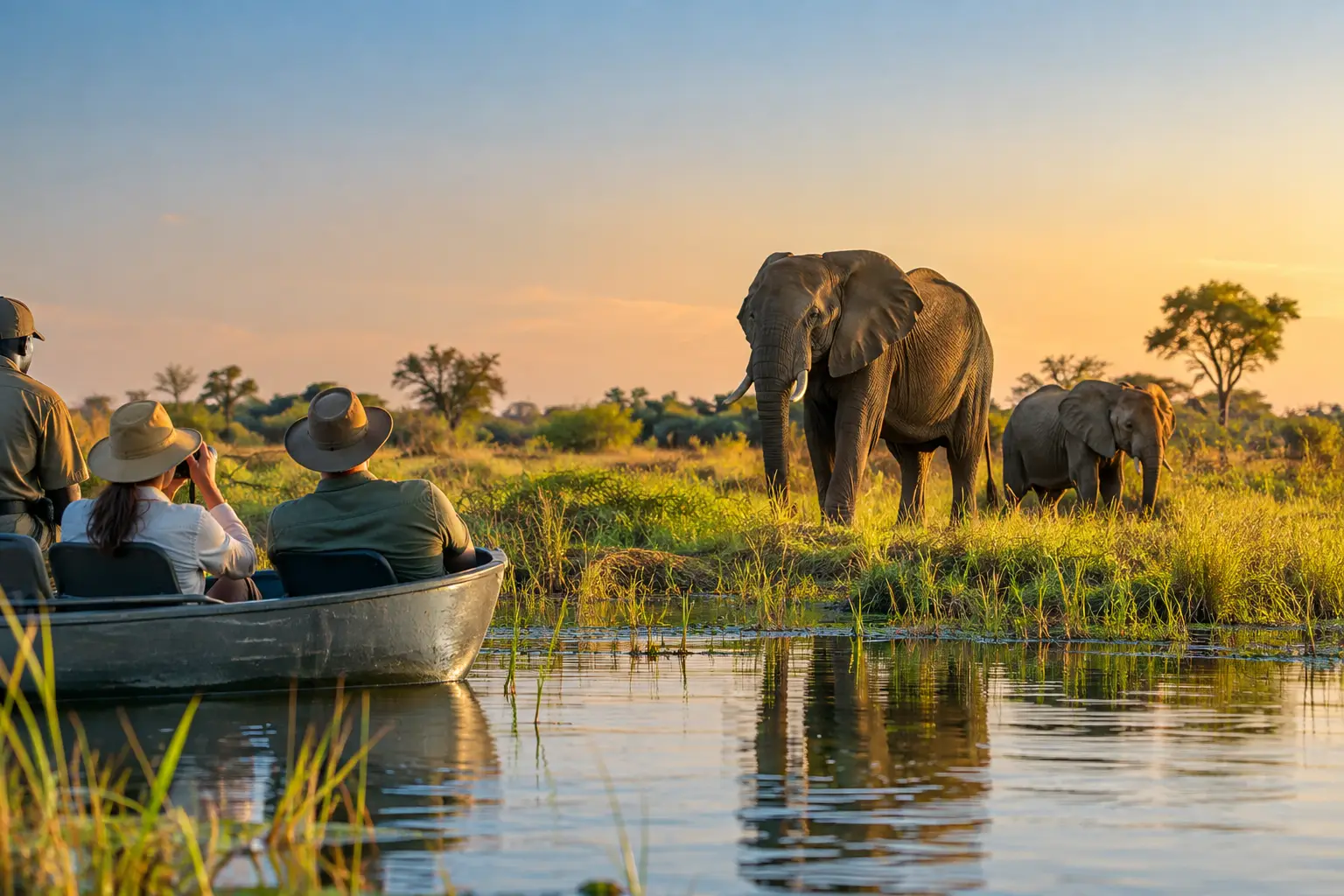
A Botswana safari feels different from the moment a light aircraft descends over the Okavango Delta. Below, channels curve through papyrus beds, elephants leave dark tracks across pale sand, and remote camps sit far apart in an immense, living landscape. This is safari travel at its most private: unhurried wildlife encounters, thoughtful guiding, and the rare pleasure of being far from ordinary routines without surrendering comfort.
For travelers who want wilderness with polish, Botswana offers an exceptional balance. Its conservation-led approach has favored lower visitor numbers and high-quality experiences in many prime areas. The result is not a rushed checklist of sightings, but time to follow a leopard at first light, watch a herd of buffalo cross a lagoon, or return to camp as lanterns glow beneath an African sky.
Why Choose a Botswana Safari?
Botswana is home to some of southern Africa’s most celebrated wildlife regions, yet each one offers a distinct rhythm. The Okavango Delta is a waterworld of islands, lagoons, and seasonal floodplains. Chobe National Park is renowned for its immense elephant population and river-based game viewing. The Moremi Game Reserve combines delta habitat with woodland and open grassland, while the Makgadikgadi Pans deliver wide, silvery horizons that feel almost otherworldly.
The country is particularly compelling for travelers seeking space. Many camps operate within private concessions, where vehicle numbers are carefully managed and activities can extend beyond standard daytime game drives. Depending on the location and conditions, guests may enjoy guided walks, mokoro excursions in traditional dugout canoes, boating, catch-and-release fishing, or night drives in search of lesser-seen wildlife.
That flexibility matters. A lion sighting can be unforgettable, but so can an evening drive tracking a honey badger, a quiet hour photographing bee-eaters along a channel, or a guide explaining the calls that move through camp after dark. Botswana rewards curiosity as much as it rewards patience.
The Landscapes That Shape the Experience
Okavango Delta: Water, Wildlife, and Stillness
The Okavango Delta is the heart of many luxury itineraries, and for good reason. Seasonal floodwaters from Angola spread across northern Botswana, creating a shifting mosaic of waterways and islands. One camp may offer superb boating and mokoro excursions, while another is better positioned for land-based game drives. Water levels, camp location, and the time of year all influence what is possible.
For a first visit, pairing a water-focused Delta camp with a land-focused camp often creates the most complete experience. Mornings may begin with hippos grunting near your deck and continue by mokoro through reed-lined channels. In a drier concession, the following days can bring memorable encounters with wild dogs, big cats, giraffes, and elephants on the move.
Chobe: The Power of the River
Chobe is a natural choice for travelers drawn to elephants and dramatic river scenes. Along the Chobe River, game viewing from a boat offers a fresh perspective: elephants wade and swim between islands, buffalo gather at the edge of the water, and crocodiles rest on sun-warmed banks.
Chobe can also work beautifully as part of a wider journey that combines Botswana with Victoria Falls. The pairing delivers contrast in a short span of time – tranquil river safaris and refined lodges on one side, then the thunder and mist of one of the world’s great natural landmarks on the other.
Moremi and the Northern Concessions: Classic Game Viewing
Moremi Game Reserve and the surrounding northern concessions offer the classic safari scenes many travelers imagine, but with remarkable variety. Open plains, mopane woodland, riverine forest, and seasonal wetlands support a rich concentration of wildlife. These areas are especially rewarding for guests interested in predators, photographic safari travel, and expertly guided game drives.
Private concessions can add another layer to the experience. Subject to local regulations, they may allow off-road viewing in appropriate circumstances, carefully managed night drives, and walking experiences. These privileges should never be treated as a guarantee of a particular sighting. They are simply tools that give experienced guides more ways to read the conditions and create a meaningful day in the bush.
Makgadikgadi: A Safari Beyond the Expected
For travelers returning to Africa or looking for a striking change of pace, the Makgadikgadi Pans are worth considering. In the dry season, the pans are vast and open, with a sense of silence that is hard to find elsewhere. During the green season, rains can transform the area and attract migratory wildlife.
This is not the destination to choose solely for dense, daily big-game viewing. It is the destination for perspective: quad biking across salt flats when conditions allow, sleeping beneath the stars, meeting habituated meerkats at dawn, and experiencing Botswana’s desert character alongside its wetter north.
When to Go to Botswana
There is no single best month for every traveler. Botswana’s dry season, generally from May through October, brings cooler mornings, thinner vegetation, and excellent wildlife viewing around permanent water sources. It is also the period when the Okavango Delta’s floodwaters are often at their fullest, even though local rainfall has ended. Demand is high, particularly from June through September, so premium camps and preferred room categories should be secured well in advance.
The green season, roughly November through April, has its own appeal. Afternoon rainstorms clear the air, landscapes become vivid, and many camps offer more favorable rates. Bird-watchers will appreciate migratory species and breeding plumage, while photographers often value the soft light, dramatic skies, and greener backdrops. The trade-off is that some areas may be less accessible, and wildlife can spread out as surface water becomes more widely available.
For honeymooners, families, and travelers with fixed dates, the right answer usually comes down to priorities. Do you want peak dry-season game viewing, water activities in the Delta, value during the green season, or a mix of wildlife and a special occasion itinerary? A well-designed route begins there.
What Luxury Means in the Botswana Wilderness
Luxury in Botswana is less about excessive formality and more about being cared for in places where logistics are genuinely complex. It may mean a private charter timed to connect smoothly with your international arrival, a suite positioned for uninterrupted views, or a guide who understands that your ideal morning is devoted to birds rather than big cats.
It also means choosing camps with intention. Some are intimate and deeply remote, with only a handful of suites and a strong focus on privacy. Others are more social, ideal for multigenerational families or small groups who value shared dinners and a lively camp atmosphere. Certain properties are designed for serious photographers, offering specialized vehicles, flexible schedules, and room for equipment. Others lean into wellness, exceptional cuisine, or private-villa living.
The most polished itinerary does not try to make every stop identical. A three-night Delta stay may be followed by three nights in a predator-rich private concession and a final two nights beside the Chobe River. The transitions are part of the story, provided flights, luggage handling, dietary needs, pacing, and onward connections have been planned with care.
Travel With Respect for Place and People
Botswana’s safari economy is closely connected to conservation. Wilderness areas support employment, anti-poaching efforts, habitat protection, and community partnerships, while responsible tourism gives remote regions a meaningful stake in preserving wildlife. The specific impact varies by camp and concession, so travelers who care about community engagement should ask how a property works with neighboring communities, employs local teams, manages water and energy, and supports conservation initiatives.
Respect also shows in smaller choices. Listen closely to your guide, keep a comfortable distance from wildlife, and approach cultural experiences with genuine interest rather than expectation. The finest safari moments are not staged. They are earned through quiet observation and a willingness to let the landscape set the pace.
Planning a Botswana Safari Without the Friction
Botswana is wonderfully remote, which is precisely why expert planning makes a difference. Most itineraries involve a mix of international flights, regional gateways, light-aircraft transfers, and camps with different luggage requirements. Weather, flood levels, family ages, mobility needs, and desired activities all shape the final route.
A tailored plan can account for every transition while preserving a sense of ease. That includes selecting the right camps for your travel style, arranging flights and transfers, coordinating guides and special interests, and providing support should plans need to change. For milestone trips, it can also include private dining, celebratory touches, a surprise sleep-out, or time at Victoria Falls before the journey home.
Chloorokop Travel and Tours designs Botswana journeys around the way you want to experience the wild – whether that means a quiet honeymoon, a family safari with room to reconnect, a photographer’s focused expedition, or a refined corporate retreat with a purpose beyond the boardroom.
The right Botswana safari leaves room for the unexpected: elephants appearing through morning mist, a fish eagle calling across still water, or the silence that follows sunset when the whole Delta seems to hold its breath. Start with the experiences you want to remember, then let every detail be arranged around them.