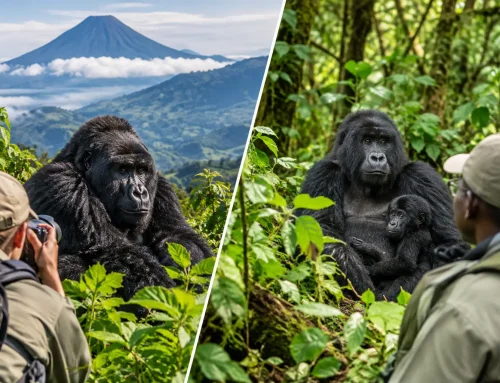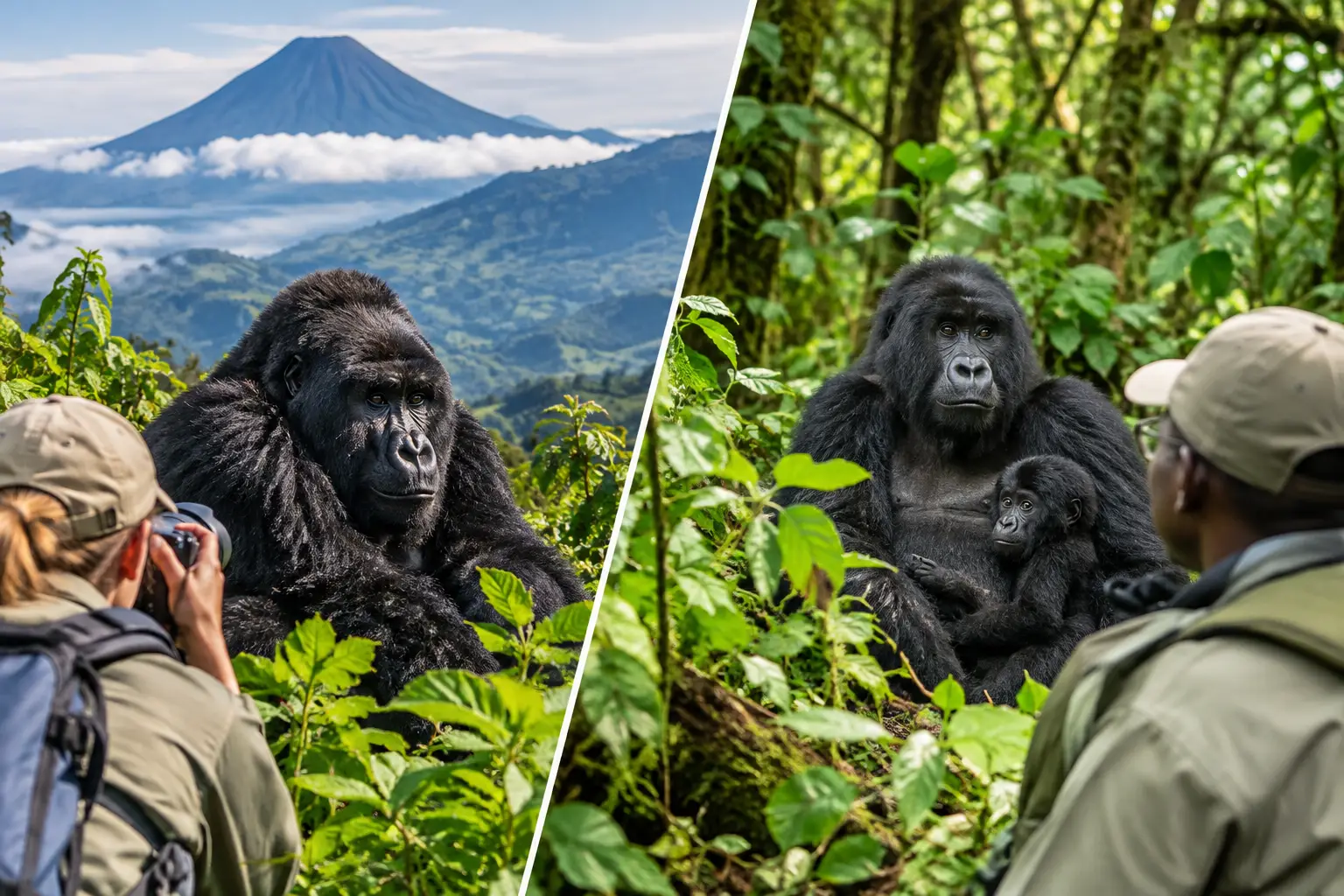
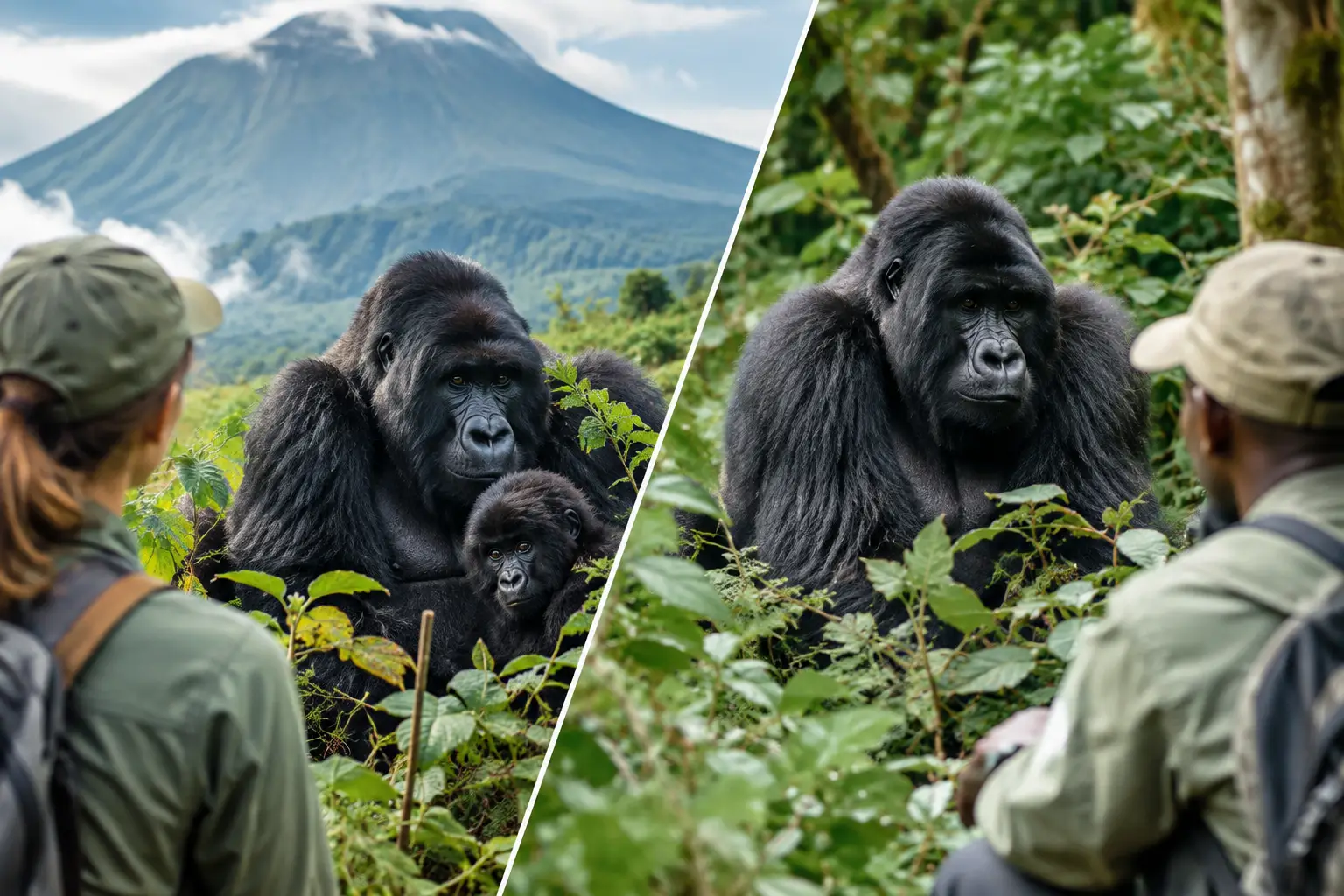
The first sighting often happens quietly. A guide pauses beneath giant leaves, gestures ahead, and suddenly the forest seems to hold its breath. Gorilla trekking is not a conventional wildlife drive with a comfortable distance between guest and animal. It is a carefully regulated, on-foot encounter in the mountain forests of Rwanda or Uganda, culminating in one extraordinary hour with a habituated gorilla family.
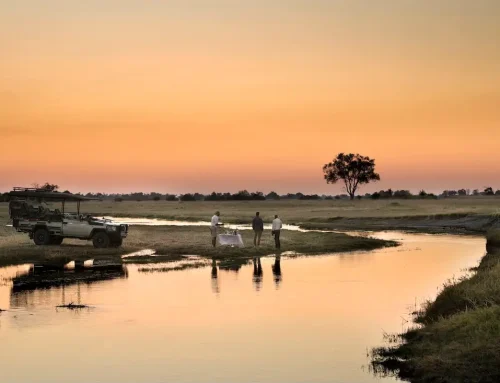
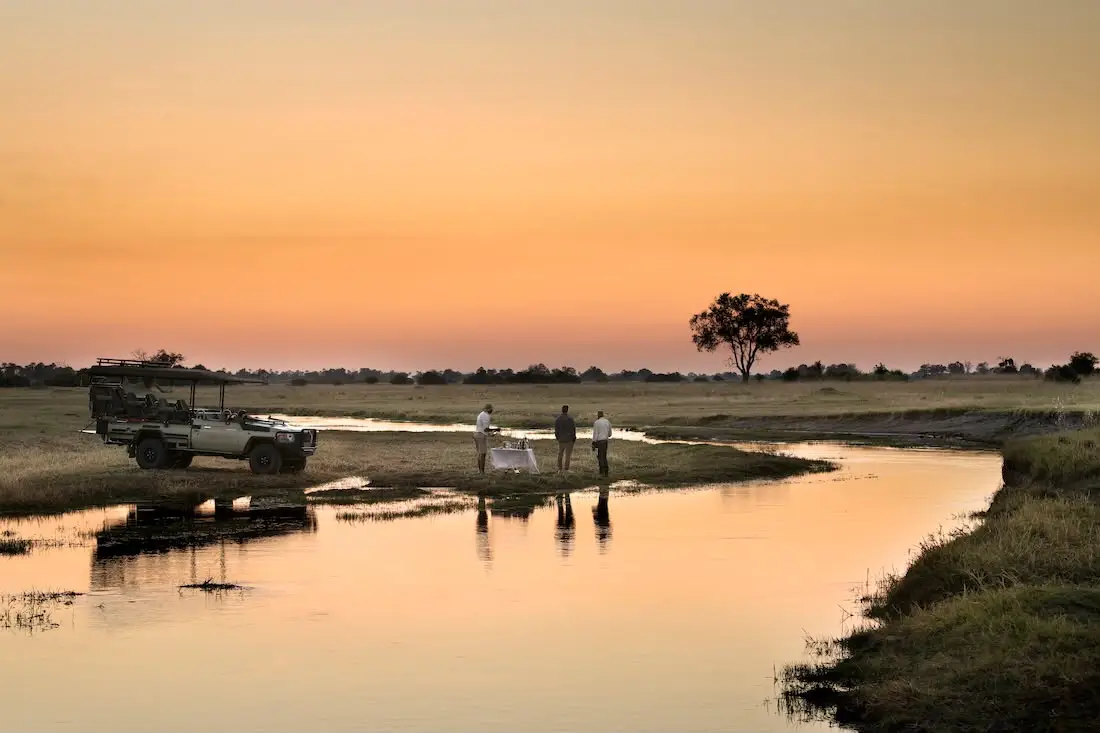
For travelers who have explored Botswana’s wide floodplains, elephant corridors, and desert horizons, the intimacy of the experience offers a compelling contrast. It asks for effort, patience, and respect, then rewards it with one of Africa’s most profound wildlife moments. The right itinerary makes that effort feel considered rather than complicated, with the right lodge, routing, guides, and recovery time built around it.
What Makes Gorilla Trekking So Meaningful?
Mountain gorillas live in a small, protected range spanning Rwanda, Uganda, and the Democratic Republic of Congo. Most luxury travelers choose Rwanda’s Volcanoes National Park or Uganda’s Bwindi Impenetrable National Park, with some also considering Mgahinga Gorilla National Park in Uganda. Both countries protect habituated families that are visited under strict daily limits, led by expert rangers and trackers.
The encounter is powerful because it is unscripted. You may watch a silverback settle into the vegetation, juveniles tumble through the undergrowth, or a mother gather an infant close to her chest. There is no guarantee of a particular behavior, and that uncertainty is part of the privilege. You are entering the gorillas’ world on their terms, not calling them closer for a photograph.
Your permit directly supports protected-area management and conservation efforts, while gorilla tourism also creates valuable employment for guides, trackers, lodge teams, and communities living near the parks. Responsible travel here is not an added feature. It is the structure that makes the experience possible.
Gorilla Trekking in Rwanda or Uganda
Rwanda and Uganda deliver equally moving time with mountain gorillas, but the rhythm of each journey is different. The better choice depends on your travel style, available time, desired level of remoteness, and the wider African itinerary you have in mind.
Rwanda: Refined, Efficient, and Easy to Combine
Rwanda’s Volcanoes National Park is often the natural choice for travelers who want a polished, time-efficient extension. The park is reached by road from Kigali, allowing an itinerary to move smoothly from an international arrival or a night in the capital to a high-quality forest lodge near the park. The landscape is striking: a chain of volcanic peaks, cultivated foothills, bamboo forest, and mist-covered slopes.
This is particularly appealing for honeymooners, families with older teenagers, and travelers combining gorillas with a broader safari journey. A Rwanda extension can sit beautifully before or after Botswana’s Okavango Delta, Chobe, or a Victoria Falls stay, particularly when private transfers and well-timed regional flights are arranged as one journey.
Rwanda’s treks can still be demanding. Altitude, rain, and steep terrain do not disappear because the road access is straightforward. What Rwanda offers is efficiency around the trek, not a softened wilderness experience.
Uganda: Deeper Forest and a Slower Pace
Uganda’s Bwindi Impenetrable National Park feels more remote and immersive. Its ancient forest, ridgelines, and small communities create a wonderful sense of place, and travelers often stay several nights to allow for the journey in, a trek, and time to absorb the surroundings. Different trailheads and lodge locations can involve varied driving times, so careful planning is essential.
For guests who value a more unhurried East African experience, Uganda can be especially rewarding. It can also combine well with chimpanzee tracking, the savannas of Queen Elizabeth National Park, or a private Nile experience. The trade-off is logistical complexity. Internal flights, road transfers, park sectors, and lodge selection should be designed around the specific gorilla permit allocation rather than added afterward.
Neither destination is universally better. Rwanda is often right for a shorter, highly curated luxury extension; Uganda suits travelers who have more time and want the forest to be part of a broader journey. In either country, permits should be secured early, particularly around peak travel periods and school holiday dates.
What the Trekking Day Really Looks Like
The day begins early with a briefing at park headquarters. Guests are assigned to a gorilla family and trekking group, with guides considering factors such as fitness, pace, and the gorillas’ previous location. Porters are available and are worth considering even for confident walkers. They offer practical support on uneven ground while providing direct local employment.
The duration is variable. Some groups are found after a relatively short walk; others require several hours over muddy, steep, or densely vegetated trails. Rain is possible at any time, and conditions underfoot can be slippery. The guides set a manageable pace and make regular stops, but this is a real hike at altitude, not a stroll between lodge activities.
Once the family is located, visitors generally spend one hour observing from a respectful distance. Guides will direct the group’s position, especially if gorillas move closer. Cameras should be ready, but the most memorable moments are often the ones that cannot be perfectly framed: the sound of leaves being stripped from a branch, a silverback’s low rumble, the direct curiosity of a young gorilla before it disappears into the green.
How to Prepare for a Comfortable Experience
A good gorilla trekking experience starts with honest planning. Travelers do not need to be elite athletes, but they should be comfortable walking on uneven ground for several hours and should discuss mobility concerns before permits are confirmed. Rwanda and Uganda can accommodate a broad range of abilities, but the suitable park sector, lodge, porter support, and pace matter greatly.
Bring broken-in hiking boots with strong grip, waterproof layers, long pants, gloves for grasping vegetation, and a small daypack. A waterproof cover for camera equipment is useful, as is a refillable water bottle. Neutral, practical clothing works best. Avoid strong fragrances, and follow all health requirements carefully, as gorillas are susceptible to human respiratory illness.
Private guiding and lodge choice also influence the experience beyond the trail. A lodge close to the relevant park gate reduces unnecessary early-morning driving. Thoughtful scheduling allows a relaxed afternoon afterward, whether that means a fireside drink, a massage, or simply time on a private terrace to let the morning settle in.
Building a Gorilla Trekking Journey With Safari
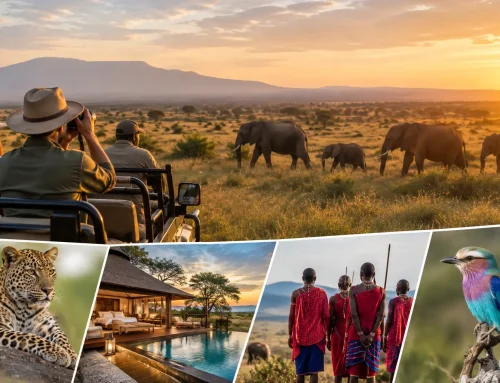
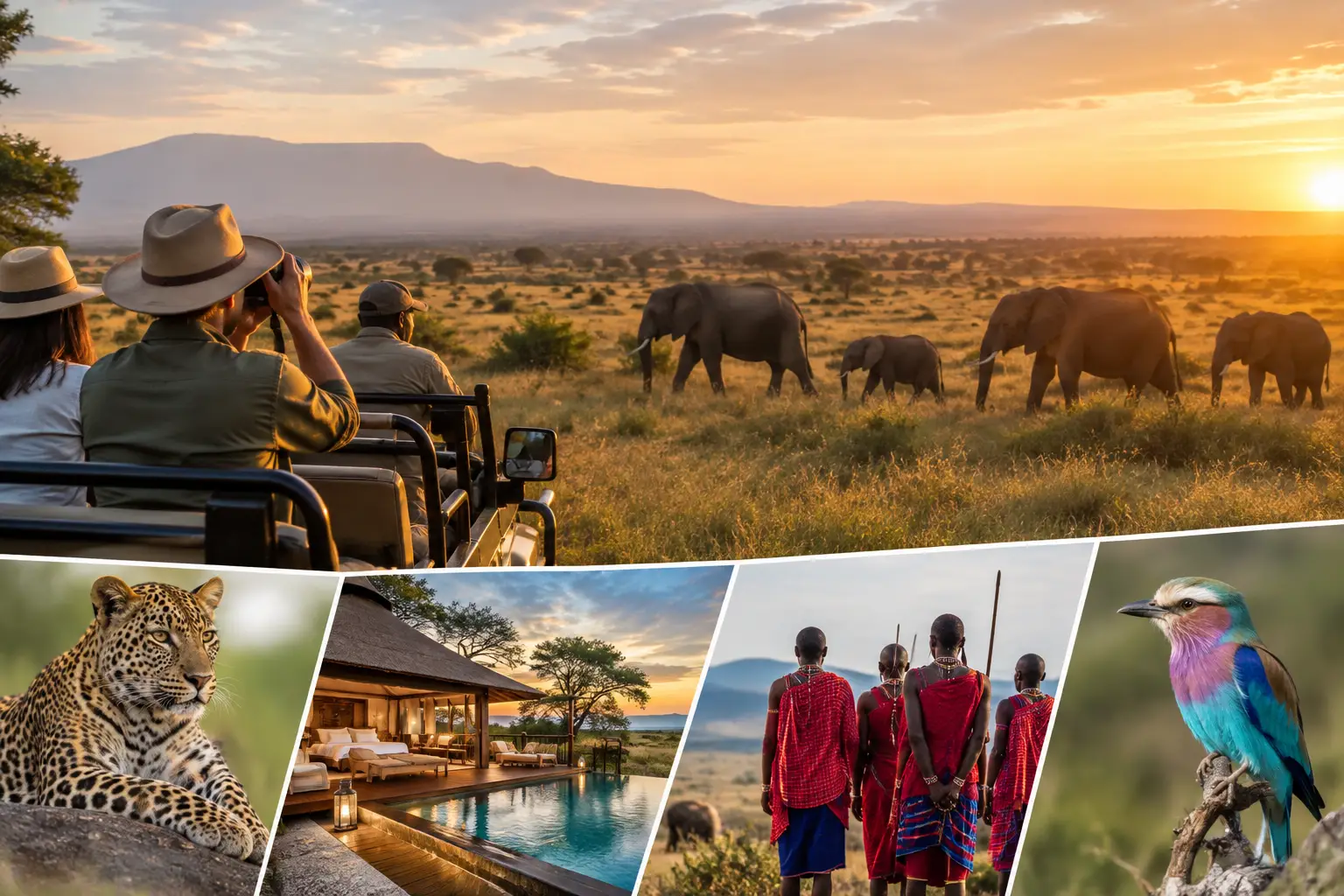
Gorillas are often the emotional centerpiece of a longer African journey, rather than the entire vacation. A beautifully paced itinerary may begin with a few nights in Rwanda or Uganda, then continue to Botswana for water-based exploration in the Okavango Delta, exceptional predator viewing in Moremi or Khwai, and elephant-rich landscapes in Chobe.
The contrast is the point. In the forest, you move through dense vegetation to meet one family of primates at close range. In Botswana, you may glide through channels by mokoro, watch a leopard from a vehicle, or sit quietly as elephants cross the river at dusk. Pairing the two gives travelers both intimacy and scale without repeating the same kind of safari day.
This is where experienced ground handling matters. Gorilla permits are date-specific, regional flights can have limited schedules, and international connections need realistic buffers. Chloorokop Travel & Tours designs these journeys as a single, personally managed experience, coordinating the details so that the travel feels calm even when the route is ambitious.
The Etiquette That Protects the Experience
Gorilla trekking is a privilege founded on rules that protect both wildlife and visitors. Guests must follow ranger instructions, keep the required distance, avoid flash photography, speak quietly, and never attempt to touch a gorilla. If a gorilla approaches, the guide will explain how to respond calmly.
Health protocols are equally important. Travelers who feel unwell should report it rather than risk exposing a vulnerable gorilla family. This can be disappointing, particularly after months of anticipation, but it is a meaningful expression of responsible travel. The same care extends beyond the trek: choose operators and lodges that employ locally, respect community partnerships, manage waste carefully, and support conservation in practical ways.
The best photographs will preserve the memory. The deeper value lies in knowing that your presence, when thoughtfully planned and responsibly conducted, helps keep a rare species and its forest home worth protecting.
Gorilla trekking asks you to leave the vehicle, accept the weather, and walk into a living forest with humility. Allow enough time, choose the destination that fits your pace, and give the encounter room to be exactly what it is: wild, fleeting, and unforgettable.