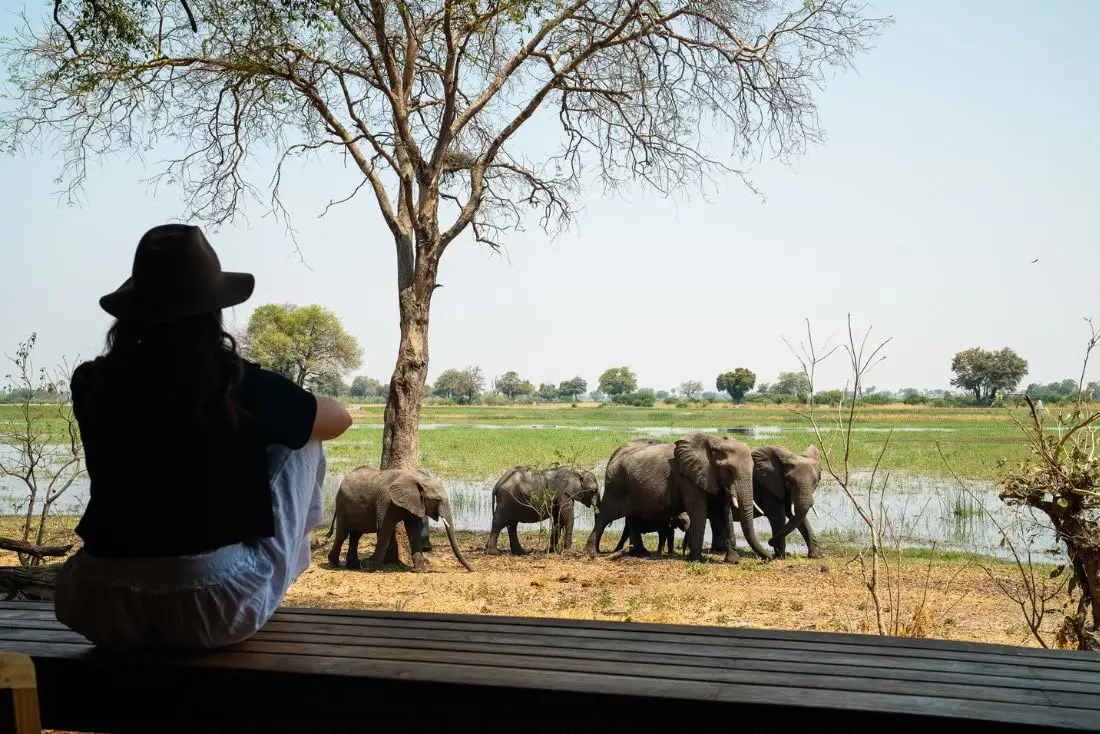
The right lodge can change the shape of a Botswana safari. It determines whether your mornings begin with mokoro gliding through Delta channels, elephants crossing the Chobe River, or lion tracks outside camp in the Kalahari. To choose safari lodges well, look beyond beautiful tent interiors and focus on the relationship between location, wildlife, guiding, privacy, and the pace you want from your time in Africa.
A lodge is not simply where you sleep between game drives. In Botswana, it is your gateway into a particular ecosystem, your base for the hours when the bush is most alive, and often the setting for the quietest, most memorable moments of a journey.
Choose Safari Lodges by Landscape First
Botswana is not one safari destination with interchangeable camps. Each region has its own character, seasonal rhythms, activities, and sense of remoteness. Start with the wilderness experience you hope to have, then identify lodges within the right area.
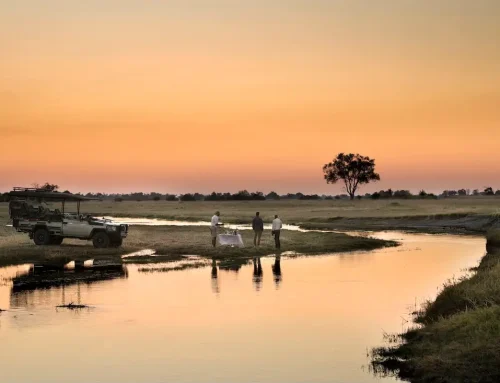
The Okavango Delta is ideal for travelers drawn to water-based safari experiences. Depending on water levels and a camp’s location, days may include mokoro excursions, boating, and walks on islands, alongside traditional game drives. It suits honeymooners and returning safari travelers who value an intimate, immersive connection to the landscape. A permanently water-based camp feels very different from a land-focused camp on the Delta’s edge, so this distinction matters.
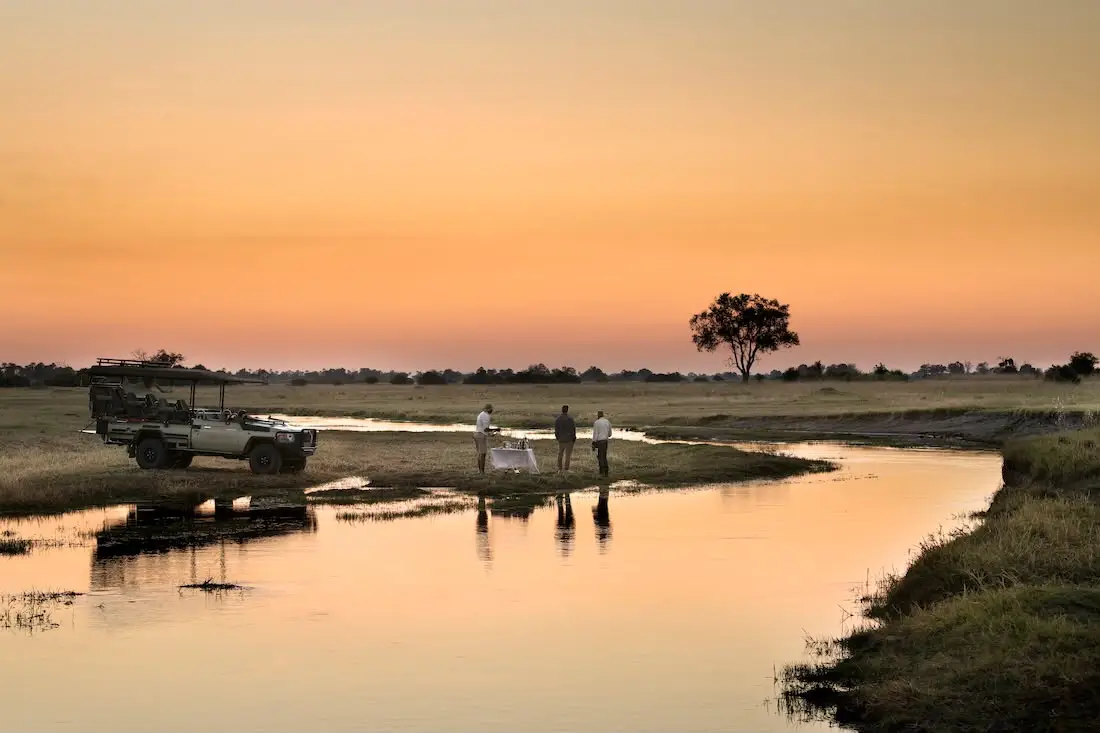
Moremi Game Reserve and neighboring Khwai offer exceptional variety, with floodplains, woodland, channels, and productive predator habitat. These areas are particularly rewarding for first-time visitors seeking classic game viewing, while photographers often appreciate the changing light and diverse habitats. Private concession lodges in the wider Khwai area may also offer activities not generally permitted inside national parks, such as off-road game viewing in appropriate circumstances, night drives, and guided walks.
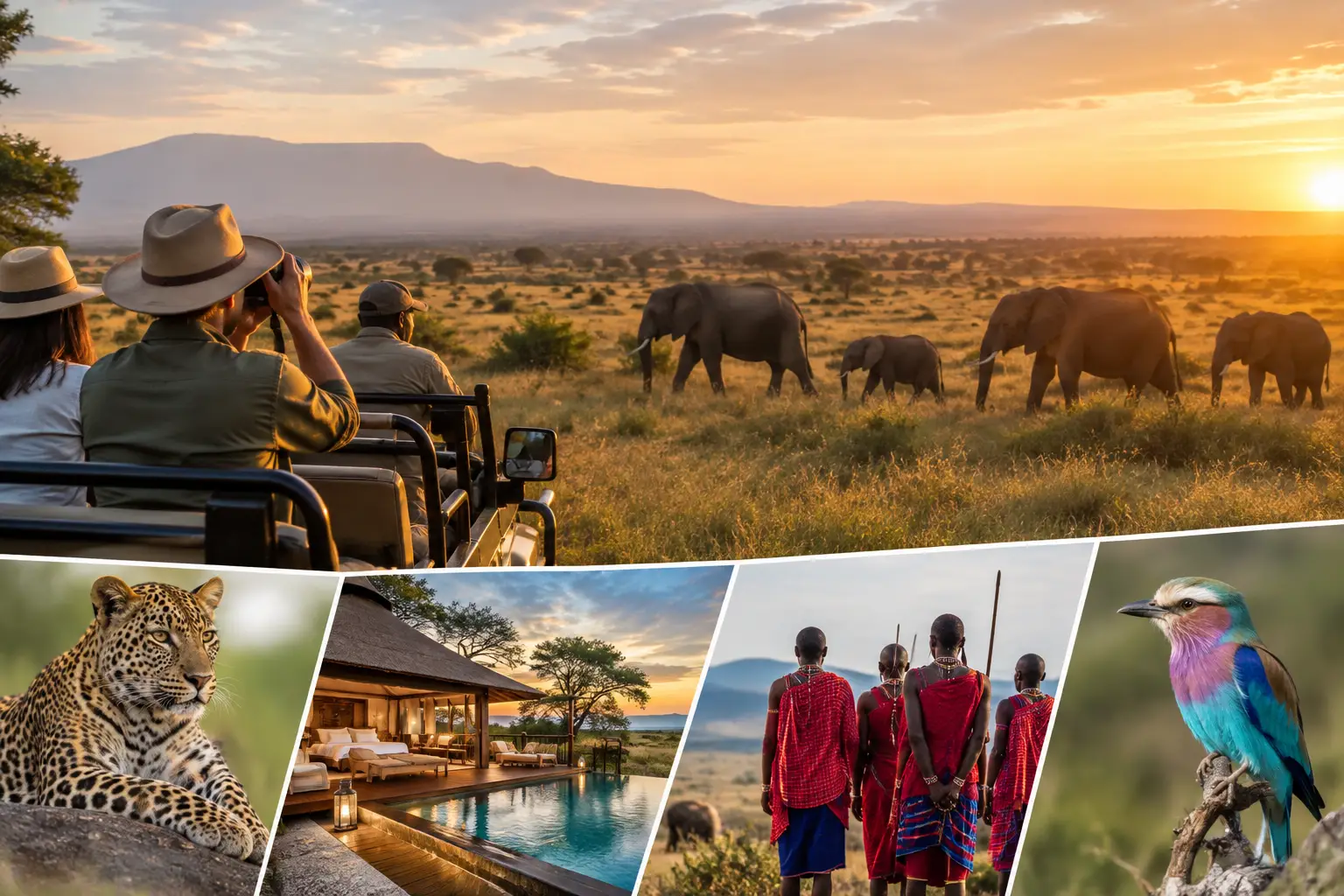
Chobe is a compelling choice for elephant encounters, especially along the riverfront, where boat safaris reveal a different perspective on wildlife. For a more remote Chobe experience, Savuti and Linyanti deliver dramatic landscapes, seasonal wildlife concentrations, and a stronger sense of wilderness. Linyanti’s riverine habitat and private concessions can be especially appealing to travelers who prioritize privacy, exclusive guiding, and time away from busier routes.
The Makgadikgadi and Central Kalahari challenge the assumption that every safari must center on lush landscapes. Here, vast horizons, salt pans, desert-adapted wildlife, and extraordinary night skies create a quieter, more elemental experience. These regions are often best paired with the Delta or Chobe rather than chosen as a complete first safari on their own. They are exceptional for travelers who value space, photography, geology, and the emotional impact of true solitude.
Look Beyond the Lodge Design
A beautifully designed lodge matters. Comfort after a long day in the bush, thoughtful service, excellent food, and a private deck overlooking wildlife all enrich the experience. But aesthetics should support the safari rather than distract from it.
Ask how many suites or tents the property has, how far apart they are, and whether the shared areas feel sociable or secluded. Smaller camps may offer a more personal atmosphere, while larger lodges can have broader facilities and may work well for multigenerational families or private groups. Neither is automatically better. The right choice depends on whether you want to share stories around the fire with other guests or retreat into complete privacy after each drive.
Consider the practical details, too. Some camps are tented in the classic safari sense, with canvas walls, open-air showers, and the sounds of wildlife close by. Others are more enclosed and villa-like, with air conditioning, private plunge pools, or larger living spaces. For many travelers, a mix creates the most satisfying itinerary: a refined lodge with generous amenities paired with an intimate camp where the wilderness feels nearer.
Families should check age policies, room configurations, private-vehicle options, and the availability of flexible activities. A family suite is helpful, but it is only part of the picture. The best family safari lodge also understands that younger guests may need shorter drives, earlier meals, and guides who can make animal behavior engaging without oversimplifying it.
Privacy Is More Than a Private Pool
Privacy on safari comes from how your days are structured. A private vehicle and guide allow you to linger with a leopard, return to camp when you wish, or shape game drives around photography, birding, or a slower morning. This level of flexibility is particularly valuable for honeymooners, families, and specialist-interest travelers.
Some lodges include private activities as part of the stay; others offer them at an additional cost or only where vehicle availability allows. Confirm this early, particularly during high-demand travel periods. Privacy may also mean choosing a remote concession, where fewer vehicles are permitted at sightings and the experience feels less choreographed.
Guiding Makes the Wildlife Experience
Wildlife sightings are never guaranteed, and a responsible safari should not promise them. What expert guiding does provide is context: the skill to read tracks in sand, interpret alarm calls, understand changing weather, and position a vehicle with consideration for animals and other guests.
When comparing lodges, ask about guide continuity, vehicle capacity, and the approach to viewing. A maximum of four to six guests per vehicle generally allows more room, clearer views, and a less hurried experience than a full vehicle. Dedicated private guides offer the greatest freedom, especially for photographers who may want to wait for a particular behavior or work patiently with early-morning light.
For birders, walking enthusiasts, anglers, and photographers, the lodge’s specialist capability deserves as much attention as its game-viewing reputation. The ideal camp for a family seeing elephants for the first time may not be the ideal camp for a serious photographer hoping to spend three hours with wild dogs.
Match Lodge Activities to the Season
Botswana’s seasons affect what a lodge can offer. The dry months generally concentrate wildlife around permanent water sources, making them excellent for conventional game viewing in many areas. In the Okavango, however, floodwaters often arrive months after local rains, meaning the water experience follows its own rhythm.
A camp that offers boating and mokoro excursions at one time of year may emphasize game drives at another. The Makgadikgadi pans can be stark and still in dry conditions, then transform after rain, when migratory wildlife and birdlife arrive. Savuti’s appeal also shifts with water patterns and animal movements.
This is why choosing a lodge from photographs alone can lead to disappointment. Ask what activities are realistically available during your specific travel dates, rather than relying on a general description. A well-designed itinerary uses seasonality to its advantage, perhaps combining water-based Delta experiences with land-based wildlife viewing in Moremi, Khwai, or Linyanti.
Choose Lodges That Travel Responsibly
Luxury and responsibility should reinforce one another. Botswana’s low-volume, high-value tourism model helps protect large wilderness areas, but the impact of each lodge still depends on how it operates and whom it supports.
Look for meaningful commitments rather than vague environmental language. These may include conservation levies that support protected landscapes, employment and training for nearby communities, partnerships with local enterprises, reduced single-use plastic, renewable energy systems, and respectful cultural experiences created with community participation. A lodge’s conservation work is strongest when it benefits both wildlife and people over time.
Responsible wildlife viewing also matters. Ethical operators keep appropriate distances, avoid pressuring animals for photographs, and follow concession or park rules. The most rewarding sightings are rarely the closest or most dramatic. They are the ones observed with patience and respect, allowing natural behavior to unfold.
Avoid the One-Region Itinerary
It can be tempting to stay in one lodge for a week and remove air transfers from the plan. That can be right for travelers who want deep rest, private guiding, or focused photography. Yet Botswana often reveals itself best through contrast.
Three or four nights in each of two or three carefully selected camps can create a fuller story: Delta water channels, predator-rich grasslands, and an elephant-filled riverbank, for example. The key is not to move too often. Every transfer uses valuable safari time, and a rushed itinerary can leave even exceptional lodges feeling like checkboxes.
A Botswana-based safari specialist can make those choices easier by matching lodge style, flight logistics, seasonal conditions, and personal priorities before the itinerary is confirmed. Chloorokop Travel & Tours designs these details around the traveler, from the right tent category to the right guide and onward connections across Southern or East Africa.
The lodge you remember most may not be the one with the largest suite or the most polished photograph. It may be the camp where your guide paused quietly as a herd of elephants moved through the trees, where dinner conversations lasted beneath a clear southern sky, and where the place itself felt worth protecting. Choose for that feeling, and let every practical decision support it.