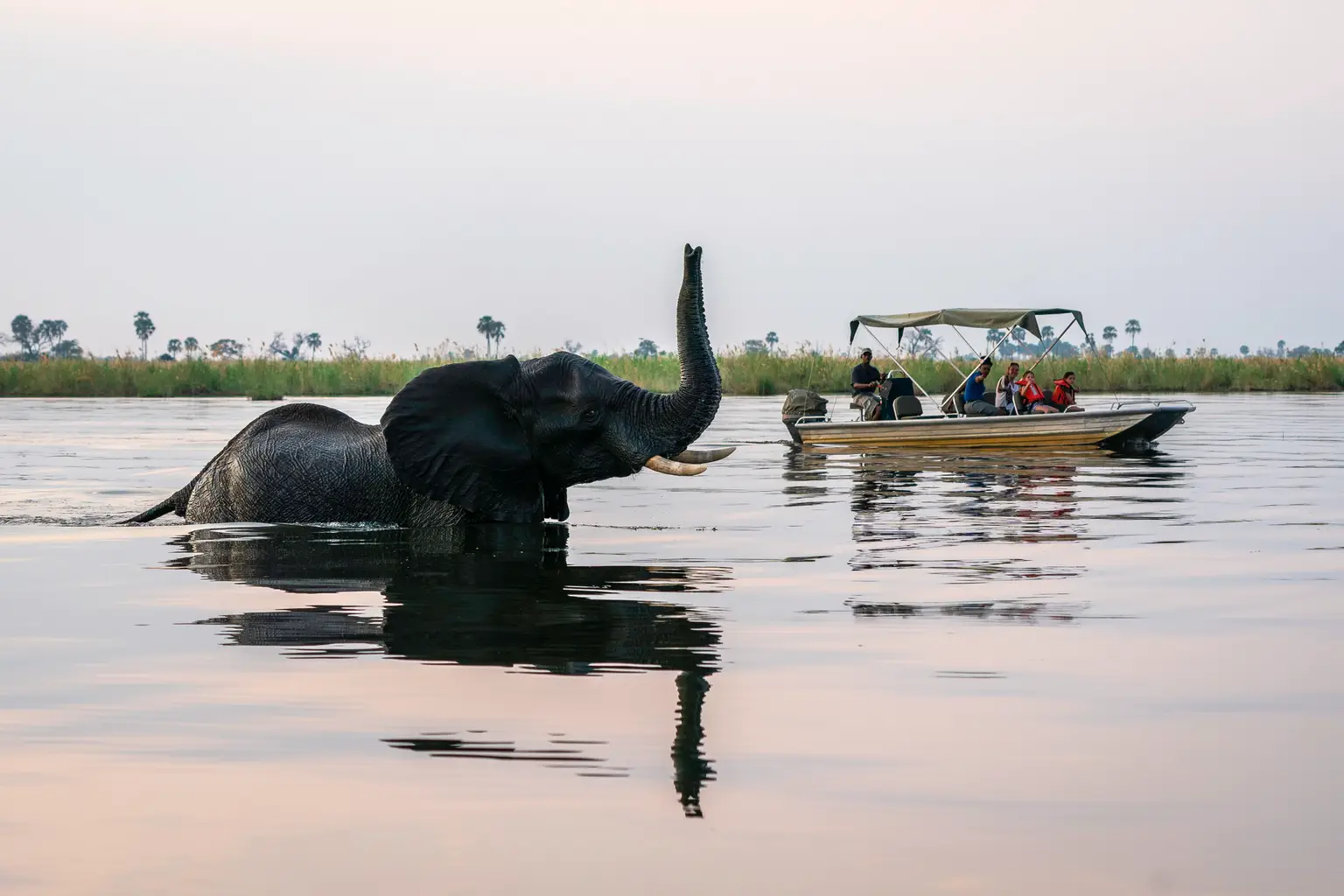
The question of when does Chobe flood has no single fixed-date answer, and that is part of what makes this northern Botswana wilderness so compelling. The Chobe River responds to summer rain, upstream catchments, and the wider Zambezi system. Water levels generally begin to rise during the rainy months, with the river and its floodplains often fullest from about March through May. Yet every season writes its own version of the landscape.
For travelers, this is less about chasing a dramatic flood event than understanding how changing water shapes the safari. High water brings broad silver channels, lush riverine habitat, exceptional boating, and a sense of green abundance. As the dry season progresses, the river becomes a vital gathering place for elephants, buffalo, antelope, and the predators that follow them.
When Does Chobe Flood in Botswana?
Chobe National Park’s wetter period usually runs from November to March, when summer rain transforms the bush. Local rainfall and runoff start replenishing pans, channels, and low-lying ground, while the Chobe River gradually rises. The most pronounced high-water conditions along the river are commonly seen in late summer and early autumn, roughly March to May.
This pattern is variable. A generous wet season can leave floodplains wetter for longer; a drier year may mean lower water and more limited inundation. Water levels can also be influenced by the Chobe River’s connection to the Zambezi system, making the area hydrologically fascinating but difficult to reduce to a calendar promise.
For a well-planned luxury safari, the practical distinction is simple: December through March is the green season, April and May often offer high river levels with increasingly pleasant weather, and June through October is the classic dry-season period when wildlife concentrates along permanent water.
What the Flood Season Looks Like
Chobe does not flood in the same way as the Okavango Delta’s celebrated annual flood pulse. Here, the defining feature is the Chobe River and its floodplain – a broad, life-giving corridor bordering the park. When water is high, river views feel expansive and the banks can become soft, green, and richly layered with birdlife.
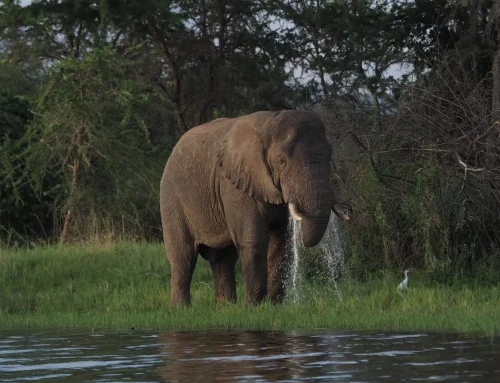
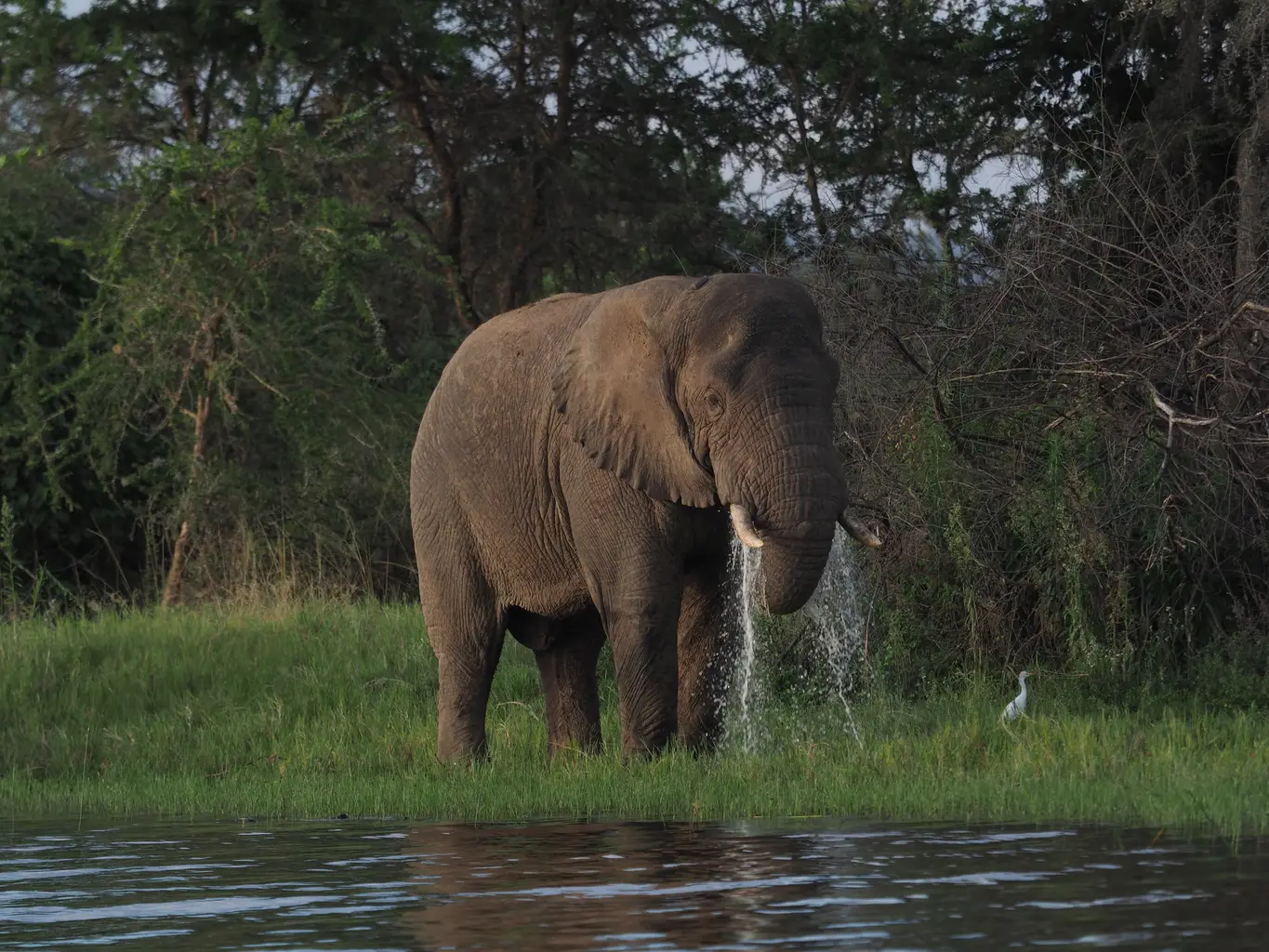
Boat safaris are especially rewarding at this time. Hippos rest in quieter shallows, crocodiles warm themselves on exposed sandbanks, and elephants may cross channels or feed at the water’s edge. The water also gives guides a different perspective on the park’s wildlife, particularly in the riverfront zone near Kasane.
The trade-off is that wildlife can be more dispersed than it is later in the dry season. With water available beyond the river, animals need not all converge at one reliable source. Travelers hoping for concentrated elephant herds along exposed banks may prefer the dry months, while those drawn to verdant scenery, migratory birds, and a more secluded seasonal atmosphere may find the wetter months deeply rewarding.
March to May: High Water and Green Landscapes
March, April, and May are often an elegant window for travelers who want Chobe at its most water-shaped. Rainfall begins to ease, temperatures become more comfortable, and vegetation remains fresh. Depending on the year, river levels can be high and boat excursions can be particularly scenic.
April and May can be an excellent choice for a tailor-made itinerary that pairs Chobe with other Botswana regions. The Okavango Delta may be beginning its flood-season transformation, while Chobe still carries the richness of the green season. It is a beautiful time for travelers who value varied landscapes rather than only dry-season wildlife density.
For photographers, this season offers clear post-rain light, reflective water, dramatic cloud formations, and saturated greens. It can also appeal to families and couples who appreciate gentler daytime temperatures without sacrificing the energy of the bush.
June to October: The River Becomes the Main Stage
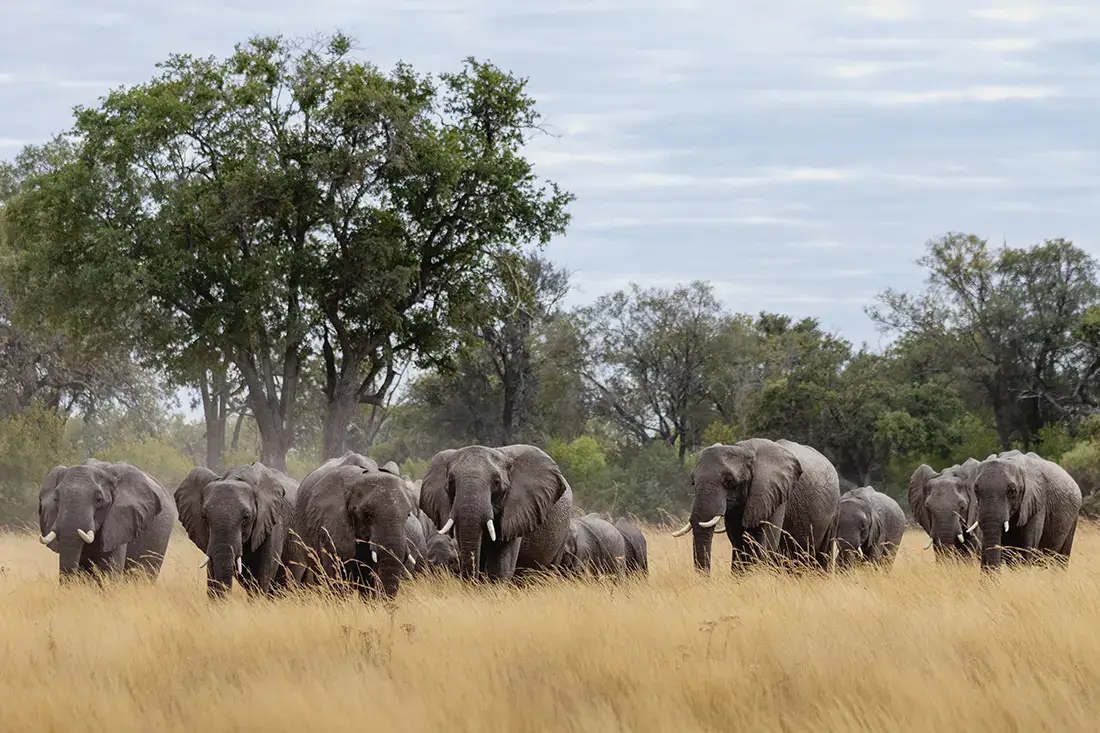
By the heart of the dry season, seasonal pans and smaller water sources have receded. The Chobe River remains dependable, drawing wildlife toward its banks. This is when the region earns its reputation for extraordinary elephant encounters, often from both vehicle and boat.
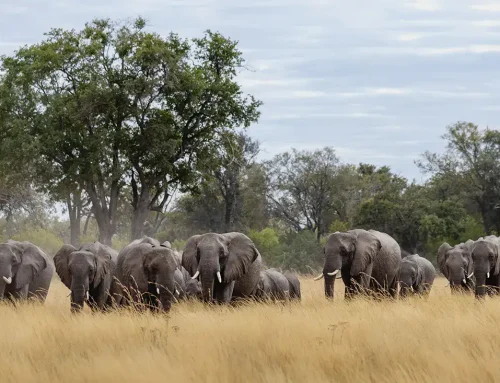
From July through October, it is common to see large herds bathing, drinking, or moving through the riverfront woodland. Buffalo gather in impressive numbers, giraffes browse near open clearings, and predators patrol areas where prey is more predictable. Conditions are generally drier, skies clearer, and game viewing highly consistent.
The advantages are obvious, but so is the demand for the most sought-after camps, suites, private villas, and guides. A carefully designed itinerary can preserve privacy and flexibility, whether that means selecting a smaller lodge, arranging private activities where available, or combining Chobe with the quieter Linyanti, Savuti, or Khwai regions.
How Flooding Changes a Chobe Safari
Water conditions affect the experience, not merely the scenery. During higher-water months, boating becomes central to the rhythm of the day. A private sunset cruise can reveal elephants framed by glowing reedbeds, fish eagles calling overhead, and the quiet movement of hippos beneath a rose-colored sky. It is one of the most restful ways to experience wildlife at close range, with no need to hurry.
On land, some tracks may be muddy or temporarily inaccessible during and shortly after heavy rain. This is not necessarily a disadvantage, but it makes experienced local ground handling essential. Guides and camp teams adapt routes daily according to conditions, wildlife movements, and guest interests. In the green season, flexibility creates the best experiences.
Birders have a particularly strong reason to consider the wetter months. Migratory species arrive, breeding plumage adds brilliance to familiar birds, and the riverfront supports remarkable diversity. Carmine bee-eaters, kingfishers, herons, storks, raptors, and waterbirds can make a boat safari as captivating as a big-game drive.
Choosing the Right Time for Your Priorities
If your priority is seeing the highest water and a lush Chobe landscape, plan around March to May, while recognizing that nature sets the exact timetable. For a river-and-wildlife safari with the greatest likelihood of large elephant concentrations, the dry period from July to October is typically the strongest choice.
November can be a fascinating transition month. The first rains may arrive, the bush begins to change, and wildlife still uses the river regularly. December through February brings hotter, wetter conditions, dramatic skies, young animals, and fewer visitors in some areas. This can be an inspired choice for return safari travelers, photographers, and those who find beauty in a wilderness that feels alive with renewal.
Your wider itinerary matters, too. Chobe combines naturally with Victoria Falls, only a short regional connection away, and with the Okavango Delta, Moremi, Khwai, Savuti, or Linyanti for a more complete Botswana journey. The best order, flight routing, and camp selection will depend on your dates, preferred pace, and whether you favor water activities, photography, family time, or private guiding.
A Responsible Way to Experience Chobe’s Water World
The Chobe River supports wildlife, neighboring communities, and a living ecosystem of immense regional value. Responsible safari planning means choosing operators and accommodations that respect water, minimize disturbance around wildlife, employ local teams, and contribute meaningfully to conservation and community livelihoods.
On the river, thoughtful guiding matters. Boats should approach animals with patience, never pressure them at crossings or drinking points, and give birds and nesting areas appropriate space. The most memorable sighting is not the closest one. It is the one that allows natural behavior to continue undisturbed.
Chobe’s seasonal water is a reminder that Botswana’s great safari landscapes are never static. Whether you travel in the green flush of April or the dry-season gold of September, the river will shape the story. Chloorokop Travel & Tours can design that story around the Chobe you hope to experience – personally managed, expertly paced, and grounded in the rhythms of the wilderness.