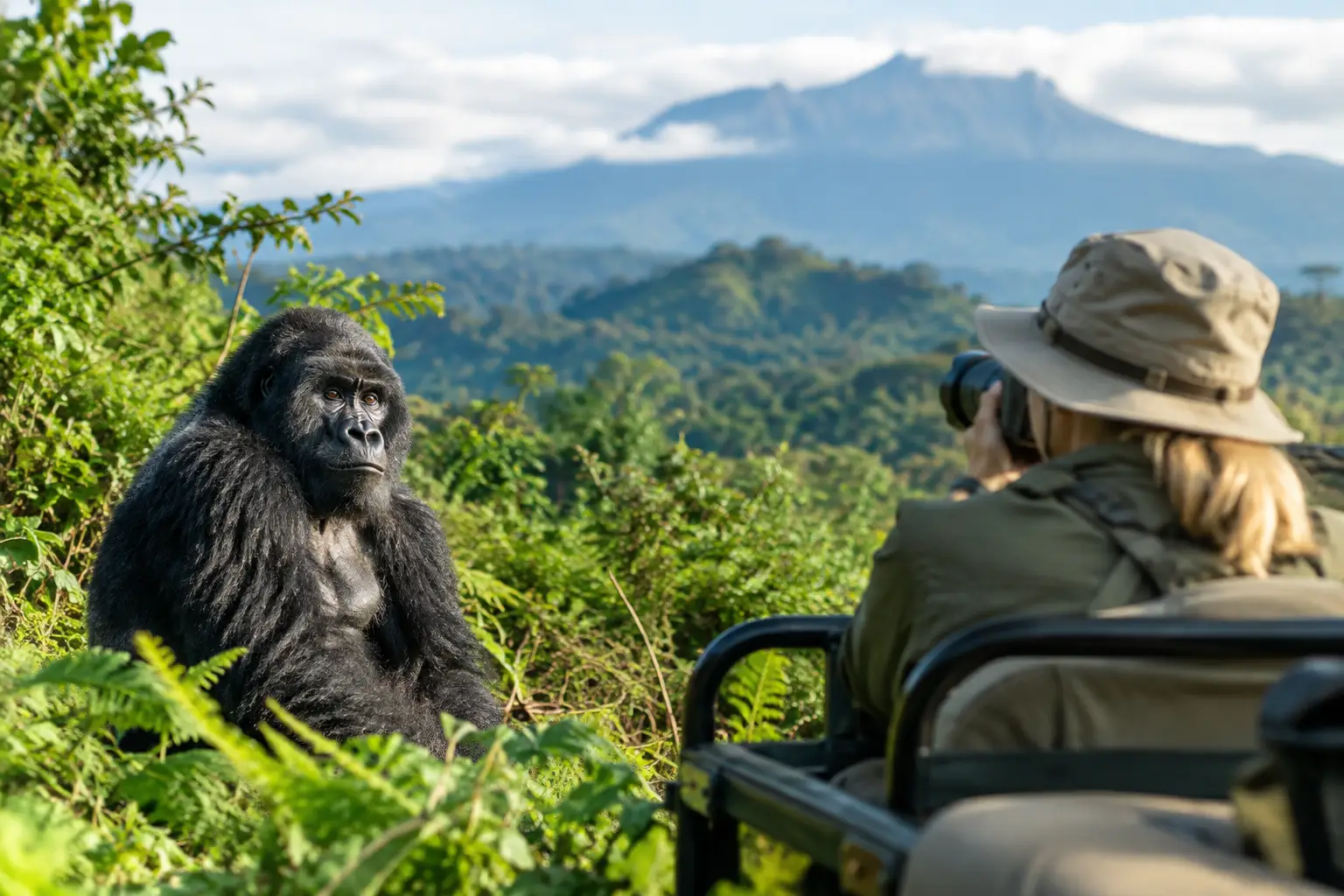
A gorilla trek may be the defining morning of an African journey: a misty forest trail, the quiet instruction of your guide, then an hour in the presence of a wild mountain gorilla family. But are gorilla permits included in your safari? The honest answer is: sometimes. It depends entirely on how the itinerary has been designed and, more importantly, what is stated in its inclusions.
For a tailor-made Rwanda or Uganda extension, the permit can be built into the total trip price and arranged on your behalf. In other proposals, it is quoted separately because permit availability, regulations, and government fees can change. Neither approach is inherently better. What matters is complete clarity before you commit.
Are Gorilla Permits Included in Safari Packages?
A gorilla permit is a government-issued authorization to trek to an allocated gorilla family in Rwanda’s Volcanoes National Park or Uganda’s Bwindi Impenetrable National Park or Mgahinga Gorilla National Park. It is not simply an activity ticket. Permit revenue plays a direct role in protecting fragile forest habitat, supporting ranger operations, and delivering benefits to neighboring communities.
In a well-planned luxury safari, the permit is often included as a named line item within the itinerary price. Your travel partner secures it alongside the lodge, private transfers, domestic flights, guiding, and other arrangements. This gives travelers one coordinated journey and a clear view of what has been handled.
Yet “included” should never be assumed from the words “gorilla trekking extension” alone. Some sample itineraries show land arrangements and accommodations but exclude permits until travel dates, visitor numbers, and permit availability are confirmed. Others may hold a permit provisionally but require prompt payment to finalize it. Ask for a written inclusions and exclusions schedule rather than relying on a headline price.
Why Permit Fees May Appear Separately
Gorilla permits are tightly controlled and limited each day. They are issued by the relevant wildlife authorities, not by lodges or safari companies, and their cost is subject to official policy. Keeping the fee separate can make a proposal more transparent, especially when a journey is being shaped many months in advance.
It can also allow for greater flexibility. A couple may be deciding between Rwanda and Uganda, or a family may need to confirm whether every eligible traveler will trek. Separating the permit initially lets the itinerary take shape while those decisions are finalized.
Once permits have been secured, their terms are generally strict. They are commonly nonrefundable or subject to very limited change conditions, even when flights or lodging can be adjusted. Travel insurance with suitable cancellation and medical coverage is therefore a sensible part of planning. A specialist will explain the applicable conditions before issuing the permits, rather than treating them as an afterthought.
What the permit normally covers
The permit usually covers park entry for the trekking day, the services of park rangers and trackers, an allocated gorilla group, and the regulated viewing time with the family. In standard mountain gorilla trekking, that viewing time is generally limited to one hour once the group has been located.
It does not automatically cover getting to the park, accommodation near the trailhead, porter services, gratuities, meals, personal equipment, visas, or comprehensive insurance. Some lodges and itineraries include particular items among these, while others do not. The distinction is why a detailed proposal matters.
Uganda also offers a longer gorilla habituation experience on limited dates, subject to separate rules and permits. This is not interchangeable with a standard trek and should be requested specifically by travelers who want more time in the forest and are comfortable with a more demanding, less predictable experience.
Rwanda or Uganda: The Choice Changes the Plan
Both destinations offer profound, carefully managed encounters with mountain gorillas, but they suit different rhythms of travel. Rwanda’s Volcanoes National Park is relatively accessible from Kigali. This can make a shorter, polished extension possible, particularly when combined with a Rwanda-focused journey or an East African itinerary where time is limited.
Uganda’s Bwindi forest offers several trekking sectors, each with its own approach roads, lodge options, and gorilla families. It can reward travelers who want a deeper journey through varied landscapes, perhaps combining gorillas with Queen Elizabeth National Park, the crater lakes region, or a classic East Africa safari. The drive times and internal flight planning deserve careful attention, as a lodge that looks nearby on a map may require a longer transfer than expected.
Terrain, weather, and trekking duration vary in both countries. A trek can be relatively gentle or involve steep, muddy slopes and several hours on foot. Rangers assign groups with care, but the wilderness does not follow a timetable. Travelers with mobility concerns should share them early so the routing, lodge choice, assistance, and porters can be arranged thoughtfully. Hiring a porter is strongly recommended. Beyond practical support on uneven ground, it provides meaningful local employment.
When to Secure a Gorilla Permit
The best time to reserve is when travel dates are firm enough to act. Peak travel periods, school vacations, and dates that align with high-demand safari seasons can sell out far in advance. For a honeymoon, multigenerational journey, or itinerary tied to international flights and exclusive-use accommodations, early planning is especially valuable.
A permit is issued for a specific date, park, and traveler. Names must match passport details, so accurate documentation matters from the beginning. A small spelling error can become an unnecessary complication on trekking day.
Your itinerary should also allow breathing room around the trek. Arriving at the lodge the afternoon before is preferable to landing after a series of connections and facing an early park departure the next morning. A second night after trekking is equally welcome, giving you time to rest, enjoy the lodge, visit a community initiative if appropriate, or simply absorb what you have experienced before continuing onward.
Questions to Ask Before You Confirm
Before approving a gorilla safari proposal, ask whether the permit is included in the total, quoted separately, or held pending availability. Confirm the park, trekking date, number of permits, and whether the itinerary allows enough time for the road or air transfers involved.
You should also ask what happens if a traveler is unable to trek because of illness, delayed arrival, or a change in official park operations. No operator can remove wildlife authority terms, but an experienced ground handler can make sure you understand them and can respond calmly if plans need to shift.
Finally, look beyond the permit itself. The quality of the experience is shaped by the lodge location, the comfort of the transfer, the strength of local guiding, the pace of the itinerary, and the care taken with every handover. Chloorokop Travel & Tours designs these details around the traveler, whether gorilla trekking is a focused Rwanda escape or one chapter in a Botswana, Victoria Falls, and East Africa journey.
Trek With Respect for the Forest and Its Families
Gorilla trekking works because access is restricted. Visitors are briefed to keep a respectful distance, follow ranger instructions, avoid flash photography, and limit noise around the animals. Those who are unwell may be asked not to trek, protecting gorillas from human respiratory illnesses to which they are vulnerable.
The goal is not to get the closest possible photograph. It is to be present in a rare wild encounter while leaving the gorilla family undisturbed. Choosing responsible lodges, employing local guides and porters, and respecting park rules helps ensure that the surrounding communities and the forest benefit from tourism over the long term.
A gorilla permit is more than a line in an itinerary. When it is clearly accounted for, secured at the right time, and supported by considered logistics, it becomes the beginning of an extraordinary day in the forest – one you can meet with anticipation rather than uncertainty.