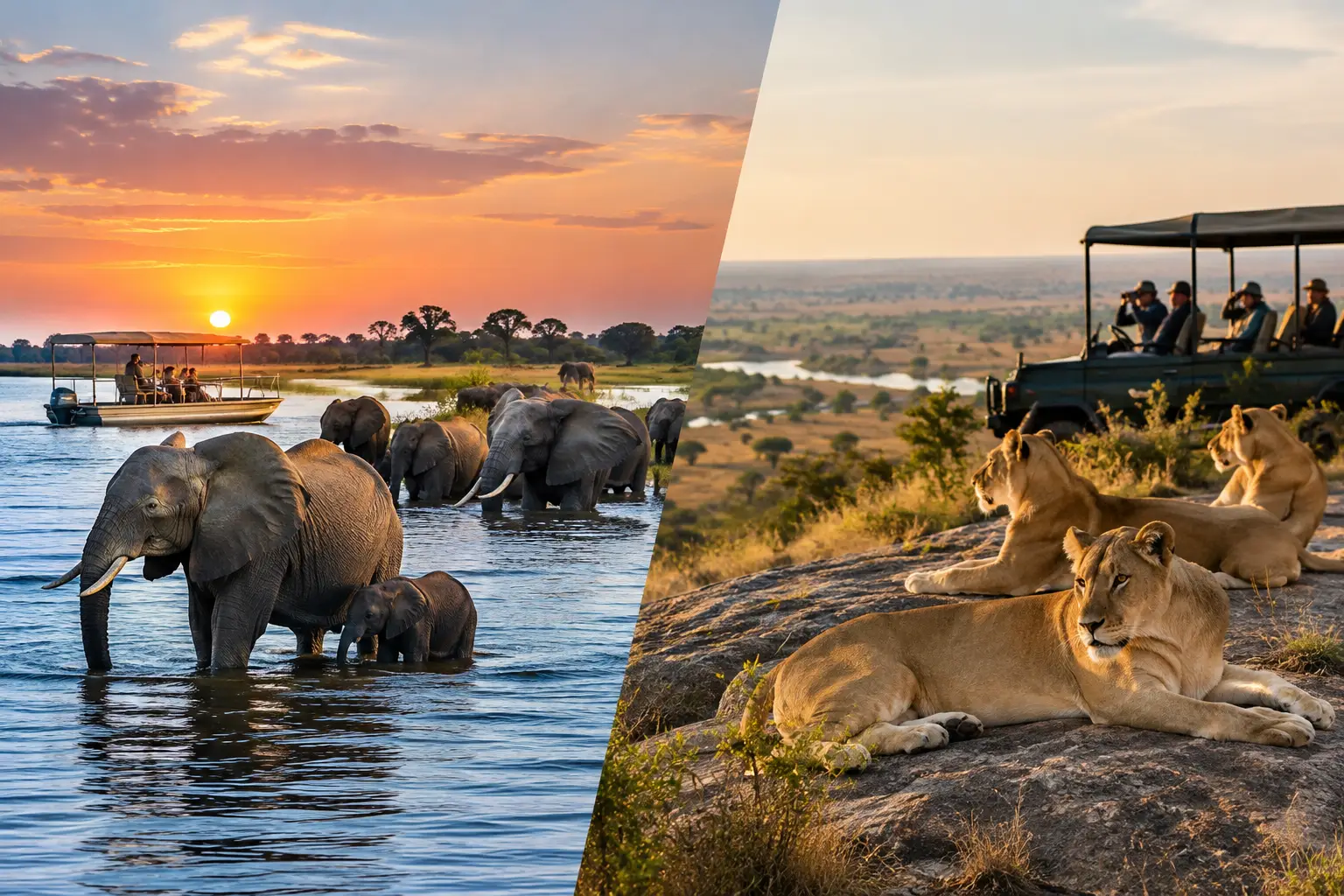
A Chobe versus Linyanti safari is not simply a choice between two northern Botswana destinations. It is a choice between two distinct ways of being in the wilderness. One places you close to the broad, busy life of the Chobe River, where elephants gather in remarkable numbers. The other leads into a quieter, more remote landscape where long silences, private guiding, and the possibility of rare encounters shape the rhythm of each day.
Both regions can be exceptional additions to a tailor-made Botswana safari. The right fit depends on how you like to travel: whether you value river time and classic game viewing, or solitude, flexibility, and a deeper sense of remoteness. For many travelers, the most rewarding answer is not choosing one over the other, but allowing each to reveal a different side of Botswana.
Chobe Versus Linyanti Safari: The Essential Difference
Chobe is best known for the Chobe Riverfront, near Kasane in Botswana’s northeast. It is an accessible and dramatic safari setting, defined by riverine forests, floodplains, open water, and large herds of elephants moving down to drink and bathe. A boat safari is central to the experience here. From water level, you may watch elephants cross shallow channels, hippos surface beside the boat, and buffalo gather along the reeds as the afternoon light softens.
Linyanti lies farther west, in a more secluded corner of northern Botswana near the Linyanti River and the wildlife-rich habitats bordering Chobe National Park. Its camps are generally set within private concessions or exclusive-use areas, where the experience is shaped by fewer vehicles, wider space, and more flexible guiding. Landscapes range from riverine woodland and lagoon systems to mopane forest and open grassland. It feels less like an arrival point and more like a wilderness retreat.
Neither is inherently better. Chobe offers spectacle and variety, especially for first-time safari travelers and families who appreciate the ease of combining land and water activities. Linyanti appeals to travelers seeking privacy, unhurried wildlife viewing, and a camp-based safari with a strong sense of place.
Wildlife: Elephant Encounters or Predator Possibilities?
Chobe’s elephant population is among the defining wildlife experiences of Botswana. During the dry season, usually from around June through October, animals concentrate near permanent water. Seeing a large family group emerge from the trees and enter the river is not a staged moment. It is the ordinary, extraordinary life of this landscape.
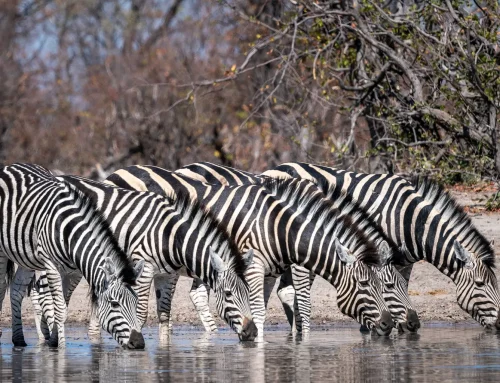
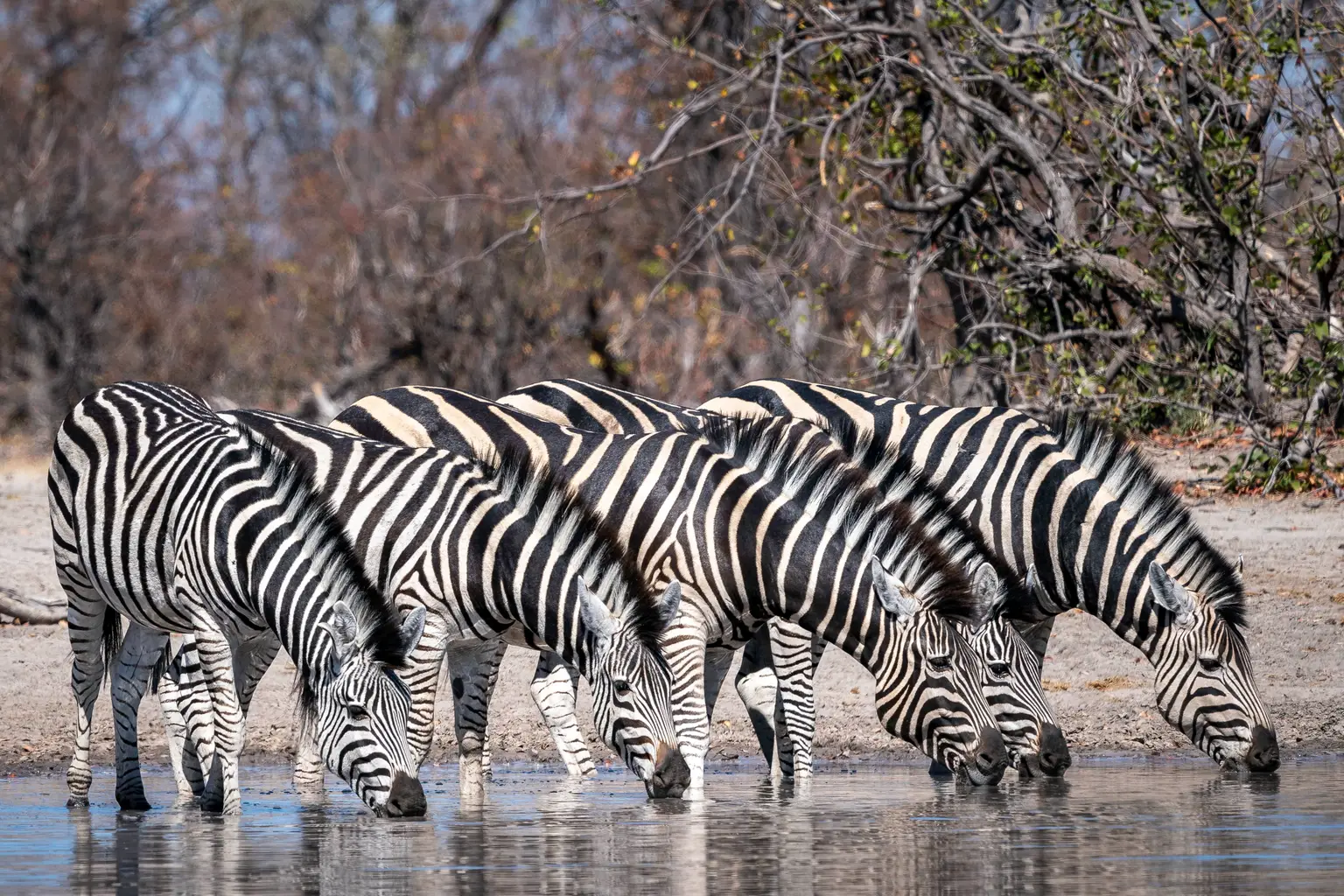
The riverfront also supports buffalo, giraffe, zebra, impala, kudu, warthog, crocodiles, and a rich variety of birdlife. Lions are present, and lucky guests may see them near the river or on game drives, but Chobe is often remembered first for its scale: broad horizons, active riverbanks, and wildlife in abundance.
Linyanti can feel more unpredictable, which is part of its appeal. Elephant numbers can also be significant, particularly in the dry months, but sightings often unfold in more intimate settings along a lagoon, at a waterhole, or in woodland clearings. The area has a strong reputation for predators, including lion, leopard, and African wild dog, although no responsible safari planner should promise a particular species or sighting.
For keen wildlife photographers, the difference is often practical. Chobe’s boat safaris offer a low-angle perspective and beautiful opportunities to photograph elephants, birds, and buffalo against the water. Linyanti’s private concession setting may allow guides to spend longer with a sighting and, where permitted, position vehicles with greater flexibility. Serious photographers often benefit from combining both regions and allowing enough nights for patience to do its work.
The value of private concessions
A key distinction in a Chobe versus Linyanti safari is not just geography, but land use. Inside Chobe National Park, vehicles generally remain on established roads and activities follow national park regulations. This protects a vital public wilderness, though popular riverfront areas can see more vehicles during peak travel periods.
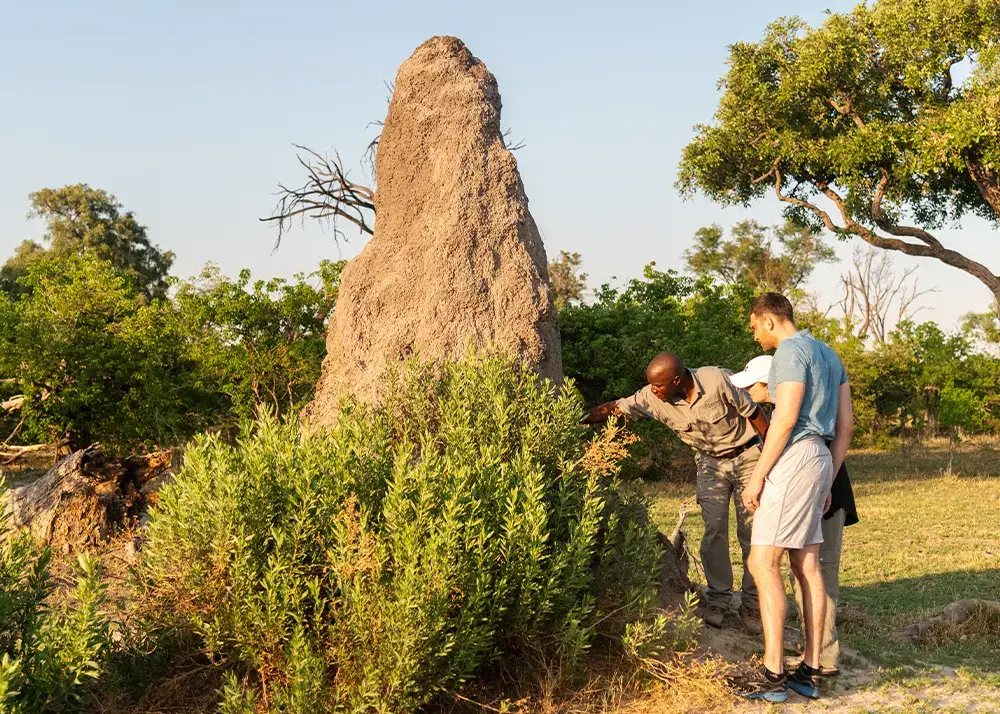
Many Linyanti camps operate in private concessions, where low guest density is part of the model. Depending on the specific concession and conditions, this can permit off-road tracking, night drives, and walking safaris. These activities bring a different dimension to the bush: following fresh tracks at dawn, listening for lions after dark, or noticing the smaller details of an ecosystem on foot with an experienced guide.
It is worth asking exactly what each camp can offer. Concession rules, seasonal conditions, and wildlife movements vary, and the most thoughtful itinerary matches activities to your interests rather than assuming every camp provides the same experience.
Landscape and Atmosphere
Chobe has an immediate energy. The river is a constant presence, drawing wildlife and shaping the day. Morning game drives may move through teak woodland and open floodplains; afternoons often belong on the water. There is a sociable quality to the destination, particularly around Kasane, which also makes it a natural pairing with Victoria Falls.
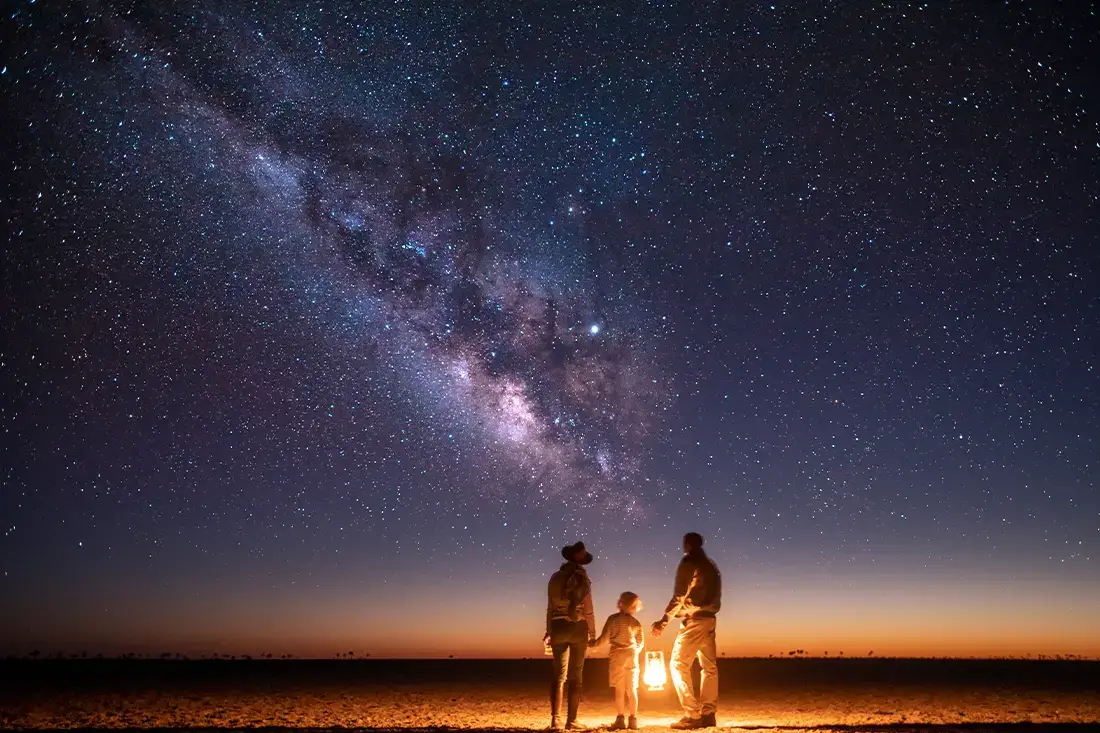
Linyanti asks for more time. Its beauty is quieter and more layered: bull elephants standing beneath towering trees, a leopard disappearing into dense vegetation, the call of fish eagles across a channel, or a slow sunset from a camp deck with no other lodge in sight. This is a place for travelers who find luxury in space, stillness, and the freedom to follow the bush’s changing moods.
For honeymooners, Linyanti often creates a more private and immersive atmosphere. For multigenerational families, Chobe can be especially rewarding when paired with a well-designed lodge or private vehicle, as boat safaris provide a comfortable and engaging alternative to longer drives. Experienced safari travelers may be drawn to Linyanti’s seasonal complexity and the depth that comes with staying in one remote area for several nights.
When to Go
The dry season, from June through October, is excellent for both regions. Water becomes a focal point, vegetation thins, and wildlife viewing is often at its most concentrated. Chobe’s river activity is particularly compelling at this time, while Linyanti’s dry-season water sources can draw elephants and predators into defined areas.
The green season, broadly November through March, offers a different kind of reward. Rain renews the landscape, migratory birds arrive, and the air feels alive with possibility. Sightings can require more patience as animals disperse, yet the light, green scenery, and quieter camps can be deeply appealing to photographers, birders, and returning safari guests.
Water levels also influence the experience. Boating, fishing, mokoro-style activities, and access to particular areas depend on annual rainfall and local conditions. A Botswana specialist should assess the season, the camp’s exact location, and your priorities before recommending a route.
How Many Nights Should You Spend?
Two nights in Chobe can introduce the riverfront, but three nights allow time for both boat and vehicle safaris without rushing. If Chobe is paired with Victoria Falls, consider the border crossing, transfer timing, and whether you prefer to begin or end your safari with the falls’ dramatic energy.
Linyanti deserves at least three nights, and four can be ideal for travelers who want to settle into a private concession experience. Wildlife in this landscape does not operate on a timetable. More time creates room for changing weather, unplanned sightings, and the pleasure of lingering at camp between drives.
A well-paced northern Botswana itinerary might combine Chobe for its river and elephant encounters, Linyanti for privacy and predator-focused game viewing, and the Okavango Delta for water-based wilderness. Light aircraft transfers turn long distances into part of the journey, with aerial views of channels, islands, and shifting floodplains below.
Choosing the Right Safari for You
Choose Chobe if you are drawn to the river, want exceptional elephant viewing, enjoy the variety of game drives and boat safaris, or are incorporating Victoria Falls into a broader Southern African journey. It is vivid, accessible, and wonderfully dynamic.
Choose Linyanti if privacy is a priority, you value a more remote camp experience, or you want the activity flexibility that may come with a private concession. It is especially suited to couples, photographers, and repeat safari travelers who prefer fewer vehicles and more time in one wild place.
At Chloorokop Travel & Tours, we design these choices around the traveler, not a fixed route. The most meaningful safari may include Chobe’s river light at sunset, then several quiet nights in Linyanti where the only schedule is set by the wildlife. Travel beautifully, leave meaningfully, and give Botswana enough time to become more than a destination on an itinerary.