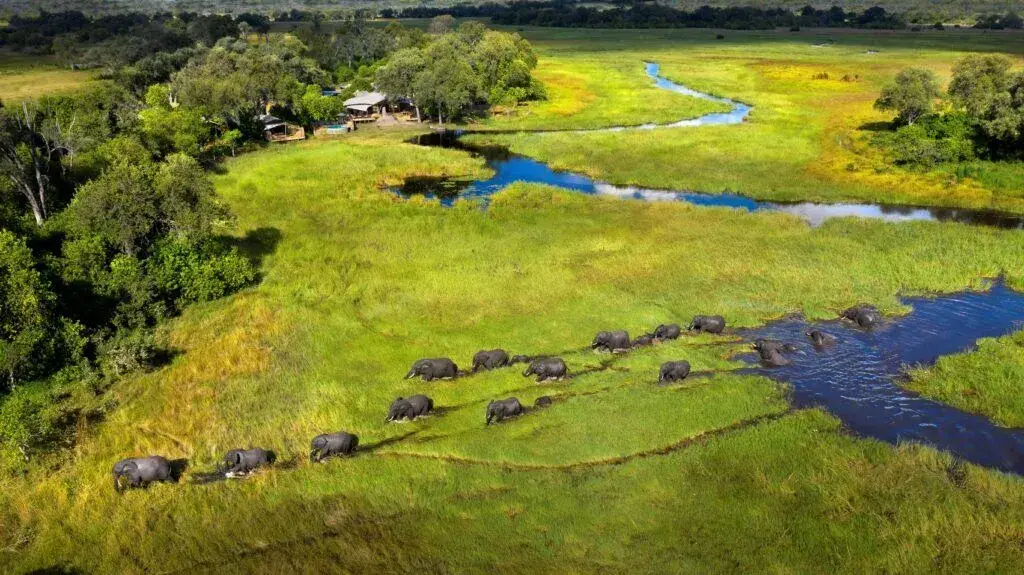
A safari can begin with the soft whir of a light aircraft lifting above the Okavango Delta, revealing channels, palm islands, and elephants moving below. But do safaris include flights? Sometimes – and the distinction between international airfare, regional connections, and in-country bush flights can shape both the rhythm and the cost of your journey.
For a tailor-made African safari, there is no single universal answer. What is included depends on the itinerary, the camps selected, the countries visited, and whether your journey is designed as a fully managed, door-to-door experience or begins on arrival in Africa. The key is to understand which flights serve the safari itself and which bring you to it.
Do Safaris Include Flights From the United States?
International flights from the United States, Canada, Europe, Australia, or elsewhere are often quoted separately from the land safari. Many travelers prefer this arrangement because they may wish to use preferred airlines, loyalty points, premium-cabin upgrades, or a specific routing through cities such as Johannesburg, Cape Town, Nairobi, or Dubai.
That does not mean international airfare cannot be arranged as part of the wider journey. A full-service safari specialist can coordinate these flights alongside your accommodations, transfers, regional flights, and safari logistics. The benefit is not merely convenience. When each moving part is considered together, arrival times, baggage requirements, overnight stays, and connections can be planned with greater care.
For example, a traveler flying overnight into Johannesburg may need an airport hotel before continuing to Maun the next morning. Another may arrive early enough to connect onward the same day. A well-designed itinerary accounts for these practical differences rather than treating airfare as an afterthought.
The Flights Most Often Included in a Safari
Once you are in the safari region, flights are far more likely to be part of the itinerary. In Botswana, many exceptional camps sit deep in wilderness areas where a light-aircraft transfer is the most comfortable and appropriate way to arrive.
A typical Botswana safari may include scheduled light-aircraft flights between Maun and camps in the Okavango Delta, Moremi, Khwai, Linyanti, Savuti, or the Makgadikgadi. These flights are not simply transport. They replace long road journeys, preserve valuable safari time, and offer a remarkable aerial introduction to the landscape.
Your safari may also include airport-to-camp transfers by road or boat, depending on the season and location. In the Delta, the route to a camp can shift with water levels. In Chobe, a road transfer may connect you with game viewing almost immediately. In remote areas of the Central Kalahari, the most practical access may be by charter aircraft or a carefully timed road transfer.
The itinerary should state these arrangements clearly. Look for wording such as “scheduled charter flights,” “inter-camp air transfers,” “bush flights,” or “air transfers as per itinerary.” These generally refer to flights within the safari, not the long-haul flight from your home country.
Scheduled Bush Flights Versus Private Charters
Most fly-in safaris use scheduled light-aircraft services. You share the aircraft with other guests traveling between nearby camps, and the pilot may make more than one landing along the route. It is an efficient, scenic, and highly practical way to travel through Botswana’s more remote regions.
Private charters offer greater flexibility and privacy. They can be especially appealing for families, private groups, photographers traveling with specialist equipment, or guests whose itinerary requires a particular departure time. A private charter may also make sense when combining several countries or reaching a remote lodge with limited scheduled access.
The trade-off is cost and flexibility. Scheduled flights follow operational routes and luggage limits, while private charters can be tailored more closely to your plans. Neither is automatically better. The right choice depends on your priorities, the season, party size, and how much freedom you want in the pacing of the journey.
Why Flight Inclusions Vary by Itinerary
Safari pricing is built around the specific experiences selected. A three-night lodge stay reached by road from Maun will be structured differently from a nine-night flying safari through the Delta, Chobe, and the Kalahari. Add Victoria Falls, a Zambia walking safari, Cape Town, or a beach stay in Mozambique or Mauritius, and the flight plan becomes another important piece of the design.
Flights may be excluded from an initial quote for several sensible reasons. International fares change frequently, preferred cabin availability can be limited, and travelers may be departing from different cities. Separating international airfare can also make it easier to compare flight options without changing the underlying safari experience.
Conversely, including regional and bush flights in the safari price gives a more realistic view of what the journey requires. A remote luxury camp may appear straightforward on a map, but the logistics behind getting there deserve the same attention as the suite, guide, and wildlife experience awaiting you.
What to Check Before You Book
Rather than asking only whether flights are included, ask which flights are included and how they work. A thoughtful proposal should make this easy to see.
Confirm whether the price covers international airfare, regional flights between African cities, and light-aircraft transfers within the safari. Ask whether airport transfers, meet-and-greet services, and overnight accommodation needed for connections are included as well. These details are especially relevant on multi-country journeys, where a missed connection can affect a carefully timed onward flight.
It is also wise to check baggage allowances. Bush aircraft commonly have strict soft-sided luggage requirements, often around 44 pounds per person including hand luggage, though allowances vary by operator and aircraft. Hard-shell suitcases are generally unsuitable because they do not fit easily into the aircraft’s luggage compartment. For photographers, families traveling with additional gear, or guests with medical equipment, advance planning is essential.
Finally, understand the timing. Light-aircraft departures can vary with routing, weather, and the needs of the day’s passengers. This is part of travel in wild places, not a shortcoming. A well-planned itinerary allows enough connection time and avoids unnecessary pressure at the beginning or end of your safari.
Flights Are Part of the Experience, Not Just the Logistics
In Botswana, flying can become one of the quiet pleasures of a safari. From above, you see the Okavango’s seasonal floodwaters tracing silver paths through grasslands, buffalo herds gathering at the edge of woodland, and the immense scale of the Kalahari. The journey itself gives context to the wilderness you will explore from the ground.
That perspective also reinforces why responsible planning matters. Flying between remote camps can reduce long overland travel through sensitive habitats, while camps and local partners play a vital role in conservation economies that support wildlife areas and neighboring communities. Travel with purpose is not about sacrificing comfort. It is about choosing an itinerary where exceptional experiences contribute positively to the places that make them possible.
A Clear Answer Starts With a Personal Itinerary
The most useful answer to “do safaris include flights” is: the flights that connect your safari camps often do, while international airfare may be separate or arranged as part of a complete travel plan. What matters is that every flight, transfer, and overnight connection is visible before you commit.
At Chloorokop Travel & Tours, a Botswana-born perspective means planning the route as carefully as the wildlife moments within it. Share how you want to travel – privately, at an unhurried pace, across Botswana alone or onward into Africa – and let the journey take shape around the experiences that matter most.