A lion’s call carrying over a floodplain before sunrise, elephants crossing the Chobe River beneath a pink evening sky, a silent mokoro slipping through reeds as a painted reed frog clings to a papyrus stem – the top Botswana wildlife encounters are rarely about ticking off a list. They are about being in the right habitat, at the right pace, with a guide who knows how to read what the wilderness is revealing.
Botswana protects vast wild landscapes through a low-volume, high-value tourism model. For discerning travelers, that can mean fewer vehicles at a sighting, exceptional camps in remarkable settings, and time to experience wildlife without rushing between destinations. No sighting can be promised, of course. But a thoughtfully paced, tailor-made safari gives the natural world room to surprise you.
1. Elephant gatherings on the Chobe River
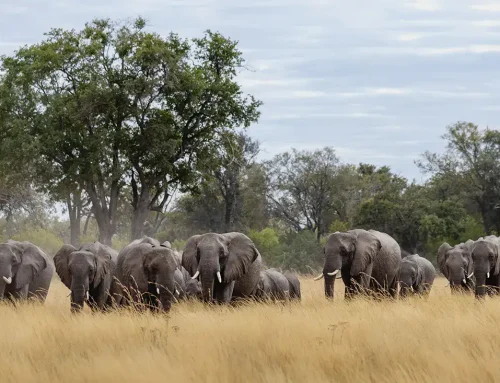
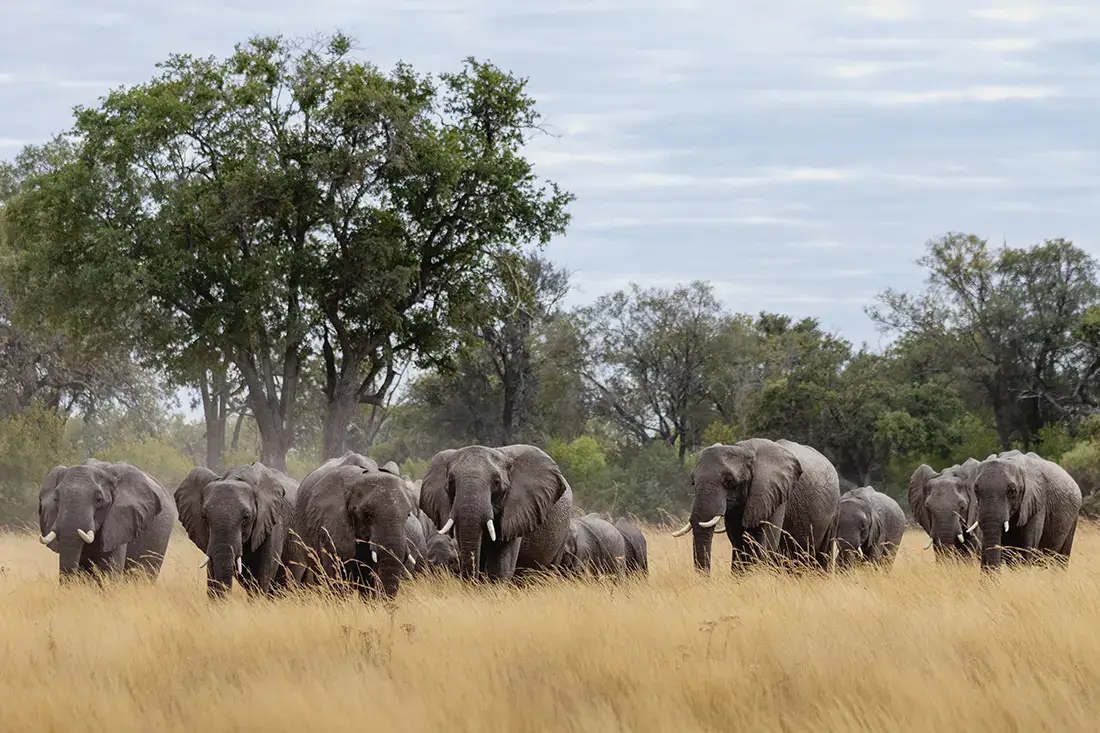
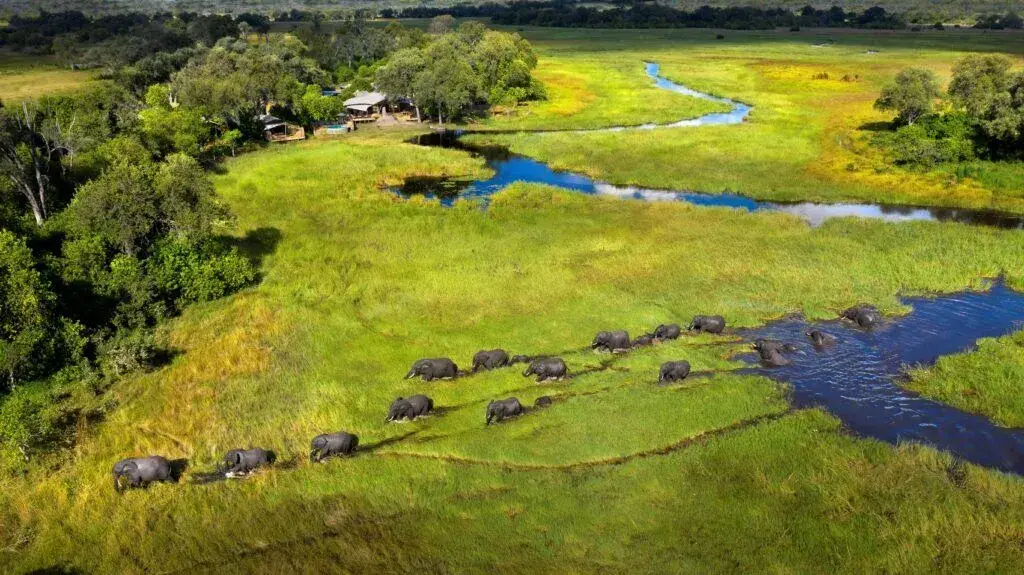
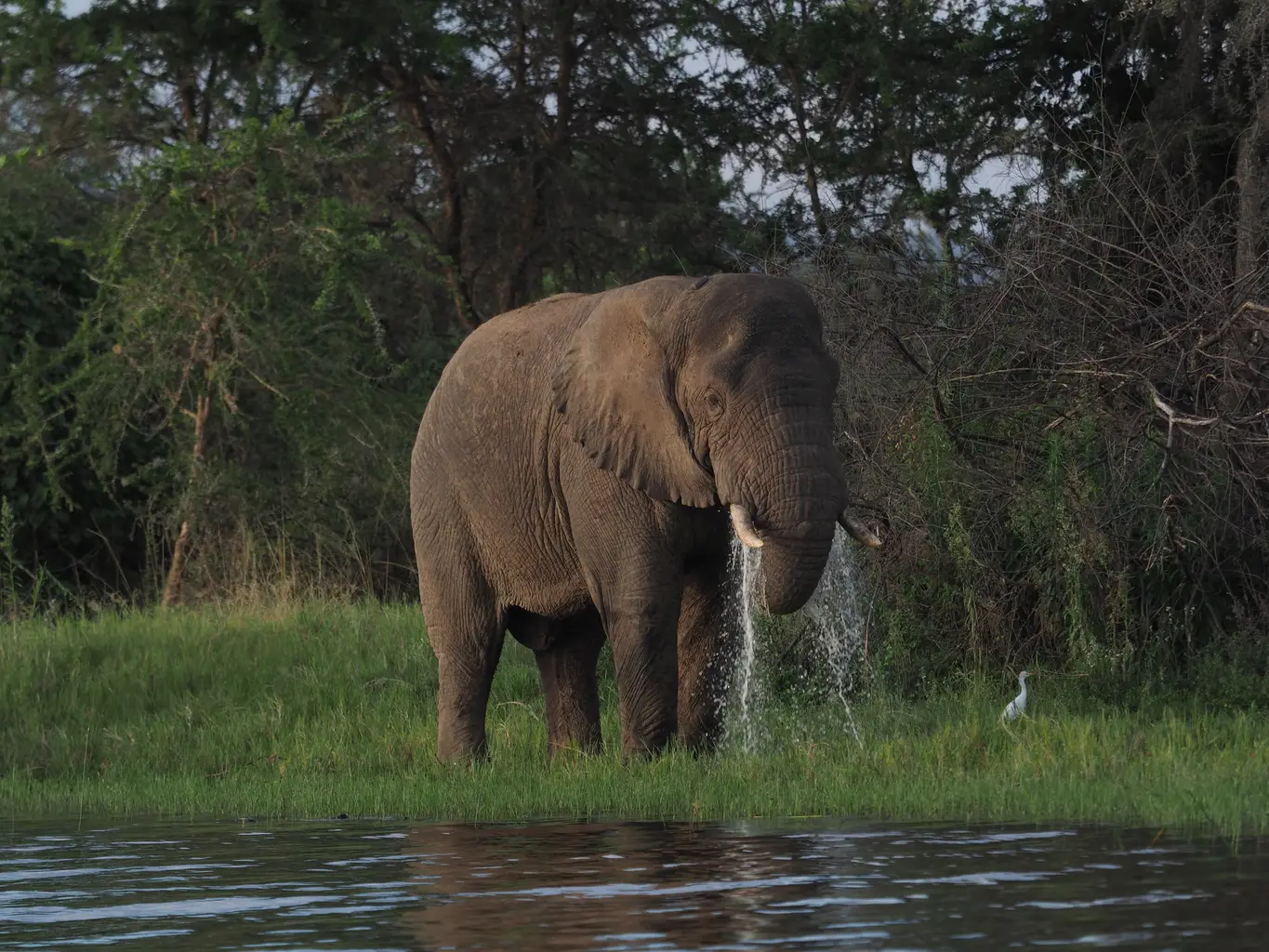
Chobe National Park is renowned for its large elephant population, and the riverfront offers one of Africa’s most absorbing ways to observe them. From a privately guided boat, you may watch family groups wade into the water, young calves climb awkwardly up muddy banks, and older bulls stand chest-deep while feeding on aquatic grasses.
The experience is especially compelling in the dry season, generally from June through October, when wildlife concentrates near permanent water. Boat safaris provide a different perspective from game drives and are often gentler for multigenerational families or travelers who appreciate a slower afternoon. Chobe pairs naturally with a few nights in the Okavango Delta or an extension to Victoria Falls.
2. Mokoro wildlife viewing in the Okavango Delta
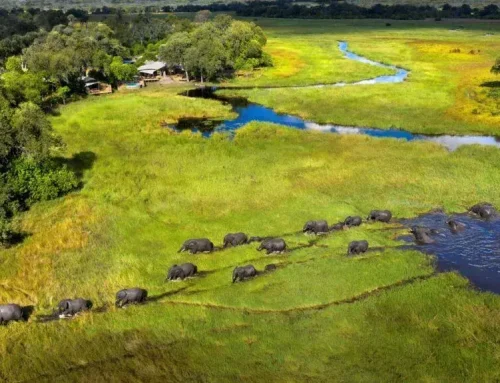
There is no better way to understand the scale and delicacy of the Okavango Delta than from a mokoro, a traditional canoe now commonly guided through shallow channels. With the engine switched off, the Delta becomes intensely detailed: dragonflies, water lilies, jacanas stepping across floating vegetation, and the soft alarm calls of birds in the reeds.
A mokoro excursion is not designed for close encounters with big predators. Its value lies in immersion and quiet observation. Hippos may surface nearby, elephants can appear at a channel crossing, and birdlife is extraordinary, but the pace is intentionally unhurried. It is particularly suited to honeymooners, birders, and travelers who want their safari to include stillness as well as excitement.
Water levels shape the experience
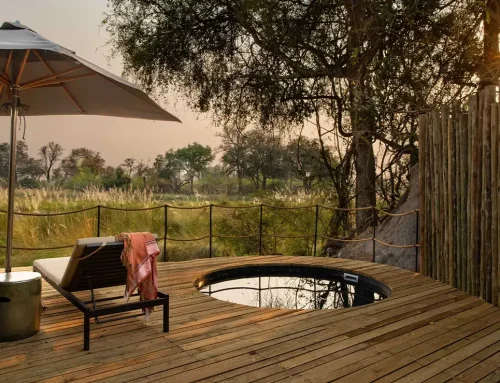
The Delta’s annual flood typically reaches many areas between June and August, although conditions vary by concession and year. When water levels are high, mokoro and boat activities can be central to an itinerary. In lower-water periods, game drives, walking, and seasonal land-based experiences may take the lead. The best camp is therefore not simply the most remote or luxurious one – it is the one that matches the activities you most want to enjoy during your travel dates.
3. Big-cat tracking in Moremi and Khwai
Moremi Game Reserve and the neighboring Khwai area bring together permanent waterways, mopane woodland, grassland, and riverine forest. That habitat diversity supports strong populations of lion, leopard, and African wild dog, alongside buffalo, giraffe, zebra, antelope, and prolific birdlife.
Leopard sightings often reward patience. A skilled guide may notice a tail hanging from a sausage tree, fresh tracks on a sandy road, or the behavior of impala and monkeys. Wild dogs are more unpredictable, often moving long distances while hunting, which makes an encounter feel all the more electric. Rather than chasing sightings, an experienced private guide interprets the clues, respects the animals’ space, and adjusts the day around what is unfolding.
Khwai can be a particularly rewarding choice for travelers who want day and night drives, depending on the concession and camp. Night drives may reveal lesser-seen species such as genet, civet, bushbaby, porcupine, and, with luck, leopard on the move. Regulations differ between public reserves and private concessions, so itinerary design matters.
4. Predator drama in Savuti
Savuti has earned a formidable reputation for lions, hyenas, elephants, and wide-open encounters shaped by the rhythms of predator and prey. Its dry woodland, marsh, and grasslands have long attracted travelers who enjoy raw, cinematic safari landscapes.
This is not a destination for manufactured drama. Some days bring distant views and long, thoughtful tracking; others may reveal lions at rest after a night’s hunt or elephants moving through the dust in great numbers. Savuti rewards travelers willing to spend at least two or three nights rather than treating it as a quick stop between lodges.
For photographers, the clear dry-season light and open terrain can be appealing. For families, the sighting intensity should be balanced with downtime and a camp that offers a comfortable, welcoming rhythm between drives. A well-designed Botswana safari is never only about how much wildlife you see. It is also about how you feel while experiencing it.
5. Wild dog encounters in the northern concessions
African wild dogs are among Botswana’s most sought-after wildlife sightings. Their social bonds, alert ears, patterned coats, and coordinated hunting behavior make them endlessly compelling, while their endangered status gives each encounter added significance.
The northern Okavango and Linyanti concession areas are often strong places to look, though packs range widely and sightings are never predictable. Early mornings are usually most promising, when dogs may be active after leaving a den area or preparing to hunt. Guests with a specialist wildlife or photography interest may benefit from a flexible itinerary with extra nights in one area, rather than moving camp every two days.
Responsible viewing is essential. Wild dogs need space to hunt, rest, and care for pups without pressure from vehicles. Choosing camps and guides that prioritize ethical distances helps ensure that the privilege of seeing them supports, rather than disrupts, their future.
6. The zebra migration across the Makgadikgadi
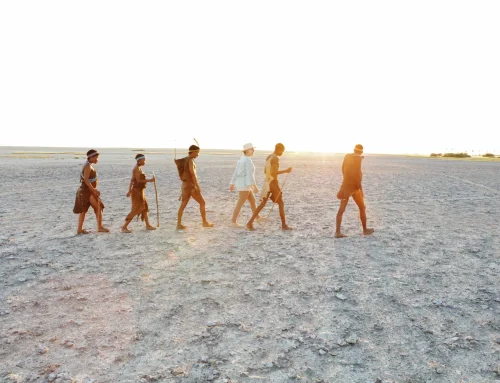
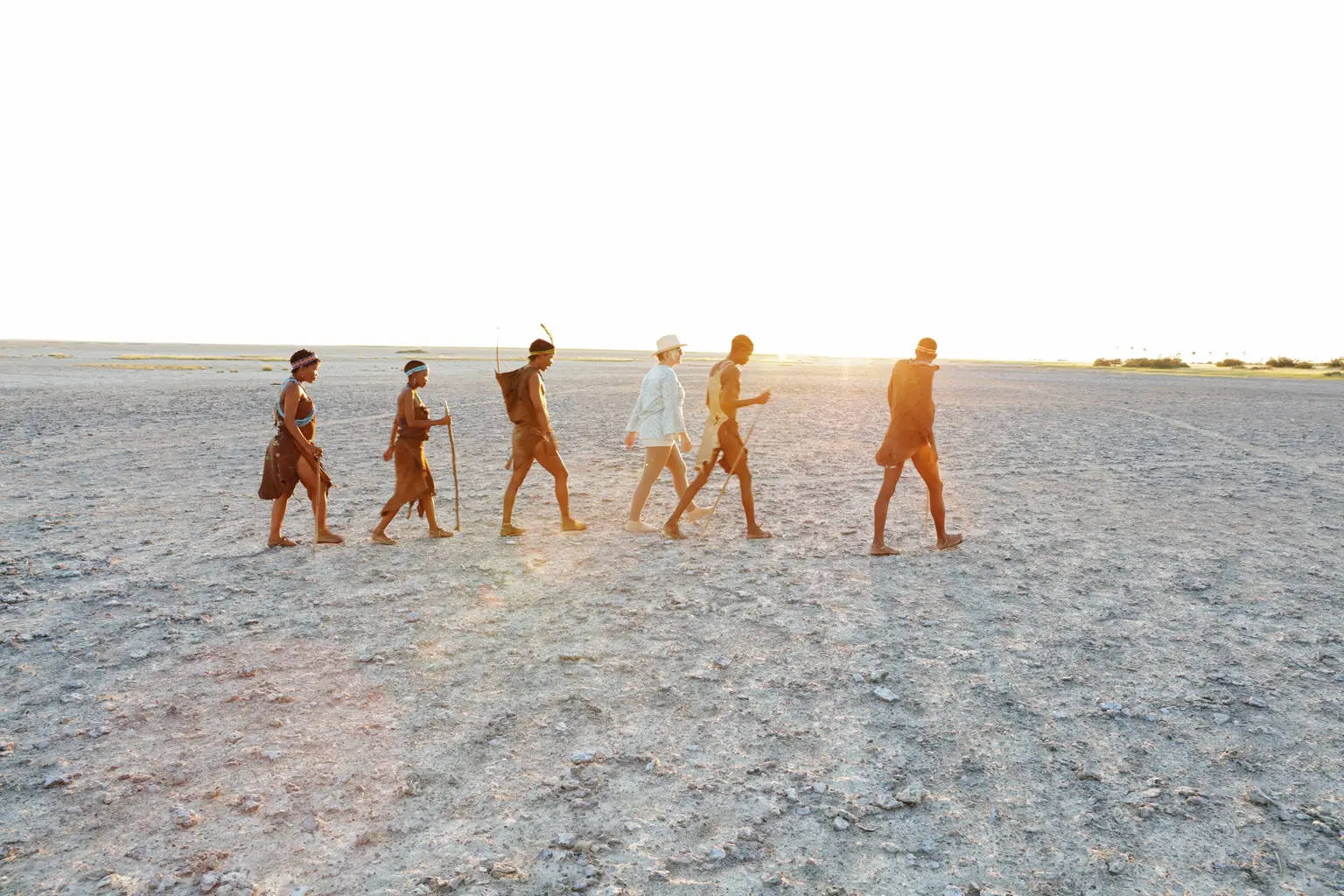
The Makgadikgadi Pans offer a striking contrast to Botswana’s watery north. In the dry months, the salt pans seem to extend beyond the horizon, a vast pale landscape where silence feels almost physical. After seasonal rains, grasses return and herds of zebra and wildebeest move through the wider ecosystem in one of Africa’s significant migrations.
Timing here is more variable than in destinations defined by permanent water. Rainfall determines where grazing develops, so travelers should approach the green season with flexibility rather than a fixed expectation of a single spectacle. The reward can be deeply memorable: zebra bands against storm-dark skies, curious meerkats at close range, and evenings beneath an immense southern sky.
Makgadikgadi is also ideal for travelers who want a safari with texture beyond traditional game drives. Depending on the season and location, experiences may include walking with habituated meerkats, quad biking on the pans, or sleeping out beneath the stars. These are not substitutes for the Delta or Chobe. They are a powerful complement to them.
7. Desert-adapted wildlife in the Central Kalahari
The Central Kalahari Game Reserve is for travelers drawn to space, silence, and wildlife adapted to a demanding environment. Black-maned Kalahari lions, cheetahs, brown hyena, bat-eared foxes, springbok, and oryx are among the species that make this landscape distinctive.
The green season, broadly from December through March, can be particularly rewarding as summer rains transform the grasslands and attract grazing animals. Predators follow, while dramatic clouds and fresh light create exceptional photographic conditions. The trade-off is heat, possible rain-affected roads, and a safari experience that feels less conventionally polished than a water-based Delta journey. For the right traveler, that sense of remoteness is precisely the point.
8. Birds, smaller species, and the moments between
Botswana’s wildlife story is much larger than the Big Five. The Okavango Delta is a superb destination for birding, with species such as African fish eagle, malachite kingfisher, lilac-breasted roller, wattled crane, and, in the right habitat, the rare Pel’s fishing owl. Chobe’s riverine edges and the Linyanti’s lagoons also reward travelers who look beyond large mammals.
Then there are the encounters no itinerary can script: a dung beetle steadily rolling its prize across a road, a chameleon changing course through camp vegetation, a herd of impala freezing as an unseen predator passes nearby. Guides create the conditions for these moments by sharing knowledge without over-directing the experience. That is where a safari becomes personal.
Planning the right Botswana wildlife itinerary
The finest wildlife itinerary depends on your priorities. A first-time safari may combine the Okavango Delta, Moremi or Khwai, and Chobe for water activities, varied game viewing, and elephant encounters. Returning travelers may add Savuti, Linyanti, Makgadikgadi, or the Central Kalahari to seek greater contrast and remoteness.
Consider how you want to travel as carefully as what you want to see. Private guiding offers flexibility for photographers, families, and guests who prefer longer time at a sighting. Smaller, characterful camps can bring a stronger sense of place, while exclusive-use villas suit families and private groups seeking complete privacy. Internal flights reduce long road transfers and reveal Botswana’s extraordinary landscapes from the air.
At Chloorokop Travel & Tours, each journey is shaped around the season, your interests, and the level of comfort and privacy you value. Thoughtful planning also means selecting partners who contribute to conservation, employ and develop local talent, and respect the communities living alongside wildlife.
Come to Botswana with a wish list, certainly, but leave room for the encounter you never expected. A pair of elephant tracks beside your breakfast table, the sudden wingbeat of a heron lifting from the reeds, or a lion’s call after dark may become the memory that stays longest.