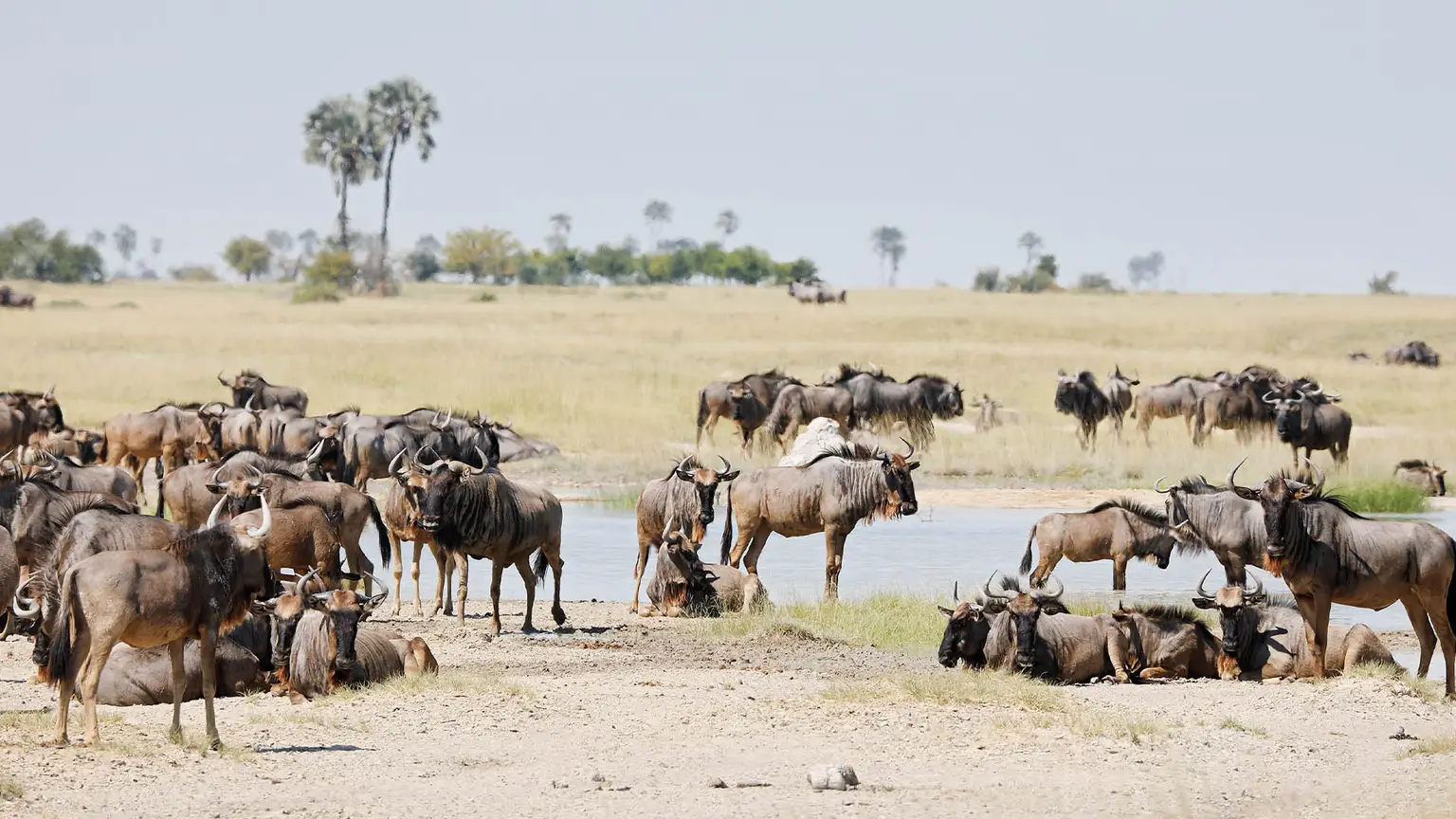
A zebra herd crossing the open grasslands after the first rains can make the Makgadikgadi feel impossibly vast and intensely alive. The top Makgadikgadi wildlife encounters are not always about ticking off the greatest number of species in a day. They are about space, season, and the rare privilege of watching animals move across one of Botswana’s most elemental landscapes.
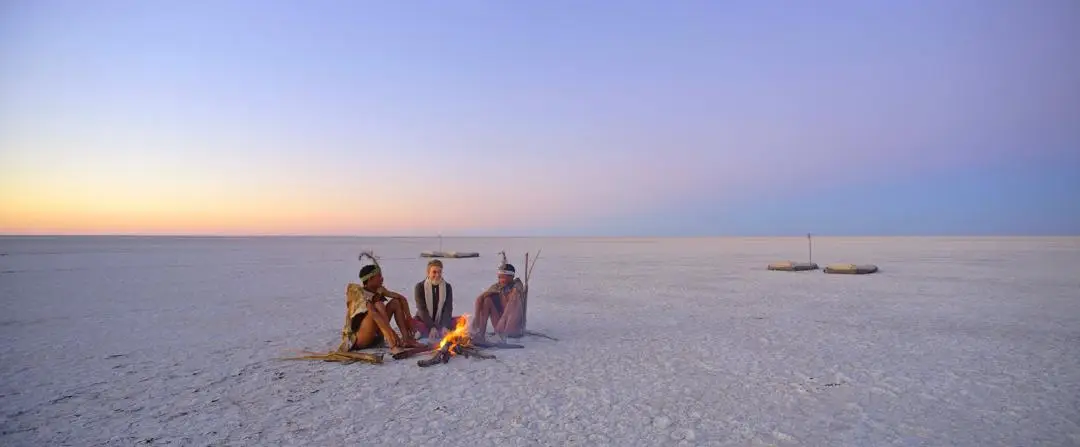
The Makgadikgadi Pans National Park and neighboring Nxai Pan form part of an ancient lakebed in northeastern Botswana. For much of the dry season, the salt pans appear almost lunar: white horizons, cobalt skies, and distant mirages. Then rain transforms the surrounding grasslands, drawing grazers, predators, and prolific birdlife into a landscape built for wide-angle wildlife viewing and unforgettable photographic moments.
Top Makgadikgadi Wildlife Encounters to Plan For
The zebra migration
The Makgadikgadi is central to one of Africa’s great, lesser-known wildlife movements: the seasonal zebra migration between the Okavango region and the salt pans. As rains replenish the grasslands, large herds of Burchell’s zebra travel toward the Makgadikgadi and Nxai Pan, often accompanied by blue wildebeest and springbok.
Seeing this movement is a study in scale. Lines of zebra can stretch across the plain, their stripes sharpened against fresh green grass and expansive cloud formations. Timing matters greatly. The migration responds to rainfall rather than a fixed calendar, although the green season, generally from around December through April, offers the strongest possibility of witnessing large concentrations.
For travelers who have already experienced the Delta’s waterways or Chobe’s elephant herds, this is a compelling contrast. There is less visual density than in some riverine reserves, but far more room to observe natural movement without feeling that the wilderness has been arranged around the vehicle.
Habituated meerkats at close range
Few encounters are as quietly joyful as spending time with a habituated meerkat family. In selected areas of the Makgadikgadi, guests may sit on the ground at a respectful distance while these alert, highly social animals forage, groom one another, and take turns standing guard.
Their familiarity with calm human presence should never be mistaken for tameness. The most rewarding experience comes from allowing the group to continue its routine without interference. A private guide will position guests carefully, explain the animals’ behavior, and ensure that photography never takes priority over their welfare.
This encounter works particularly well for families, honeymooners, and photographers because it is intimate without being rushed. Children see how cooperation functions in the wild; photographers can work at ground level; and couples often find that the stillness of the moment is as memorable as the images.
Flamingos and wet-season birdlife
When shallow water gathers across parts of the pans, the Makgadikgadi becomes a striking destination for birders. Lesser and greater flamingos may appear in impressive numbers, their pale pink bodies set against reflective water and immense skies. Pelicans, ducks, waders, and migratory species add to the sense of seasonal abundance.
Flamingo viewing is never something to promise on a specific date. Water levels, rainfall patterns, and conditions across the pans determine where birds gather and how long they remain. Yet for travelers willing to prioritize the green season and embrace nature’s unpredictability, this can be among Botswana’s most distinctive birding experiences.
The same season brings a different energy to the landscape. Thunderstorms build in the afternoon, grasslands turn luminous, and every game drive carries the possibility of new life: foals, calves, young antelope, and predators drawn to the seasonal feast.
Kalahari predators in open country
The Makgadikgadi’s wide visibility changes the way predator sightings unfold. Lions may patrol the grasslands, while cheetahs use the open terrain to scan for prey. Brown hyenas, among southern Africa’s most elusive carnivores, are also part of this ecosystem, though sightings require patience and good fortune.
Predator viewing here is often less predictable than in Botswana’s more wildlife-dense northern concessions. That is precisely its appeal for experienced safari travelers. A morning may involve tracking rather than immediately finding, reading prints in the dust, following alarm calls, and understanding how a guide interprets the terrain. When a sighting comes, it feels earned.
Smaller predators deserve equal attention. Bat-eared foxes, black-backed jackals, African wildcats, and honey badgers may emerge as the light softens. On a night drive where permitted, the desert’s quieter inhabitants can become the focus, including springhares, porcupines, and occasionally aardvark. These are never guaranteed sightings, but they give the Makgadikgadi its particular sense of discovery.
Desert-adapted wildlife and the quiet details
Not every defining Makgadikgadi encounter arrives with a herd or a dramatic chase. Look closely and the landscape reveals animals adapted to extremes: springbok poised on the horizon, ground squirrels darting between burrows, kori bustards moving through grass, and elephants occasionally passing through seasonally favored areas.
The giant baobabs of Nxai Pan add another dimension. Wildlife may gather in their shade, but the trees themselves bring scale and age to every scene. A guide who knows the area well will slow the experience down, helping guests notice tracks, dung beetles, raptors, and the changing textures of salt, sand, and grass.
When to Visit for Makgadikgadi Wildlife Encounters
There is no single best month because the encounter you want should shape the itinerary. The green season is ideal for the zebra migration, flamingos when conditions align, dramatic skies, and the vivid transformation of the pans. It is especially rewarding for returning safari guests who value behavior, landscapes, and photography as much as classic Big Five checklists.
The dry season, broadly May through October, brings clear days, cooler nights early in the season, and the surreal emptiness of the salt flats. Wildlife is generally more dispersed than around permanent water in the Okavango Delta or Chobe, but the atmosphere is extraordinary. This is often the better period for travelers who want to pair wildlife activities with the stark beauty of the pans, long horizon views, and a slower private safari rhythm.
A thoughtfully designed Botswana journey can combine the Makgadikgadi with the Okavango Delta, Moremi, Khwai, Savuti, or Chobe. The contrast is the point: water wilderness, woodland, predator-rich channels, and then the vast silence of the pans. Internal flights, road transfers, accommodations, and activity timing need to be planned as one connected journey, particularly during the rains when conditions can affect access.
How to Experience the Pans Responsibly
The Makgadikgadi rewards a light footprint. Vehicles should remain on established routes wherever possible, especially after rain when vulnerable soils and nesting areas can be disturbed. Wildlife viewing should be patient and unhurried, with no crowding, feeding, calling, or attempts to influence an animal’s behavior for a photograph.
Choice of camp and guide matters. Smaller, well-managed properties can support local employment, conservation partnerships, and carefully controlled access while providing the privacy, comfort, and excellent guiding expected of a luxury safari. The best itineraries also allow enough time. Two or three nights gives the landscape an opportunity to reveal itself beyond a single game drive.
At Chloorokop Travel & Tours, we design Makgadikgadi stays around what matters most to each traveler: migration timing, private guiding, family-friendly pacing, serious photography, or a wider Botswana and Southern Africa journey. The goal is not to rush through the pans, but to arrive at the right moment and leave space for the unexpected.
A Makgadikgadi safari is for travelers who understand that wilderness does not need to be crowded to be extraordinary. Wait for the zebra line to crest the grassland, listen to flamingos calling across shallow water, or watch a meerkat stand sentry in the morning sun. Those are the moments that stay with you, long after the salt dust has been brushed from your boots.