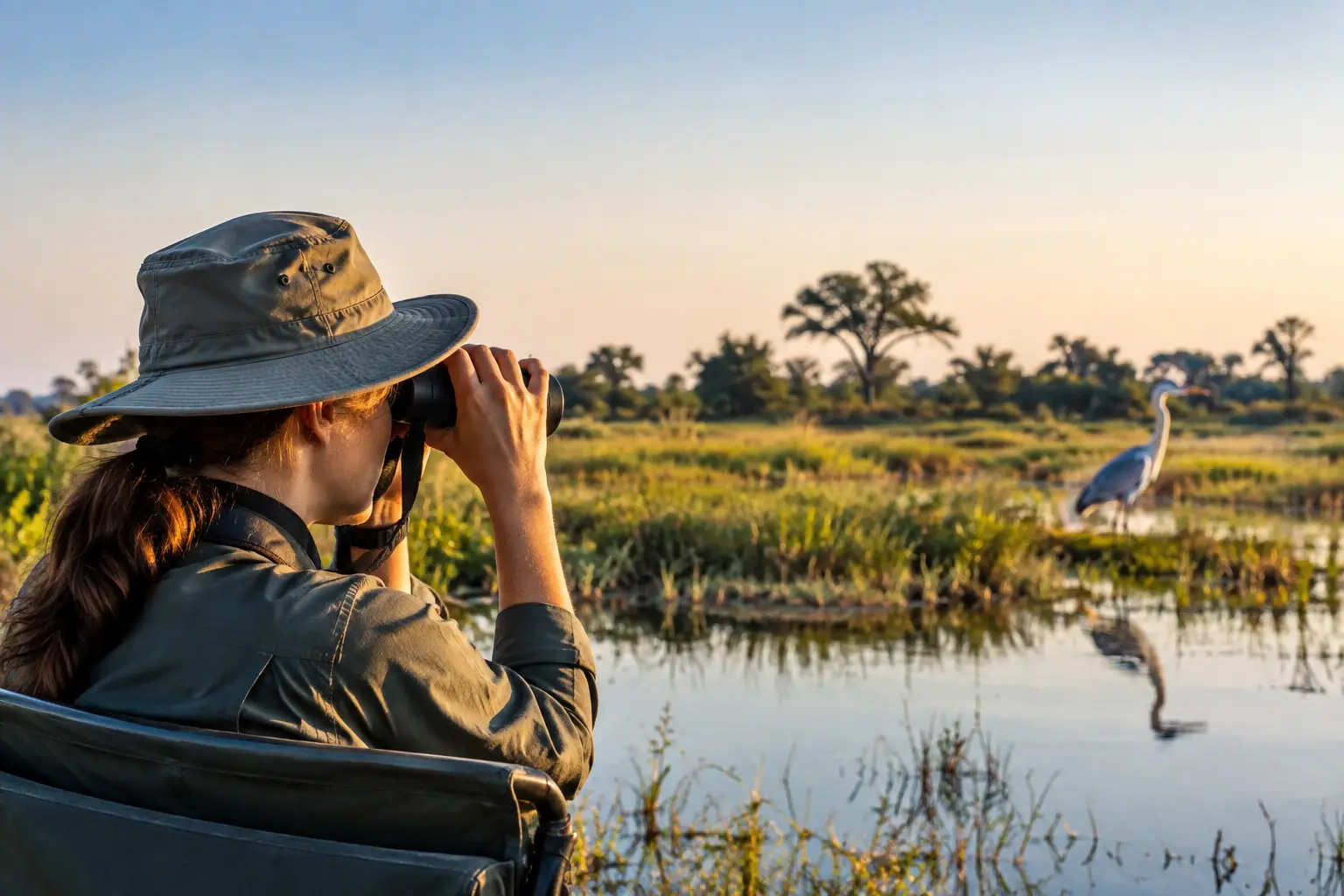
The first call from a Pel’s fishing-owl is often heard before it is seen: a deep, deliberate note carrying through the riverine forest at dusk. On a private guided birding safari, there is no need to rush past that moment to meet a group schedule. Your guide can wait, listen, reposition the vehicle or boat, and let the encounter unfold at the pace the wilderness allows.
For serious birders, enthusiastic beginners, photographers, and couples who want the wilderness with more privacy and comfort, Botswana offers an exceptional setting. Its permanent delta channels, mopane woodland, seasonal floodplains, salt pans, and river systems create striking habitat variety within one beautifully planned journey. The difference lies not only in where you go, but in how you move through these places.
Why Choose a Private Guided Birding Safari?
A private safari turns birding from a checklist exercise into a considered field experience. Your days are shaped around your interests, energy, preferred pace, and the conditions on the ground. If the morning light is perfect along a papyrus-lined channel, you can remain there. If a guide has heard of African skimmers working a particular stretch of water, the plan can change accordingly.
That flexibility matters because birding is rarely predictable. A rare sighting may require patience. Migrant activity can be most rewarding after rain. A photographer may want to return to the same lagoon at first light for a cleaner background, while another traveler may prefer to spend an unhurried hour understanding the calls and behavior of common species. Private guiding makes room for all of it.
It also allows a more personal level of interpretation. An experienced specialist guide does more than identify a bird. They place it within its habitat: why a wattled crane favors a particular wetland, how flood levels influence nesting areas, or where woodland species may be found as the afternoon cools. This depth brings the landscape into focus, whether you arrive with a life list or simply a strong curiosity about the natural world.
Botswana’s Birding Habitats, Thoughtfully Connected
Botswana is especially well suited to a tailor-made birding journey because its defining ecosystems are so distinct. A carefully paced itinerary can combine habitats without turning the trip into a sequence of hurried transfers.
The Okavango Delta: Water, Reeds, and Islands
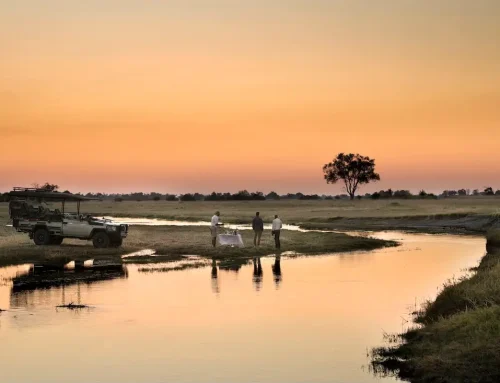
The Okavango Delta is a remarkable place to look for wetland and water-associated birds from a mokoro, a traditional dugout canoe, or a small motorboat where appropriate. Early mornings can bring reedbeds alive with calls, while shallow lagoons and floodplains create opportunities for herons, egrets, jacanas, kingfishers, geese, and raptors.
Certain species hold particular appeal for visiting birders, including slaty egret, African pygmy-goose, African fish-eagle, and, in the right riverine areas, the elusive Pel’s fishing-owl. Sightings can never be guaranteed, and that honesty is part of good safari planning. The value of a knowledgeable local guide is knowing which habitat, season, and time of day offer the strongest possibility, while ensuring the experience remains respectful of the bird and its environment.
The Delta is also a place where a birding day naturally includes more. Elephant herds may cross a channel beyond the reeds. Red lechwe can move through the shallows. At night, the soundscape shifts to frogs, insects, and distant hippos. Birding is the focus, but the broader wilderness experience adds texture to every outing.
Chobe and the Northern Rivers
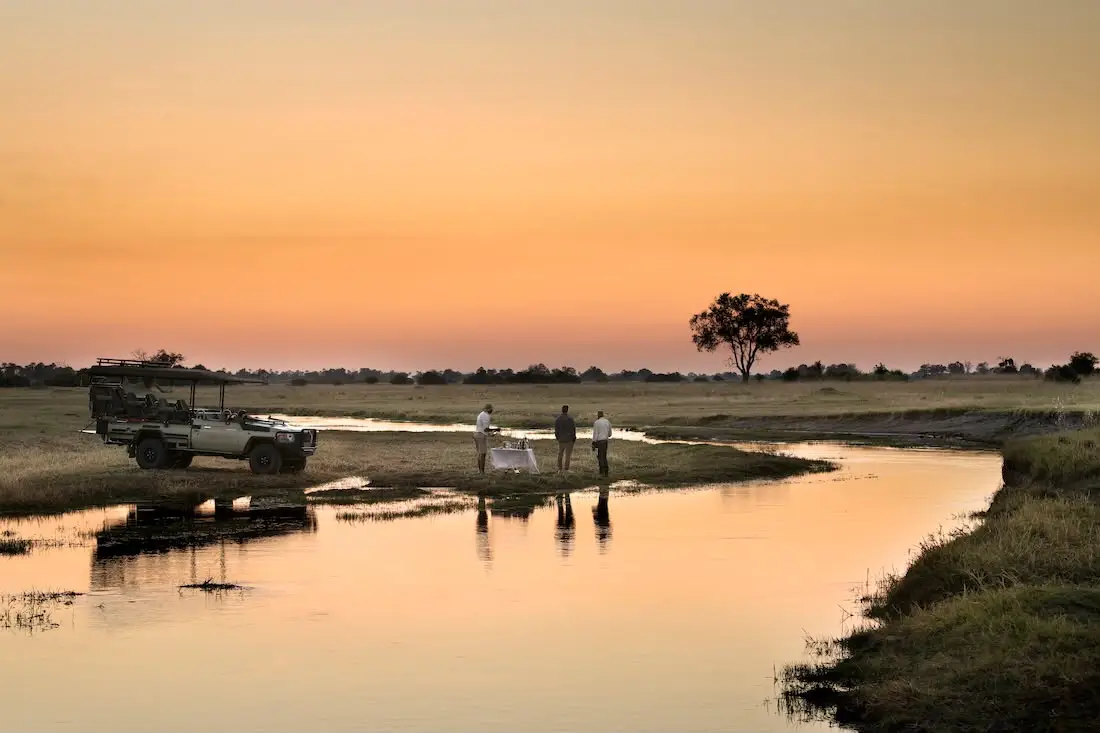
Northern Botswana’s riverfront habitats offer a different rhythm. Along the Chobe River, a private boat excursion can be one of the most rewarding ways to watch birdlife without disturbing it. Bee-eaters, swallows, waders, kingfishers, fish-eagles, and waterbirds gather around the river’s edges, while the changing light makes the landscape particularly compelling for photography.
Chobe can be a strong complement to the Delta for travelers who enjoy both birding and classic big-game viewing. The trade-off is that popular river sections can feel busier at certain times. A well-designed private itinerary addresses this through timing, quieter routes, and camps positioned for access to less pressured areas where possible.
The Makgadikgadi: Open Skies and Seasonal Change
The Makgadikgadi region delivers an entirely different visual world: immense horizons, grasslands, pans, and dramatic skies. After seasonal rains, the ecosystem transforms, drawing birds and wildlife to temporary wetlands and grazing areas. Flamingos may appear in favorable conditions, while raptors and grassland species add to the experience.
This is not a destination chosen for dense forest birding. It is chosen for space, atmosphere, and the thrill of watching a seemingly spare landscape become vividly alive after rain. For a traveler who appreciates ecological contrast, it can make a birding itinerary feel more complete.
The Guide Is the Heart of the Experience
In birding, a guide’s skill is often measured in the details: recognizing a distant silhouette against bright sky, identifying a call beneath a chorus of insects, or knowing when stillness will produce more than movement. On a private journey, that expertise becomes fully available to you.
The right guide will adapt their approach to your knowledge. Newer birders benefit from clear explanations and patient help with field marks. Experienced guests may prefer scientific names, nuanced identification discussions, and a more strategic focus on sought-after species. Photography-focused travelers may need guidance on vehicle positioning, light direction, ethical distance, and when to put the camera down because an encounter is best simply observed.
A private guide also bridges the practical realities of a safari. They coordinate with camp teams, monitor weather and water conditions, refine departure times, and help make transitions between locations feel effortless. Chloorokop Travel and Tours builds these details into each journey, pairing specialist interests with refined camps, private guiding, and carefully managed logistics.
Designing Days Around Birdlife and Comfort
The best birding days begin early, when the air is cool and activity is high. They do not, however, need to feel punishing. A private itinerary can include a leisurely breakfast back at camp, a midday rest by the pool or in your suite, and an afternoon outing timed for changing light and evening calls.
Accommodation is more than a place to sleep between game drives. The right camp may offer a productive lagoon edge, a shaded deck overlooking woodland, or an elevated viewpoint where binoculars are useful between meals. Excellent hospitality and serious birding are not competing ideas. In Botswana, they can belong naturally to the same day.
Season shapes the experience. The green season can be especially appealing for migrants, breeding plumage, dramatic skies, and lush landscapes, though rain and softer ground can affect access in some areas. Drier months often make wildlife viewing more concentrated around permanent water, but the feel of the landscape is different. There is no single best season for every traveler or every species, which is why an itinerary should begin with your priorities rather than a fixed template.
Birding with Purpose
A meaningful birding safari depends on healthy habitats, thoughtful camp operations, and guides who understand that proximity is not the same as quality. Ethical viewing means keeping appropriate distance from nests and sensitive species, avoiding pressure on birds for a photograph, and choosing operators whose presence supports conservation rather than disrupts it.
Responsible travel can also extend beyond the reserve boundary. Locally rooted guiding, employment, community partnerships, and respect for cultural knowledge help ensure that tourism has value for the people who live alongside wildlife. Luxury has greater meaning when it protects the very landscapes that make a journey extraordinary.
For guests, this approach creates a more authentic experience. You are not merely passing through a beautiful place. You are paying attention to it: the rise of floodwater, the route of a migratory bird, the work of a guide who has spent years reading a particular patch of wilderness.
What to Share When Planning Your Safari
The more clearly you describe your interests, the more finely a private birding itinerary can be shaped. Let your travel planner know whether you are building a life list, traveling with a non-birding partner, prioritizing photography, or hoping to combine birds with fishing, wildlife, wellness, or a milestone celebration.
Mention any species that matter to you, but leave room for surprise. A well-planned safari creates the conditions for exceptional sightings; it does not reduce nature to a guaranteed menu. Often, the memory that stays longest is not the hoped-for rarity, but an unplanned moment: a malachite kingfisher flashing over still water, a fish-eagle calling across the Delta, or the silence that follows as the sun drops behind the reeds.
Bring curiosity, comfortable neutral clothing, a field notebook if you enjoy recording observations, and binoculars you know how to use. Then allow time. In Botswana, the most rewarding birding is often found in the pause.