The moment a leopard lifts its head from the grass, a safari vehicle can become very quiet. Cameras rise, but the best image rarely comes from shooting first. It comes from reading the light, trusting your guide, and giving the animal enough space to behave naturally. Learning how to photograph big five wildlife is as much about patience and fieldcraft as it is about lenses and settings.
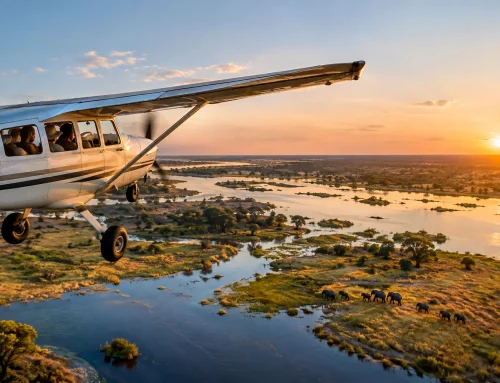
In Botswana, the Big Five – lion, leopard, elephant, rhinoceros, and buffalo – inhabit dramatically different environments, from the waterways and islands of the Okavango Delta to the woodlands of Chobe and the open plains around Moremi. A private, well-paced safari creates time to work with changing conditions rather than rushing from one sighting to the next. That is where memorable wildlife photography begins.
How to Photograph Big Five Wildlife With Intention
The Big Five are not a checklist, and a powerful portfolio does not require a tightly framed portrait of every animal. Photographing a lion in the last amber light, an elephant crossing a flooded channel, or a buffalo herd emerging through dust can tell a far richer story than a record shot.
Begin each game drive with a simple intention. You may want to capture behavior, a sense of place, family interaction, or the contrast between an animal and Botswana’s extraordinary light. Share that goal with your guide before departure. An experienced guide understands animal behavior and vehicle positioning, and can help anticipate a leopard’s likely path, an elephant herd’s movement, or where the early morning light will fall.
Patience is particularly valuable with the more elusive members of the Big Five. Leopard sightings can unfold in seconds, while rhinoceros are often encountered in carefully managed conservation areas. No responsible safari should promise a sighting. Wildlife remains wild, and that uncertainty is part of the privilege.
Choose a Camera Setup That Works in the Vehicle
You do not need a suitcase full of equipment to photograph well on safari. You do need a setup you can operate confidently when a scene changes quickly. A camera with good low-light performance, a fast autofocus system, and the ability to shoot in RAW offers useful flexibility when editing later.
For most guests, a telephoto zoom in the 100-400mm or 200-600mm range is the most practical lens. It allows you to photograph a lion at a respectful distance, frame a bird on a branch between larger sightings, and pull back when an elephant approaches the vehicle. A 70-200mm lens can be excellent for closer encounters and environmental portraits, particularly in the Delta where subjects may appear near a channel or beneath a canopy of trees.
A second camera body with a wider lens is valuable if photography is a central part of your journey. Wide-angle images place wildlife in context: a solitary bull elephant beneath storm clouds, buffalo moving across a Chobe floodplain, or lions resting amid the pale grasses of the Savuti. If you prefer one body, resist changing lenses in dusty conditions unless necessary.
Bring more memory cards than you think you will use, spare batteries, a soft cleaning cloth, and a protective bag for transfers. Beanbags supplied by some camps can stabilize a long lens against the vehicle rail. Tripods are usually impractical on game drives, while monopods can be useful in selected situations but may limit your movement in a shared vehicle.
Use Settings That Prioritize the Animal’s Movement
Wildlife does not wait for perfect settings. Set your camera before an encounter rather than after it begins. For moving animals, start with shutter priority or manual mode and aim for at least 1/1000 second. Increase to 1/1600 or 1/2000 when photographing a running lion, birds flushing from a buffalo herd, or elephants moving quickly through water.
For a resting leopard or a buffalo standing in still shade, you can slow the shutter speed, but remain alert. A yawn, a sudden head turn, or a change in posture may last a fraction of a second. Continuous autofocus and a small, flexible focus area are often better choices than a broad automatic area, especially when grass branches or other animals sit between you and your subject.
Early morning and late afternoon are the classic safari photography windows for good reason. Softer light brings warmth to fur and skin, creates catchlights in an animal’s eyes, and gives the landscape dimension. Midday can be harsh, but it is not a lost cause. Use it for graphic compositions, black-and-white work, or scenes that celebrate Botswana’s intense sun and expansive skies.
ISO is a tool, not a failure. It is generally better to accept a higher ISO and preserve a sharp image than to use a low ISO and blur a leopard’s face in fading light. Modern cameras handle noise remarkably well, especially when exposure is accurate. Avoid underexposing too aggressively, as lifting dark files later can reduce detail.
Focus on the Eyes, Then Tell the Wider Story
When the animal’s face is visible, focus on the nearest eye. This creates an immediate connection and gives even a simple portrait presence. Yet not every image needs eye contact. A lioness seen in profile against tall grass, an elephant’s weathered skin in close detail, or a buffalo’s silhouette in dust can be equally compelling.
Alternate between tight frames and wider compositions. A close portrait reveals character; a wider image reveals the place. Botswana’s wilderness is part of every sighting, and photographs that include water, grassland, woodland, or a dramatic horizon often carry a stronger sense of memory.
Photograph Each of the Big Five Differently
Lions reward observation. Watch for the moment before activity: a lioness rising from rest, cubs beginning to play, or adults gathering before an evening move. Keep your shutter speed high when behavior begins, and avoid cropping too tightly if you expect interaction between animals.
Leopards are often photographed in dappled shade or low light. Expose carefully for the face rather than the brightest patch of background, and use a wide aperture when the setting allows. If a leopard is in a tree, include enough of the trunk and branches to show its remarkable adaptability and concealment.
Elephants invite scale and detail. A telephoto lens can isolate an eye, trunk, or patterned ear, while a wide lens shows the sweep of a herd through a landscape. Never ask a guide to pressure elephants for a closer view. Their body language is clear to those who know it, and a calm, respectful encounter will produce better photographs than a forced one.
Buffalo are often underestimated by photographers, yet their heavy horns, mud-coated hides, and watchful expressions are full of texture. Photograph them in groups, where the density of bodies and layered faces can create a powerful frame. Dust, rain, and side light add atmosphere.
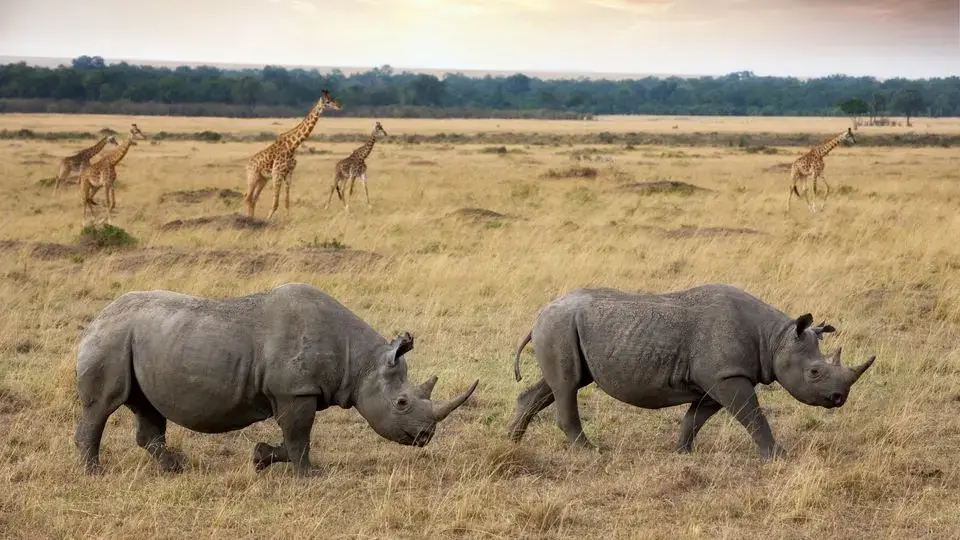
Rhinoceros photography requires exceptional sensitivity. Follow the instructions of guides and conservation teams without question, and never share real-time locations or identifiable details that could compromise security. A photograph should support appreciation for an endangered animal, not expose it to risk.
Let Ethical Fieldcraft Shape Every Image
The finest safari photographs are made without altering an animal’s behavior. Keep voices low, avoid sudden movements, and never use flash around wildlife. Do not call, clap, or play sounds to provoke a reaction. A guide may reposition the vehicle when it is safe and appropriate, but the animal always has the right of way.
Respect is also practical. A relaxed animal is more likely to remain visible, feed, groom, interact, or move through its habitat naturally. This gives you more time to compose and creates photographs that feel alive rather than pressured.
Ask before photographing people in communities, villages, or cultural settings, and listen to your guide’s advice about appropriate conduct. Responsible travel is not separate from a luxury safari experience. It is the foundation for meaningful access, enduring conservation, and the kind of welcome that cannot be staged.
Plan Your Safari Around Time, Not Just Sightings
For photographers, the rhythm of an itinerary matters. Two or three nights in a destination may deliver excellent wildlife experiences, but longer stays create the opportunity to revisit a pride, wait for changing weather, or return to a productive waterhole at different times of day. A tailored Botswana safari can balance predator-rich areas such as Moremi and Khwai with elephant country in Chobe or Linyanti, while allowing unhurried time in camp between drives.
Private guiding can be especially valuable for specialist photographers, couples on a honeymoon, and families with a strong interest in wildlife. It gives you greater control over pace, camera readiness, and how long you remain with a sighting. Still, flexibility matters. A wildlife photographer may have a detailed plan, but the day belongs to the animals and the weather.
The image you remember most may not be the closest one. It may be a lion disappearing into blue morning light, an elephant herd reflected in a Delta channel, or the quiet pause before a leopard steps into view. Travel beautifully, watch patiently, and let Botswana reveal the frame.