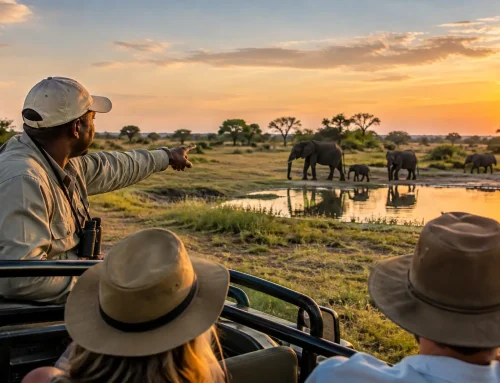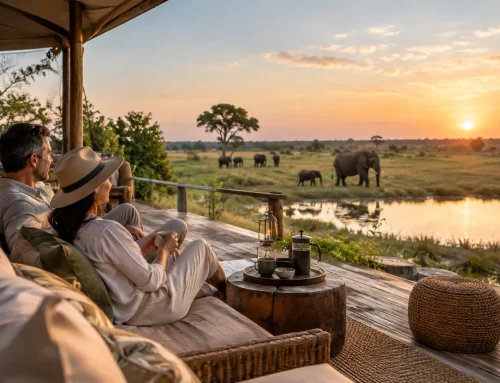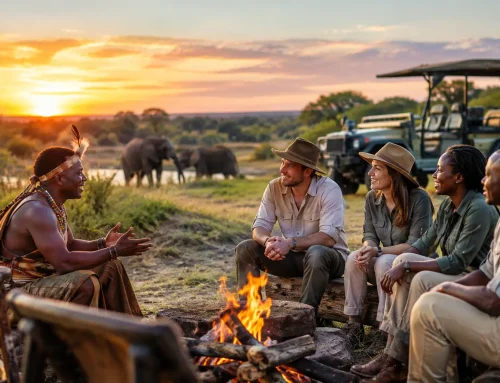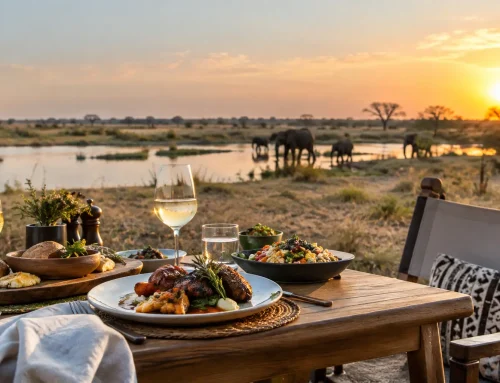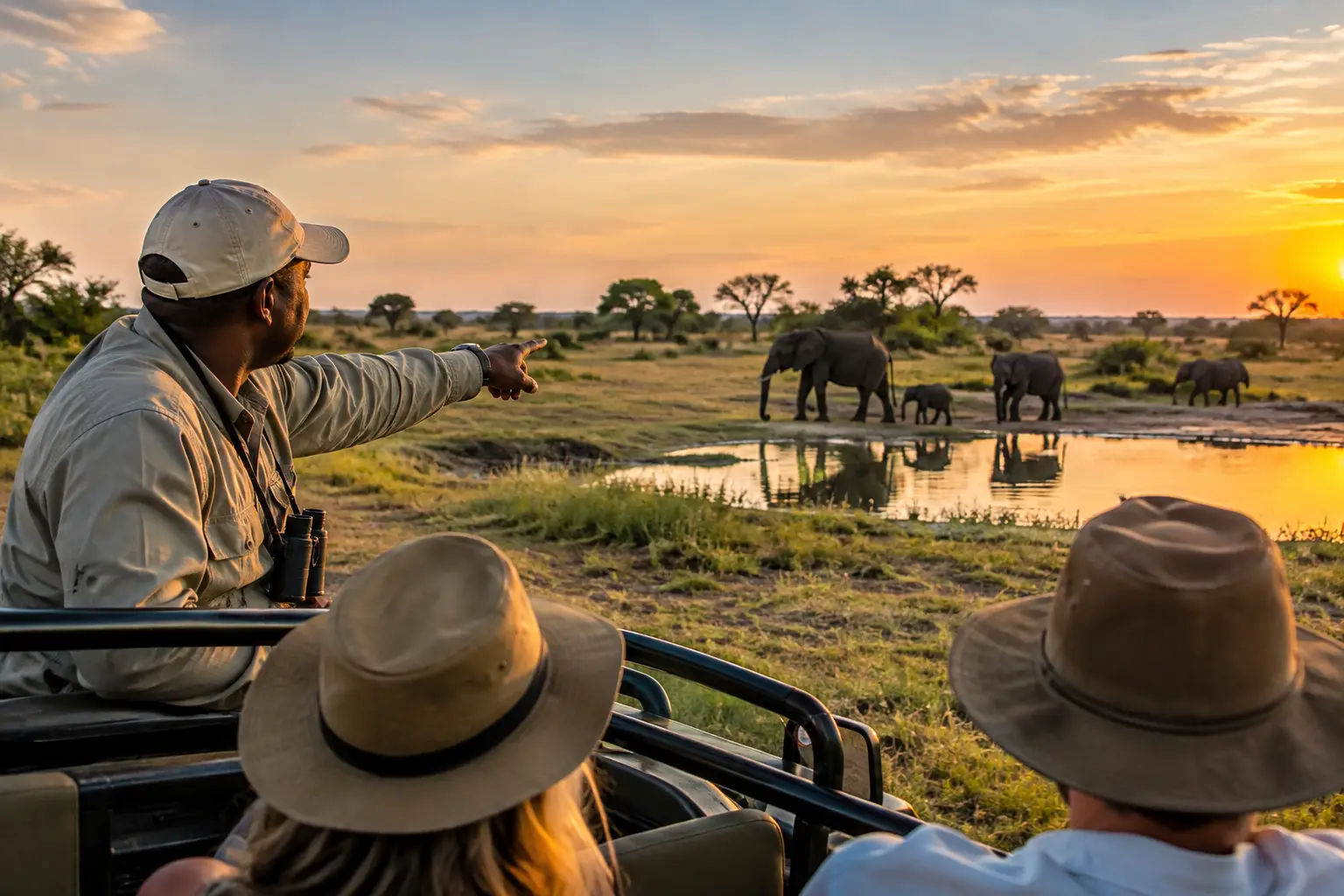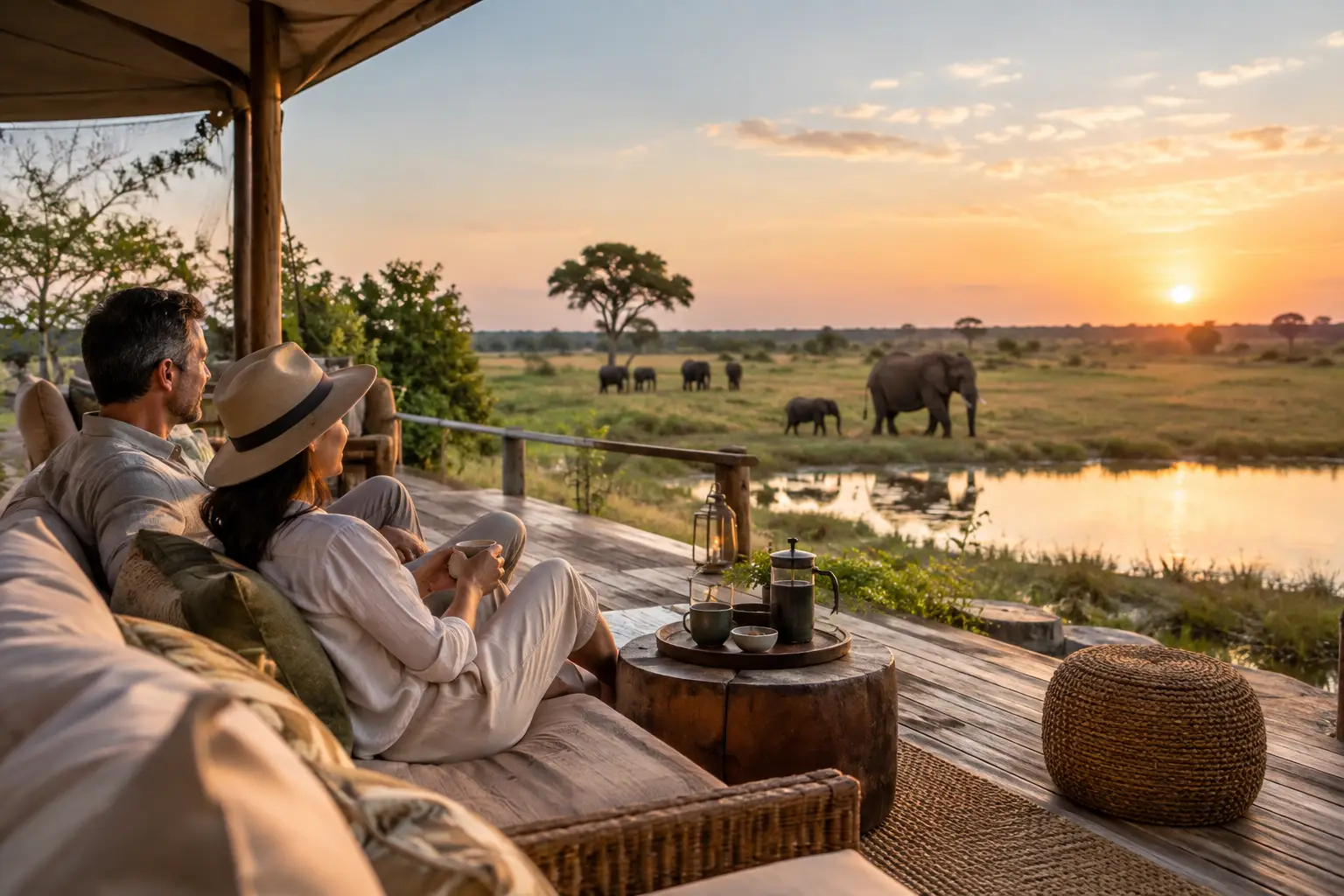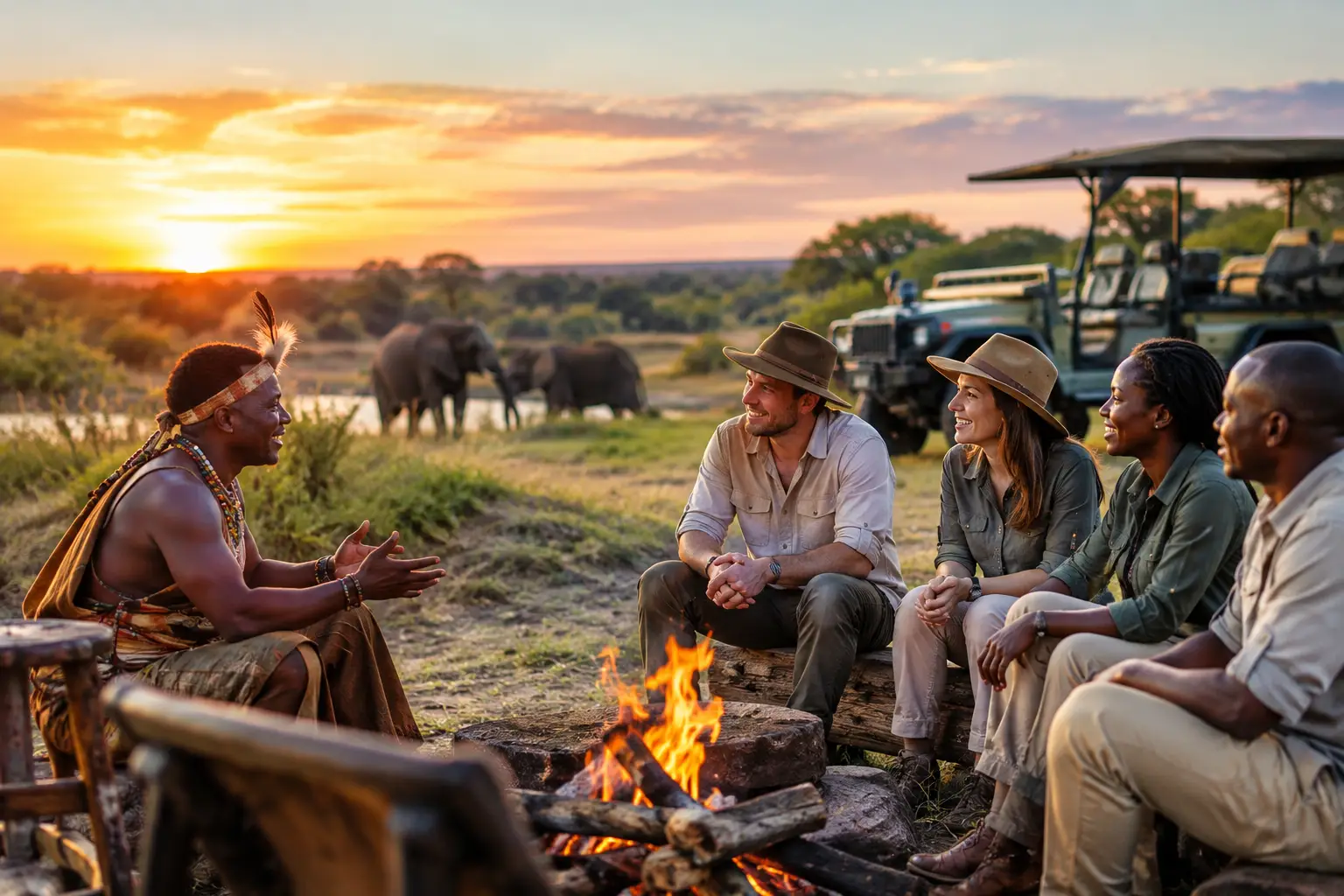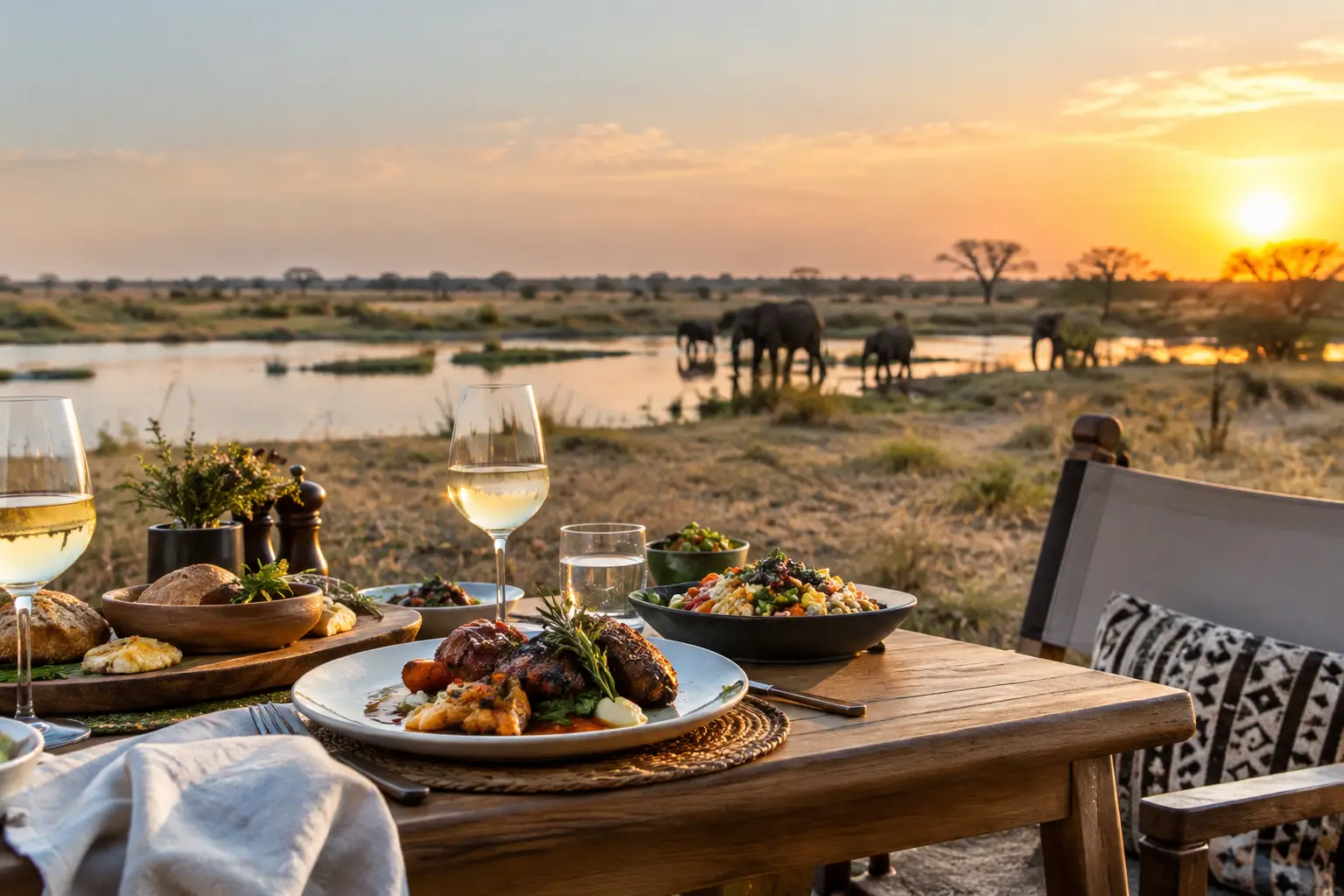
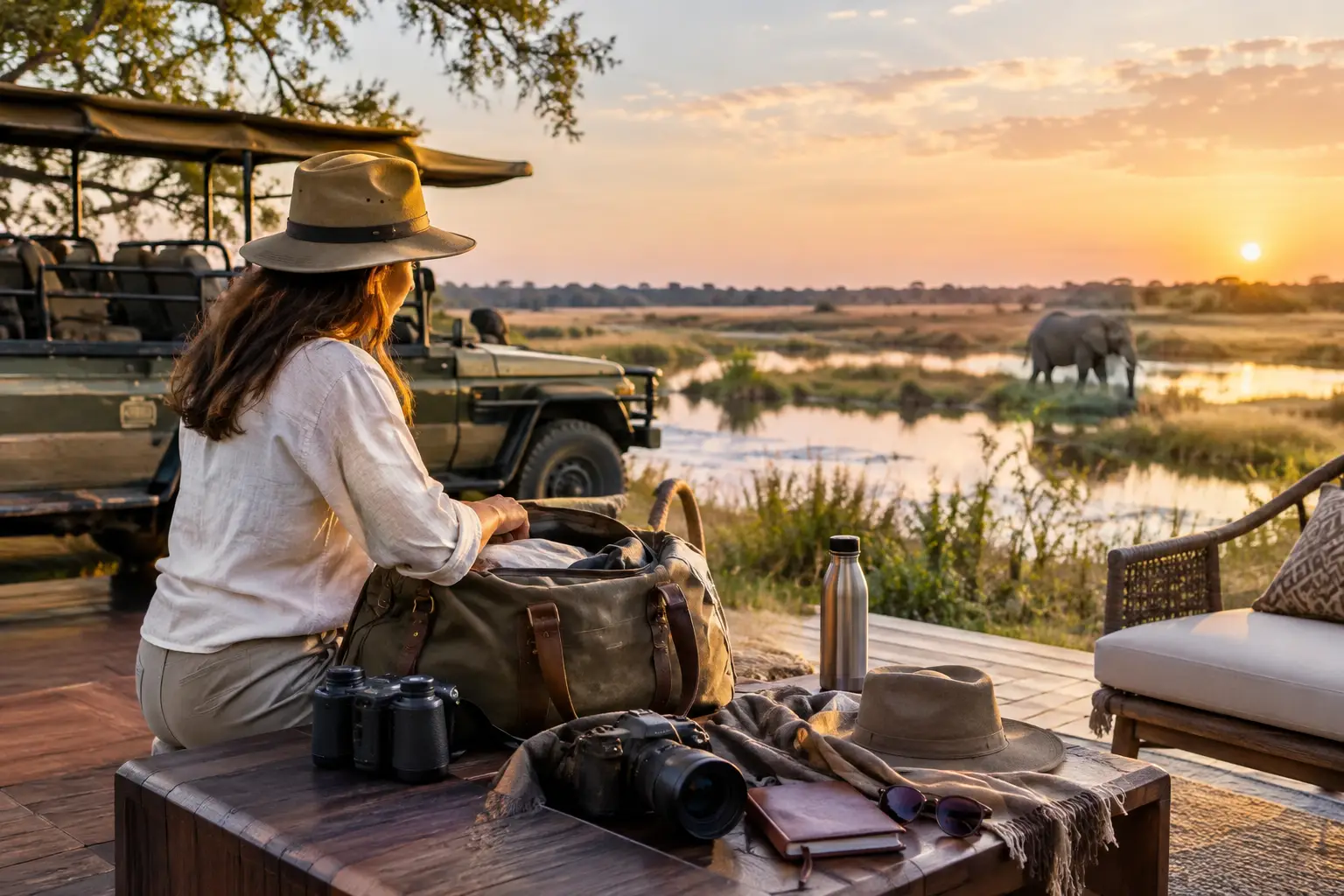
At 5:30 a.m. in the Okavango Delta, the air can feel unexpectedly crisp as you set out in an open vehicle. By midday, the sun is high, and by dinner you may be enjoying a candlelit meal beside the water. A considered luxury safari packing list is less about bringing more and more about choosing pieces that move comfortably through every part of the day.
On a tailor-made safari, your accommodations may be beautifully appointed, but the wilderness still sets the rhythm. Dust, changing temperatures, small-aircraft luggage limits, and early starts all matter. Pack for comfort, discretion, and ease, then leave room for the experiences you came to have.
Start With the Rhythm of Your Safari
A luxury African safari is not one setting. You may begin with a night in Johannesburg, fly by light aircraft into Botswana’s private concessions, explore the channels of the Delta by mokoro, and finish among the ancient baobabs of the Makgadikgadi. Each transition calls for a little planning.
Ask your travel designer about the season, the camps, and the activities confirmed for your itinerary. A walking safari has different footwear requirements from a photographic safari based around vehicles and hides. A fishing itinerary, gorilla trek, beach extension, or family journey across several countries will need its own refinements.
For most Botswana safaris, soft-sided luggage is the practical choice. Many bush flights have strict weight allowances, commonly including hand luggage, and hard-shell suitcases can be difficult to stow in smaller aircraft. Your itinerary team can confirm the allowance for every flight and arrange practical solutions where needed.
Clothing That Looks Polished and Works Hard
Choose breathable natural or technical fabrics in a restrained palette: khaki, stone, olive, taupe, soft gray, and muted blue all work well. These shades are practical in the bush and photograph beautifully without drawing attention away from the landscape. Avoid bright colors, stark white, and dark navy or black for daytime activities, particularly in areas where tsetse flies are present.
You do not need a different outfit for every day. Premium camps typically offer laundry service, often with a quick turnaround, though delicate items may not be suitable. A compact wardrobe with pieces that layer well is more useful than an overfilled bag.
For a typical seven- to ten-night safari, consider packing:
- Four or five lightweight shirts or blouses with sleeves for sun protection
- Two pairs of comfortable safari pants or tailored travel trousers, plus one pair of shorts if the itinerary and season suit them
- A light fleece, cashmere wrap, or insulating midlayer for dawn drives and cool evenings
- A packable waterproof jacket for green-season showers or Victoria Falls mist
- One relaxed, elegant outfit for lodge dinners, city stays, or a special private occasion
Long sleeves are valuable even in warm weather. They protect against sun, insects, and the chill of an open vehicle before sunrise. For cooler southern African winter months, generally May through August, add a warmer jacket, gloves, a beanie, and a scarf. In Botswana’s summer, lightweight layers and a proper rain shell are usually more useful than heavy outerwear.
Footwear for Game Drives, Walks, and Lodge Time
Comfortable, closed-toe shoes are essential, but bulky expedition boots often are not. For vehicle-based safaris, a well-broken-in pair of lightweight walking shoes or ankle boots is ideal. Add sandals, loafers, or polished slip-ons for time at camp.
If your itinerary includes guided walking, riding, trekking, or canoeing, choose footwear for that specific activity and break it in well before departure. Blisters have a way of becoming the least glamorous part of an otherwise extraordinary day. Bring a few pairs of moisture-wicking socks and consider a spare pair of shoes if your journey includes wet conditions.
The Safari Gear Worth Carrying
Binoculars are one of the few items that can transform how you experience a safari. Even with an expert guide close at hand, a compact pair lets you follow a leopard in a distant tree, study a lilac-breasted roller, or watch elephants cross a floodplain at your own pace. A high-quality 8x or 10x pair is a strong all-around choice.
Photographers should bring a camera body they know well, a versatile telephoto lens, spare memory cards, batteries, and a dust-resistant bag. A beanbag may be useful for vehicle photography, but check with your camp before carrying specialized accessories. Many camps can provide support or have practical alternatives available.
A smartphone is excellent for lodge moments and wide landscape images, but do not rely on it as your only camera if wildlife photography is a central purpose of the trip. Power availability varies by camp, although most luxury properties provide charging facilities. Bring the right plug adapters and a compact power bank for airport days and long transfers.
Sun, Insect, and Personal Care Essentials
Safari comfort is often decided by small things. Pack broad-spectrum sunscreen, SPF lip balm, sunglasses with good UV protection, and a wide-brimmed hat that stays secure in the wind. A refillable water bottle is useful for transfers, though camps will provide safe drinking water and often refill bottles for you.
For insect protection, carry a repellent recommended for your destination and personal needs. Malaria risk varies across Africa by region and season, so speak with a qualified travel health professional well before you leave. Your clinician can advise on vaccines, prescription medication, malaria prevention, and any individual considerations.
Keep prescription medications in your carry-on, in their original labeled containers, with enough supply for the full journey plus a few additional days. A small personal kit with pain relief, antihistamines, blister care, rehydration packets, and any preferred remedies is sensible. Your safari team can support you, but personal essentials are best kept close.
What Not to Pack for a Luxury Safari
A refined safari does not require formal eveningwear, excessive jewelry, or a large selection of handbags. Camp life is elegantly relaxed. One versatile evening look, simple accessories, and a lightweight crossbody or small day bag are usually enough.
Leave camouflage clothing at home. In several African countries, it may be restricted or reserved for military use. Drones are also not appropriate for most safari settings and can be prohibited in national parks, private concessions, and around wildlife. Their presence can disrupt animals and other guests’ experience of the wilderness.
Avoid packing valuable items you would worry about taking into the field. Bring travel insurance documentation, copies of important reservations, and a secure method for carrying passports and cards, but keep your luggage streamlined. The luxury lies in the space to look up, listen, and be present.
A Luxury Safari Packing List for Different Seasons
Botswana’s dry season, typically May through October, offers clear skies, cooler mornings, and excellent wildlife viewing as animals gather near water. June and July can be genuinely cold at dawn, especially in open vehicles, so warm layers are not optional. Days often become pleasantly warm, which makes layering essential.
The green season, roughly November through April, brings dramatic skies, migratory birds, newborn wildlife, and lush landscapes. It can be hot, humid, and punctuated by afternoon rain. Pack breathable clothing, a rain layer, and protective cases for cameras and electronics. This season is particularly rewarding for bird-watchers, photographers, and travelers drawn to the softer, more abundant side of the bush.
A safari across Southern Africa may involve several microclimates. Cape Town can be cool and coastal while the Delta is warm; Rwanda’s high-altitude forests require a different approach altogether. This is where a bespoke itinerary matters: packing advice should follow your exact route, not a generic checklist.
Leave Space for Meaningful Travel
Bring a small notebook if you enjoy recording sightings, conversations, or the names shared by your guide. The details become precious later: the first lion call after dark, the reed channels at sunrise, a community craftsperson’s story, or the quiet concentration of tracking wild dogs.
Packing thoughtfully also supports responsible travel. Reusable personal items reduce unnecessary waste, appropriate clothing respects local settings, and a lighter bag reduces complications on bush flights. These are small choices, but they help protect the places that make safari travel so remarkable.
Before departure, let Chloorokop Travel & Tours tailor your packing advice to the camps, flights, activities, and season ahead. Then pack lightly enough to return with what matters most: photographs, stories, and a deeper connection to Africa, personally.