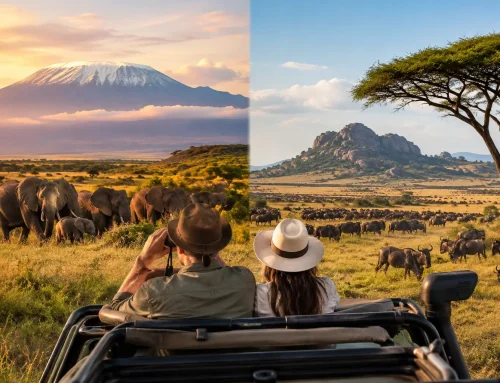
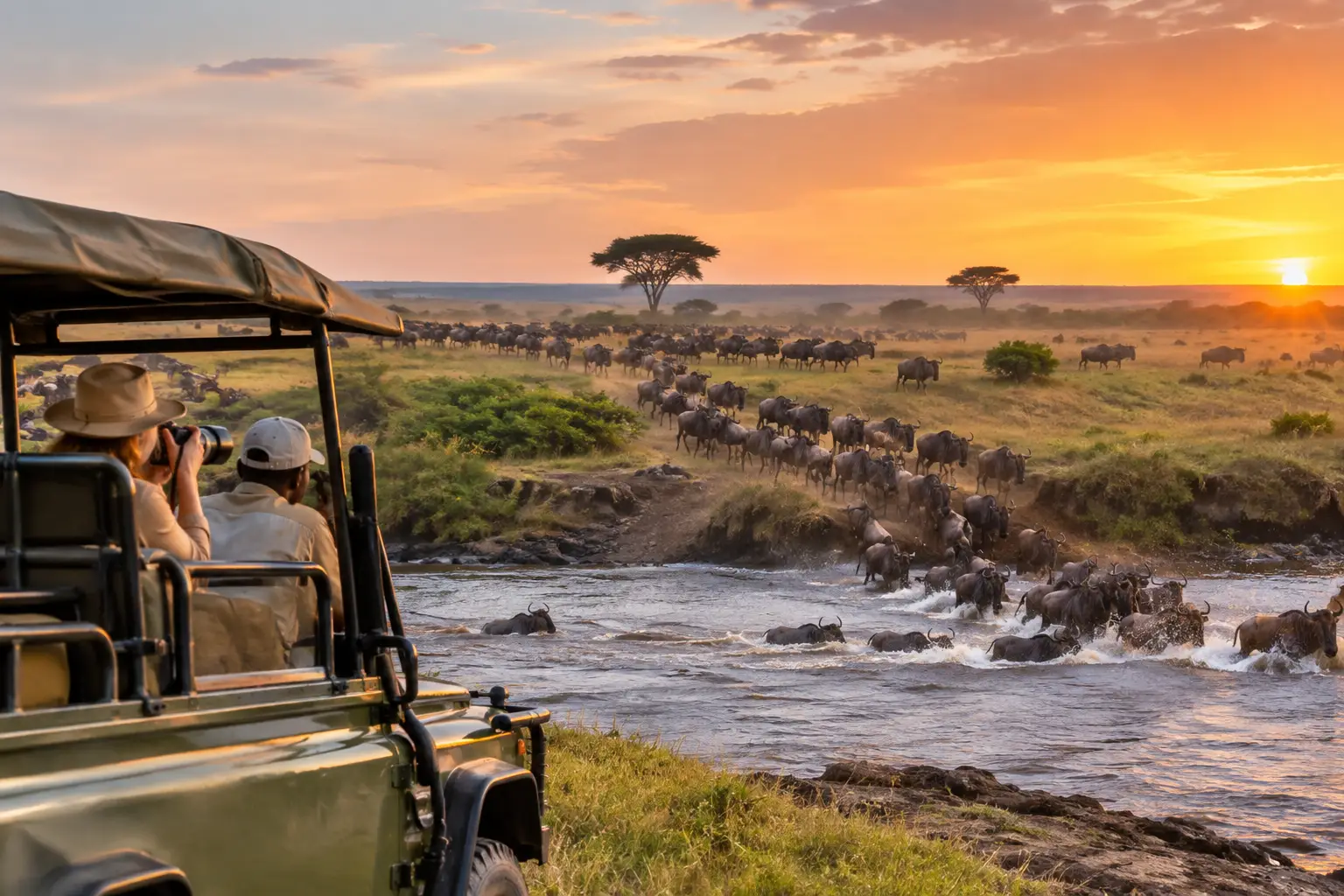
A line of wildebeest moves across the short grass at first light, calves keeping close to their mothers while zebra drift alongside them. This is the scale that defines Serengeti safaris: not a single wildlife encounter, but an unfolding natural event spread across nearly 5,700 square miles of northern Tanzania. Planning well means looking beyond a calendar label such as “migration season” and choosing the right area, camp style, guiding, and pace for the experience you want.
For travelers combining East Africa with Botswana or wider Southern Africa, the Serengeti is a compelling contrast to the watery channels of the Okavango Delta, the elephant-rich landscapes of Chobe, or the dramatic escarpments around Victoria Falls. It adds vast grasslands, big-cat country, and one of nature’s most compelling annual movements to a thoughtfully designed African journey.
Why the Serengeti Feels Different
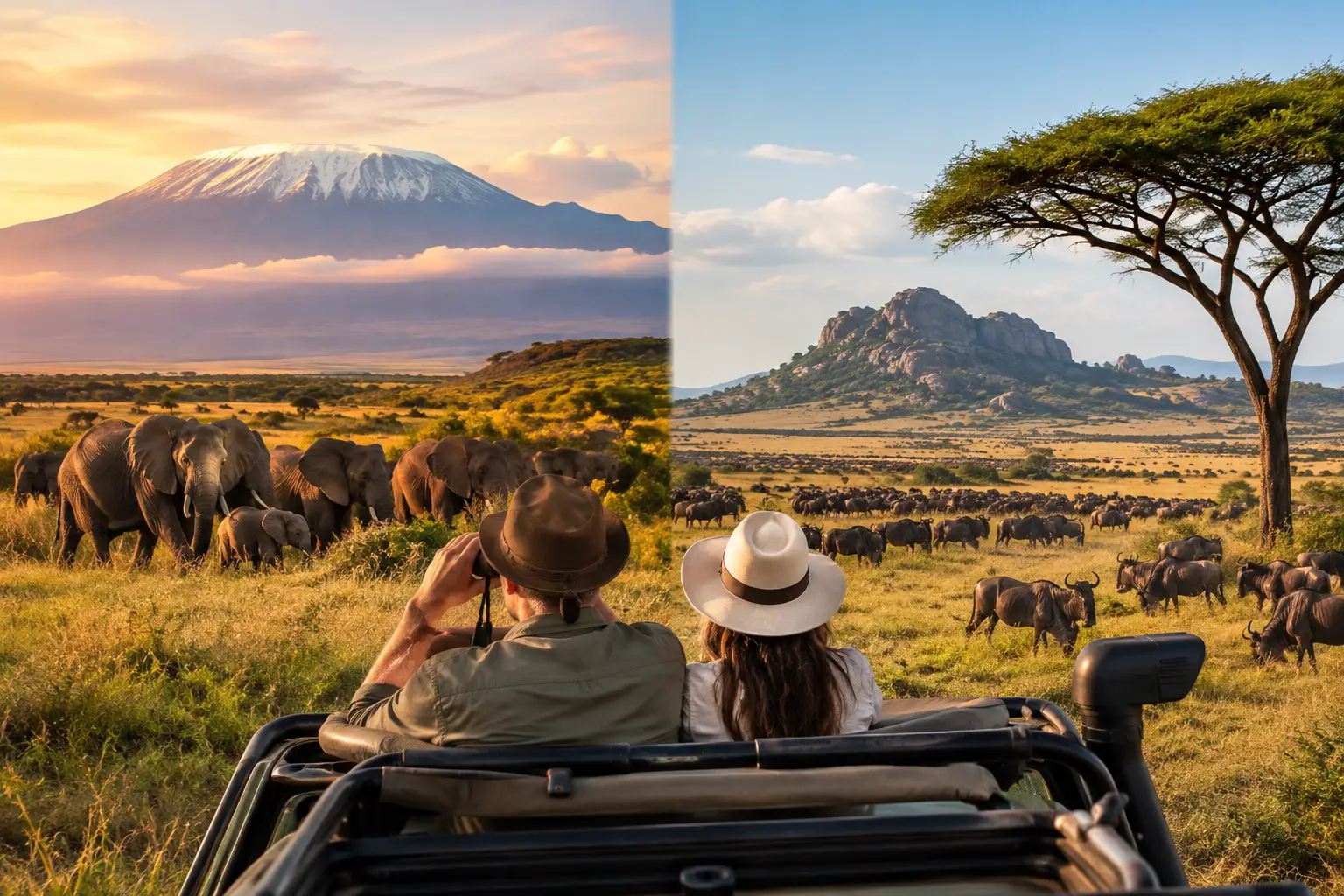
The Serengeti is often described through the Great Migration, and rightly so. More than a million wildebeest, accompanied by large numbers of zebra and gazelle, follow seasonal rains in a continuous cycle between Tanzania’s Serengeti and Kenya’s Maasai Mara. Yet the park’s real strength is that it remains rewarding even when the migration is elsewhere.
Resident lions patrol kopjes and river valleys. Leopards favor the shade of sausage trees along the Seronera River. Cheetahs use the open plains to their advantage, while spotted hyenas, jackals, elephants, giraffes, and an extraordinary variety of birds make every drive feel layered rather than repetitive. A well-paced safari leaves room for these quieter sightings, not only the headline moments.
The landscape also changes dramatically by region. The central Serengeti offers dependable year-round game viewing and easy access to varied habitats. The southern plains are known for wide horizons and the calving season. The western corridor follows river systems and woodland, while the northern Serengeti is associated with remote river crossings and a stronger sense of wilderness.
The Best Time for Serengeti Safaris Depends on Your Priorities
There is no single best month for every traveler. The migration moves in response to rain, so exact timing cannot be guaranteed. What can be planned is the strongest region for the season, with an itinerary designed to give you excellent wildlife viewing whether the herds are near or not.
January through March: Calving on the Southern Plains
From roughly January through March, the southern Serengeti and Ndutu area can host enormous concentrations of wildebeest. Calving typically peaks around February, when thousands of calves are born within a short period. The abundance draws predators, creating remarkable opportunities to observe lion, cheetah, hyena, and other species in a landscape alive with movement.
This period suits travelers who value behavior and photography as much as spectacle. It can also be an excellent choice for families with older children who are prepared for the realities of predator-prey encounters. The weather may include rain, but those green, open plains are part of the experience.
April through June: The Journey North and the Western Corridor
As the rains shift, the herds generally begin moving northwest through the central Serengeti toward the western corridor. April and May can bring lush scenery, fewer visitors in some areas, and atmospheric skies. Road conditions can be more challenging, which makes experienced ground handling and an adaptable schedule especially valuable.
By around June, the western corridor becomes a focus, with the Grumeti River adding tension to the migration’s progress. River crossings are unpredictable and should never be treated as a scheduled performance. Patience, a skilled guide, and sufficient time in the right area are more valuable than promises of a particular sighting.
July through October: Northern Serengeti and River Crossings
The dry season often brings the migration toward the northern Serengeti and the Mara River. This is the period many travelers associate with dramatic crossing scenes, though herds can cross multiple times, cross at unexpected locations, or wait for days. The northern Serengeti rewards guests who appreciate wild, spacious country as much as the possibility of a crossing.
Demand is high during these months, particularly for intimate camps in prime locations. Booking early allows for more choice in accommodation, private guiding, and charter flight schedules. It also makes it easier to combine the Serengeti with a Botswana safari without compromising the quality of either part of the journey.
November and December: The Return South
Short rains often encourage the herds to turn south again through the eastern and central Serengeti. Wildlife viewing remains excellent, landscapes begin to green, and the atmosphere can feel less crowded than peak dry-season months. For honeymooners and travelers seeking a more flexible rhythm, this can be a particularly rewarding time to travel.
Choosing the Right Safari Style
A Serengeti itinerary should reflect how you want to experience the wilderness, not simply how many nights you can fit into a schedule. A fly-in safari reduces long road transfers and gives guests a striking aerial perspective of the plains. It also preserves time for game drives, unhurried lunches, and afternoons at camp.
For many couples, a combination of two smaller camps works beautifully: perhaps several nights in the central Serengeti for diverse resident wildlife, followed by a seasonal camp positioned closer to the migration. This approach offers variety without constant packing and moving.
Families may prefer a lodge or camp with family accommodations, flexible dining, and guides experienced in tailoring drives to younger travelers’ attention spans. Private vehicles bring further flexibility, allowing families to return to camp when needed or linger at a sighting that captures everyone’s imagination.
Photography-focused travelers benefit from private vehicles, generous baggage planning on light aircraft, and camps chosen for access to specific habitats rather than just their visual appeal. Birders may wish to travel during greener periods, when migratory species and breeding plumage add another dimension to the safari.
Why Camp Location Matters More Than Camp Category
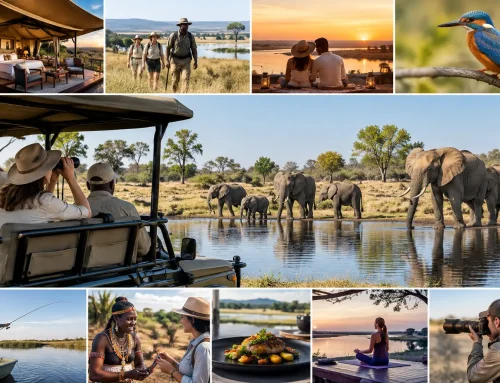
The Serengeti has refined lodges, elegant tented camps, and intimate mobile operations, each with a distinct appeal. Luxury is not only about the suite. It is about being close to the wildlife you came to see, having a guide who understands your interests, and returning from the plains to thoughtful hospitality, excellent meals, and privacy.
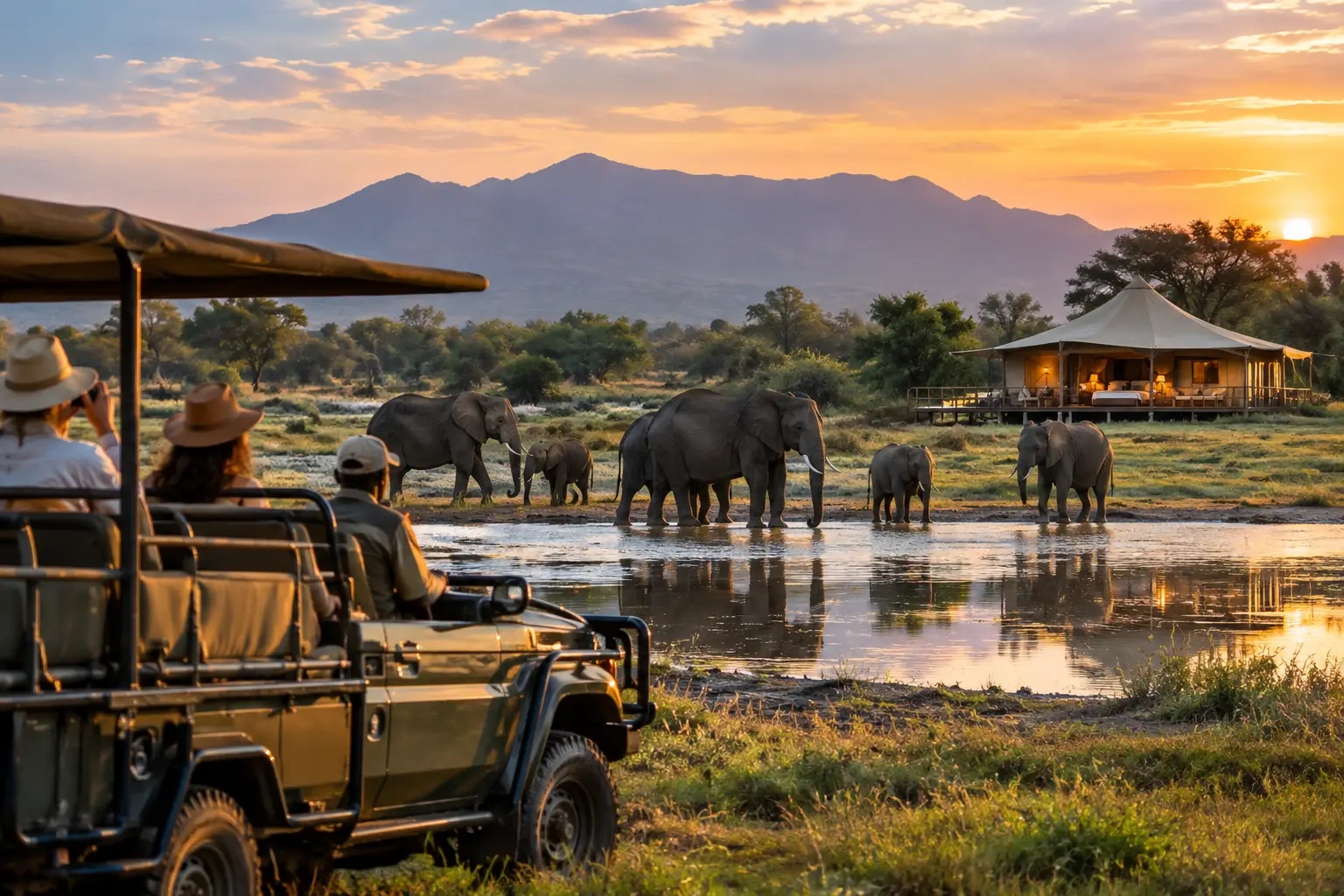
A permanent lodge may offer spacious rooms, a pool, and dependable access to a year-round wildlife area. A seasonal tented camp can place you nearer the migration in more remote country, with canvas walls, lantern-lit dinners, and the pleasure of hearing the night beyond your tent. Neither is automatically better. The best choice depends on the season, your comfort preferences, and whether your priority is location, amenities, or a balance of both.
Responsible camp selection matters too. Properties that employ locally, reduce unnecessary waste, manage water thoughtfully, and support surrounding communities help ensure that the Serengeti remains a living landscape rather than a backdrop for travel.
Pairing Tanzania With Botswana
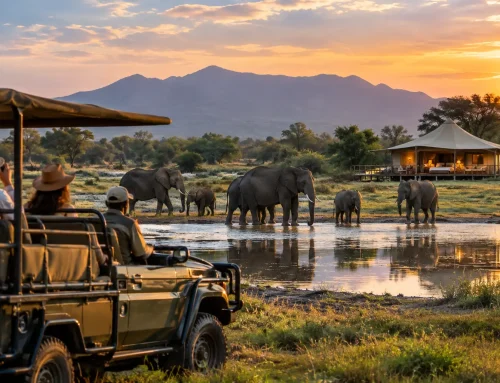
Tanzania and Botswana complement one another exceptionally well. The Serengeti offers broad savanna, vast herds, and classic predator viewing. Botswana brings a different tempo: mokoro excursions through the Okavango Delta, elephant encounters along the Chobe River, and secluded concessions where wilderness feels deeply personal.
The logistics need careful consideration. Safari regions are connected by light aircraft and regional flights, often through hubs such as Arusha, Kilimanjaro, Nairobi, Johannesburg, or Victoria Falls. Well-managed routing avoids unnecessary backtracking and protects the most valuable part of the trip: time in the wilderness.
A journey might begin with the Serengeti’s open plains, continue to Victoria Falls for a change of pace, then finish in Botswana with water-based activities in the Delta and land-based game viewing in a private concession. Others may add Rwanda or Uganda for gorilla trekking, or end in Mauritius or Mozambique with a few restorative days by the Indian Ocean.
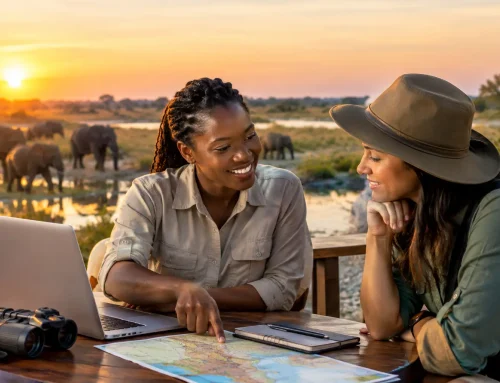
Chloorokop Travel & Tours designs these multi-country journeys with Botswana expertise at their core, coordinating the camps, flights, guides, transfers, and timing so every transition feels considered rather than complicated.
A Few Details That Shape the Experience
Allow enough time. Three nights in one Serengeti area is a useful minimum, but four or five nights can transform the experience by giving wildlife behavior time to reveal itself. Add a second region when the season and routing justify it, rather than moving simply to collect destinations.
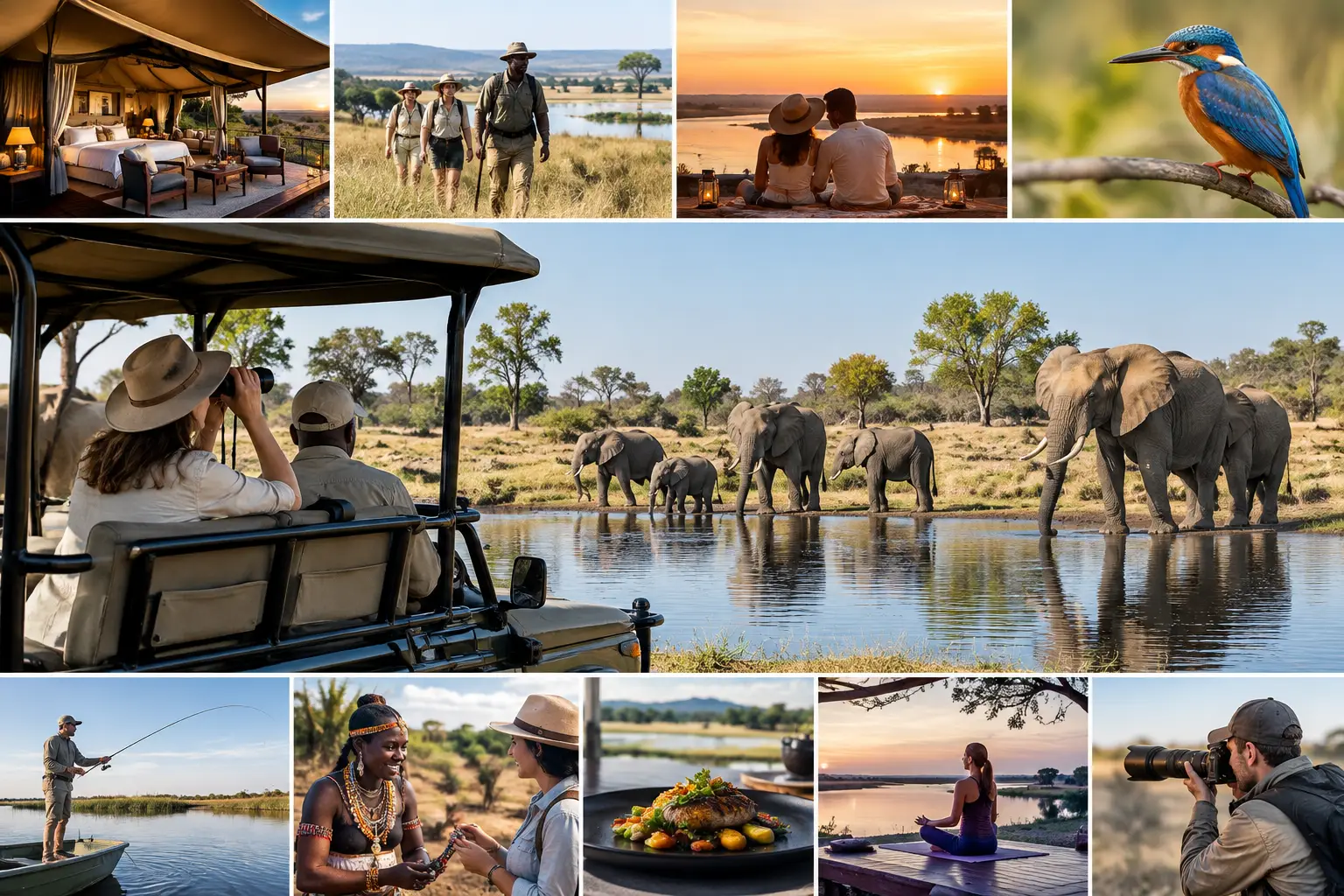
Game drives usually take place in the cool early morning and late afternoon, when animals are active and the light is beautiful. Midday can be a time to rest, read, enjoy camp, or take a private lunch overlooking the plains. Some areas allow carefully managed off-road viewing, while others do not, so expectations should be set according to the reserve and conservation rules.
Packing should favor soft-sided luggage for light aircraft, neutral layers for changing temperatures, sun protection, binoculars, and a camera you are comfortable using. More than anything, bring curiosity and patience. The most lasting safari memories are often unscripted: a lioness carrying her cub through tall grass, an elephant herd crossing a distant ridge, or the sound of wildebeest calling beyond camp after dark.
The Serengeti asks travelers to slow down and pay attention. Give it the time, the right seasonal setting, and expert local planning, and it becomes more than one extraordinary chapter of an African journey – it becomes the rhythm against which the rest of the journey is remembered.