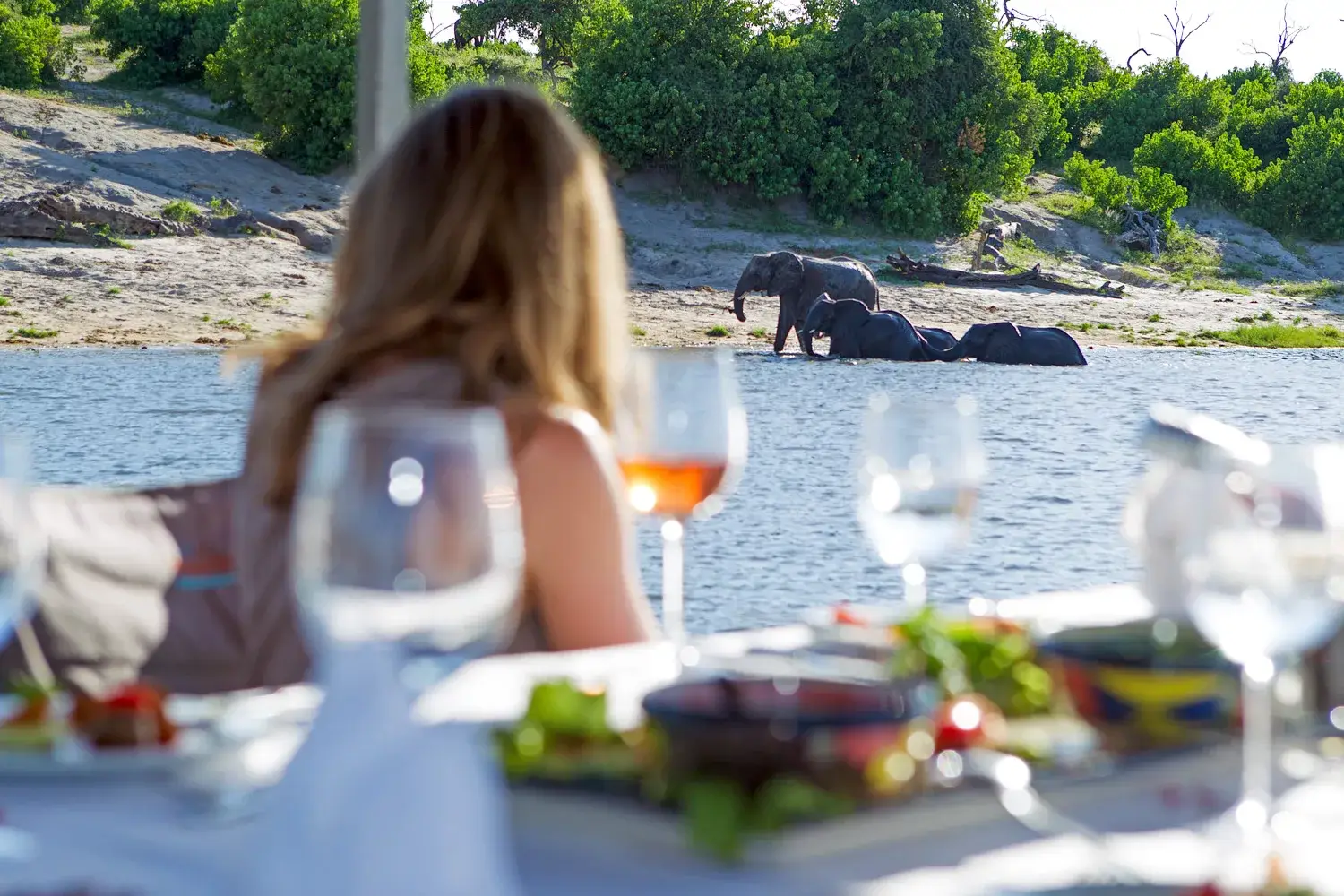
The first sight of elephants descending the Chobe Riverbank can make even seasoned safari travelers fall quiet. In this Chobe safari review, we look beyond the famous photographs to consider what a stay in northern Botswana actually feels like: abundant wildlife, water-based viewing, polished lodges, and a few important choices that shape the experience.
Chobe is not a wilderness destination for ticking off a single animal sighting. It is a place of movement. Elephant families cross dusty tracks, buffalo gather in immense herds, and boats drift past hippos at water level while fish eagles call overhead. For travelers who want a refined safari with consistently rewarding wildlife encounters, it deserves serious consideration.
What Makes a Chobe Safari Distinctive?
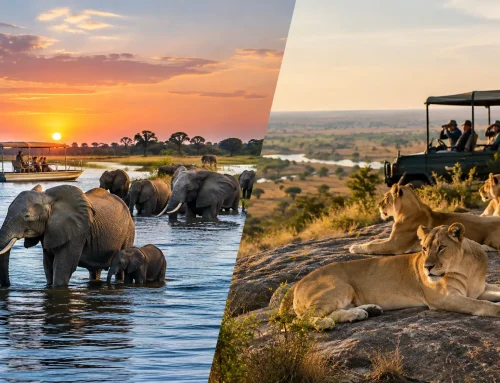
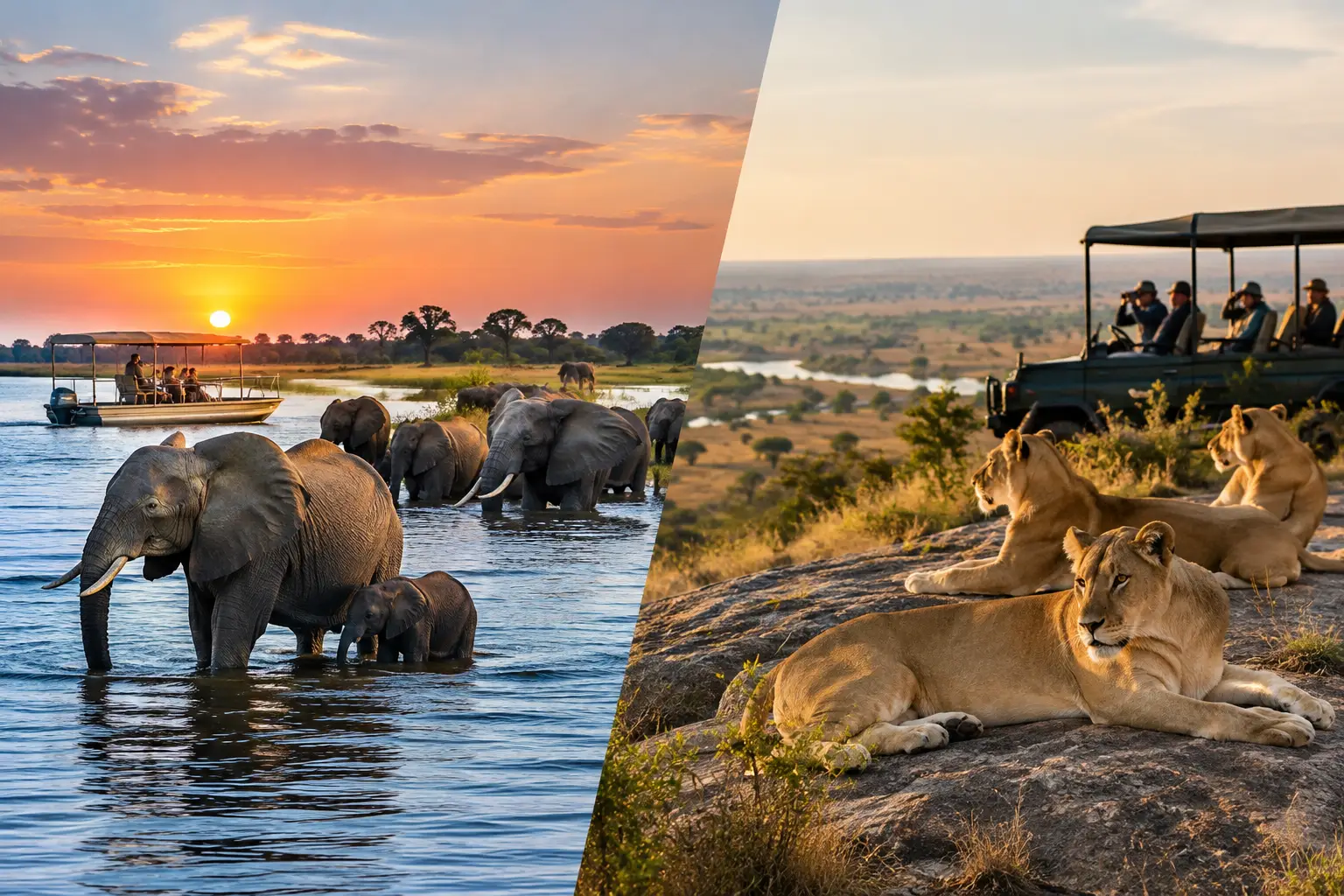
Chobe National Park is best known for its riverfront, where the Chobe River forms a natural boundary between Botswana and Namibia’s Caprivi Strip. This permanent water source draws exceptional concentrations of wildlife, particularly during the dry season. Elephants are the headline, but the experience is much broader: buffalo, giraffe, impala, sable and waterbuck appear along the floodplain, while lions and leopards are possible, if never guaranteed.
The defining feature is the choice of perspective. A morning game drive reveals tracks in the sand, distant cats, and herds moving through teak woodland. An afternoon on the river brings guests close to drinking elephants, crocodiles on the banks, and hippos rising unexpectedly beside the boat. These are not interchangeable activities. Together, they create a fuller understanding of how wildlife depends on the river.
For photographers, Chobe offers beautiful light and compelling behavior rather than only close portraits. A boat can place you at eye level with an elephant calf spraying water over its back. A game drive may deliver a lioness watching buffalo through pale grass. Birders also find considerable depth here, from African skimmers and kingfishers to African fish eagles and colorful bee-eaters, depending on the season.
Chobe Safari Review: The Experience Beyond Wildlife
A luxury Chobe safari is often easier to access than a remote fly-in camp, and that is part of its appeal. Kasane, the gateway town, has an airport and sits within reach of the Chobe Riverfront and Victoria Falls. For a first safari in Botswana, or a journey that combines Botswana and Zimbabwe or Zambia, this practical positioning can make the itinerary feel remarkably well paced.
That convenience does come with a trade-off. The Chobe Riverfront is popular, particularly in peak dry-season months, and certain viewing areas can see several vehicles or boats at once. Travelers seeking near-total isolation may prefer to pair Chobe with the Okavango Delta, Linyanti, Savuti, or Khwai, where the sense of remoteness can be stronger.
This is where lodge selection and activity timing matter. A well-planned stay uses early mornings and quieter stretches of river, avoids following the most obvious vehicle clusters, and gives guests enough time to experience Chobe at an unhurried pace. Private guiding can add further flexibility for families, photographers, and travelers with specific interests.
Accommodation around Chobe ranges from elegant riverfront retreats to intimate, design-led safari camps. The right choice depends less on a single definition of luxury and more on how you want to spend your time. Some guests value direct river views and a serene spa-like setting after game activities. Others prefer a smaller camp atmosphere, stronger guiding focus, and an itinerary built around long hours in the bush.
When Is the Best Time to Visit Chobe?
From roughly May through October, dry conditions concentrate animals near the Chobe River. Days are generally clear, vegetation is thinner, and elephant sightings are especially prolific. This is the classic season for travelers who prioritize wildlife density and comfortable daytime conditions, although nights and early mornings can be cool.
September and October can offer dramatic encounters as heat intensifies and animals depend heavily on the river. They can also feel busier, especially around the most accessible riverfront areas. For many luxury travelers, a thoughtful itinerary during this period includes a river cruise at a less crowded time of day and game drives planned around animal behavior rather than a rigid schedule.
The green season, typically from November through April, offers another kind of beauty. Rain refreshes the landscape, birdlife becomes particularly rewarding, and the colors shift from dusty gold to vibrant green. Wildlife disperses more widely, so sightings can require more patience, but the atmosphere is softer and more intimate. It is an excellent choice for repeat safari guests, birders, and photographers who enjoy dramatic skies and a changing landscape.
Weather patterns vary from year to year, and the best month depends on your priorities. A specialist itinerary should begin with what you hope to feel and see, not simply a calendar recommendation.
How Many Nights Should You Spend in Chobe?
Two nights can introduce the essential rhythm of Chobe: one river activity, one or two game drives, and time to settle into the lodge. Three nights is usually more satisfying. It allows space for the unexpected, whether that is an extended elephant encounter, a rare predator sighting, or a leisurely afternoon on the water without feeling rushed.
For a longer African journey, Chobe works beautifully as part of a considered sequence. Pair it with the Okavango Delta for contrasting water wilderness, with Savuti for a more remote and predator-focused chapter, or with Victoria Falls for a powerful shift from quiet wildlife viewing to one of Africa’s great natural spectacles.
Families often appreciate Chobe’s accessible logistics and varied activities. A private vehicle or guide can make the pace more comfortable for different ages, while river cruises offer an engaging alternative to repeated drives. Honeymooners may prefer a quieter lodge and a combination that includes a more secluded Botswana camp after Chobe’s wildlife-rich riverfront.
Who Will Love Chobe, and Who May Prefer Elsewhere?
Chobe is particularly suited to travelers who want reliable, high-volume wildlife viewing without sacrificing comfort. It is rewarding for first-time safari guests, multigenerational families, couples combining Botswana with Victoria Falls, and anyone drawn to elephants and water-based activities.
It may be less ideal as a stand-alone choice for travelers whose highest priority is exclusivity, walking safaris, or days without seeing another vehicle. That does not diminish Chobe. It simply means the destination should be matched honestly to the traveler. Botswana offers remarkable variety, and a personalized route can balance Chobe’s abundance with the stillness of a more remote concession or delta camp.
Responsible travel also matters here. Chobe’s wildlife is part of a living ecosystem shared across borders and supported by conservation efforts, local communities, and careful tourism management. Choose partners that employ knowledgeable local guides, respect wildlife space, minimize unnecessary disturbance, and create meaningful local benefit alongside an exceptional guest experience.
The Value of Expert Safari Planning
A Chobe itinerary can look simple on paper, but the details determine whether it feels ordinary or deeply personal. Flight schedules, lodge location, boat departure times, private versus shared activities, dietary preferences, family needs, and onward travel all deserve careful coordination.
As a Botswana-born DMC, Chloorokop Travel & Tours designs Chobe stays around those details, then connects them naturally to the wider journey. The goal is not to fill every hour. It is to create room for the moments that cannot be scheduled: the hush before an elephant herd enters the water, the last amber light on the river, and the feeling of being exactly where you should be.
Chobe is at its best when you allow it time. Stay long enough to see the river change through the day, travel with curiosity, and let a thoughtfully designed safari turn remarkable sightings into a lasting connection with Botswana.