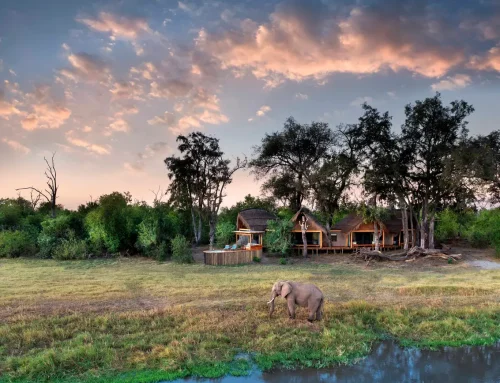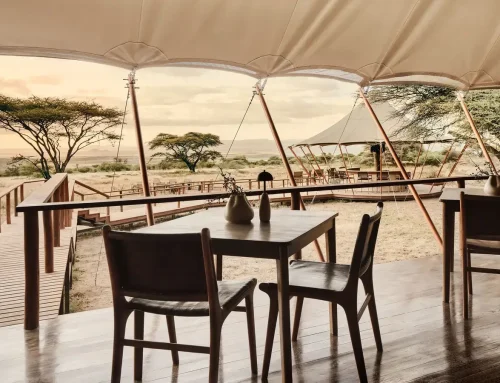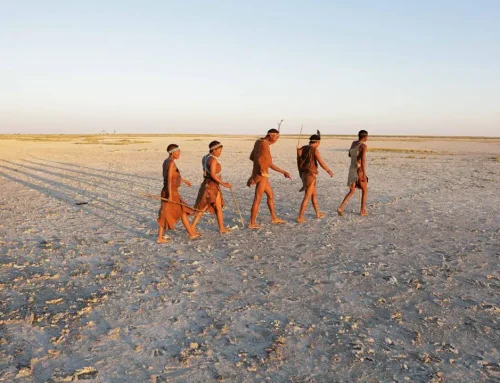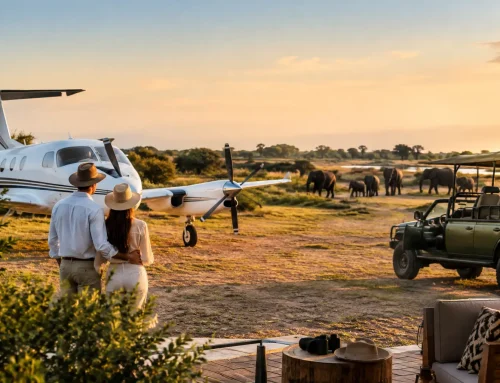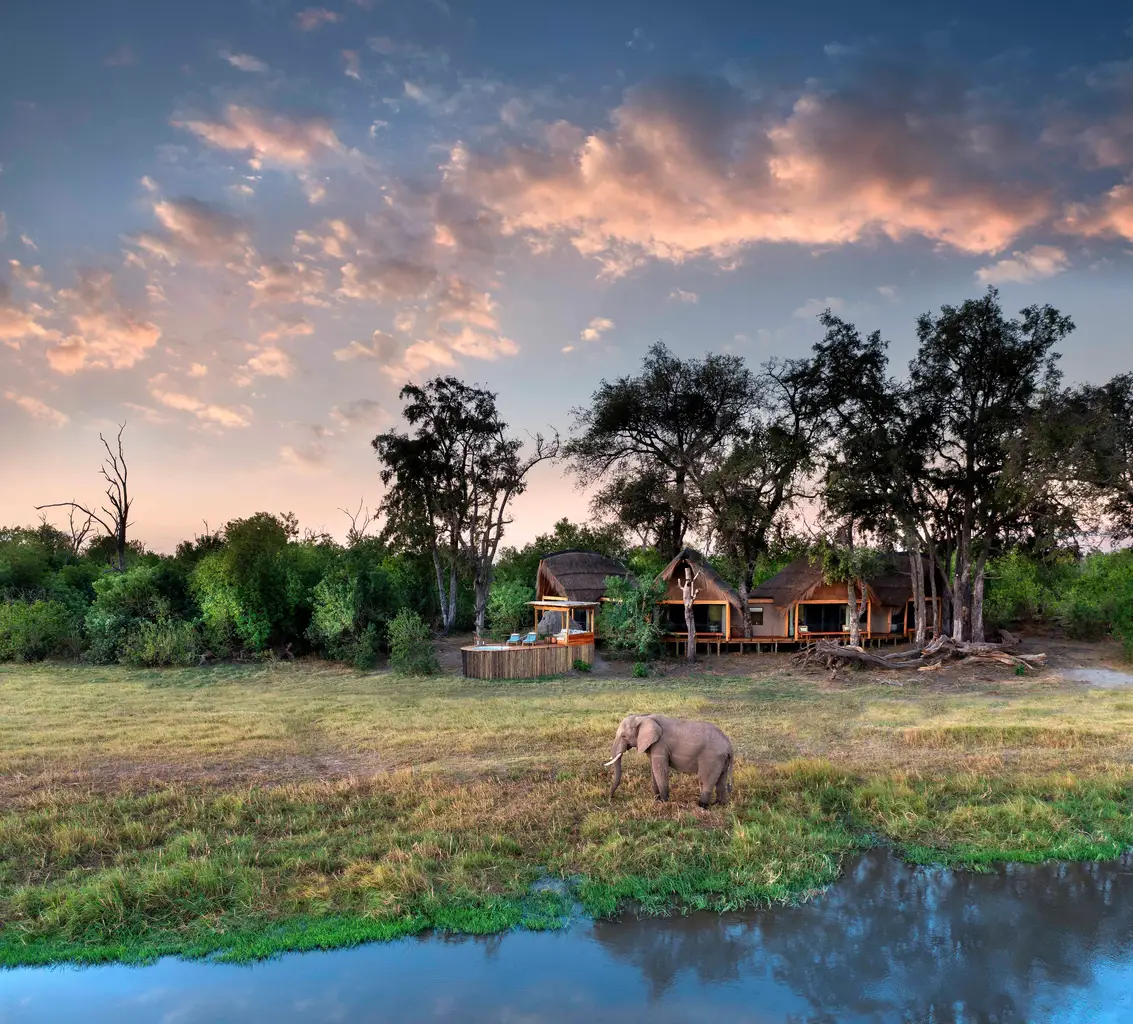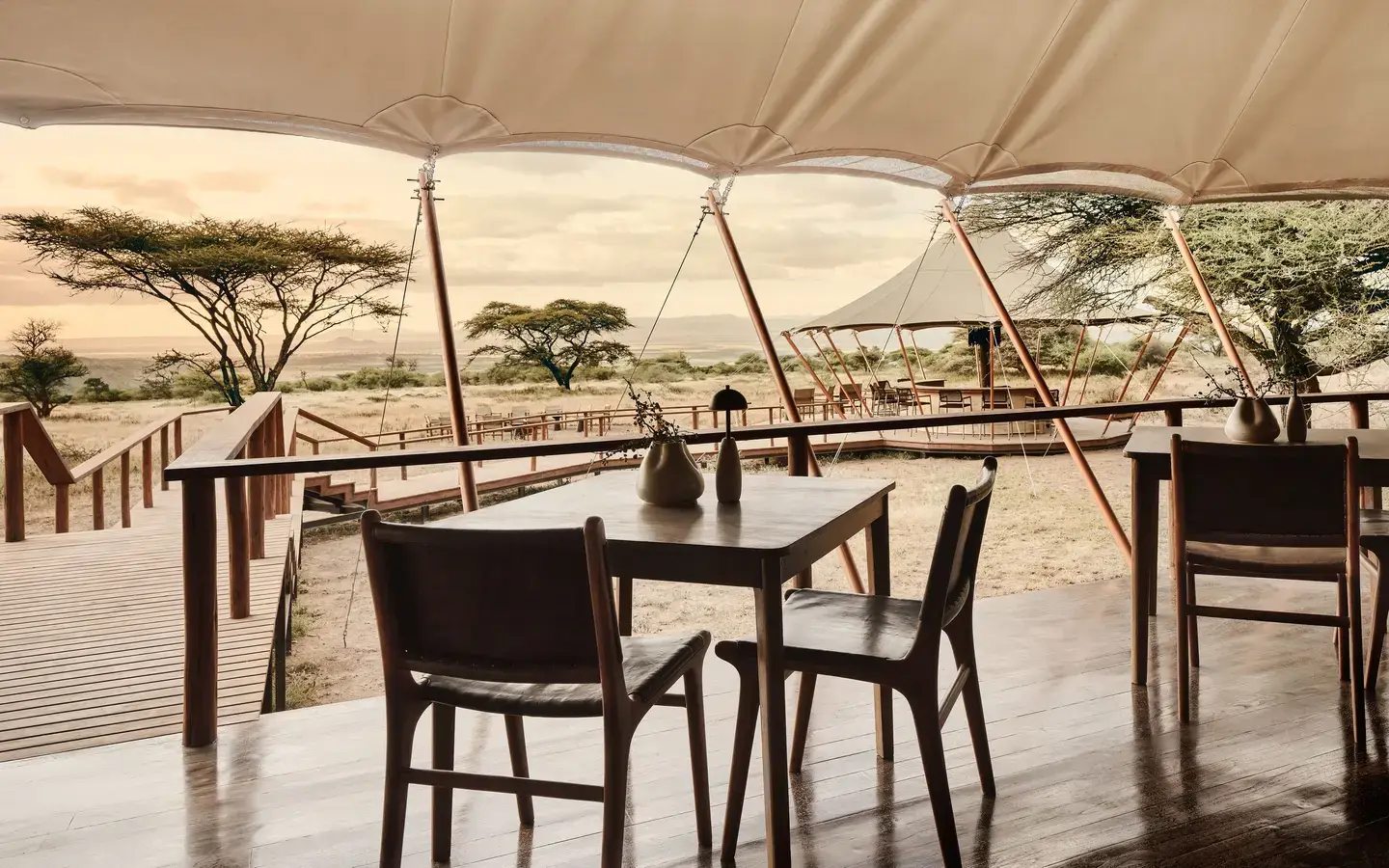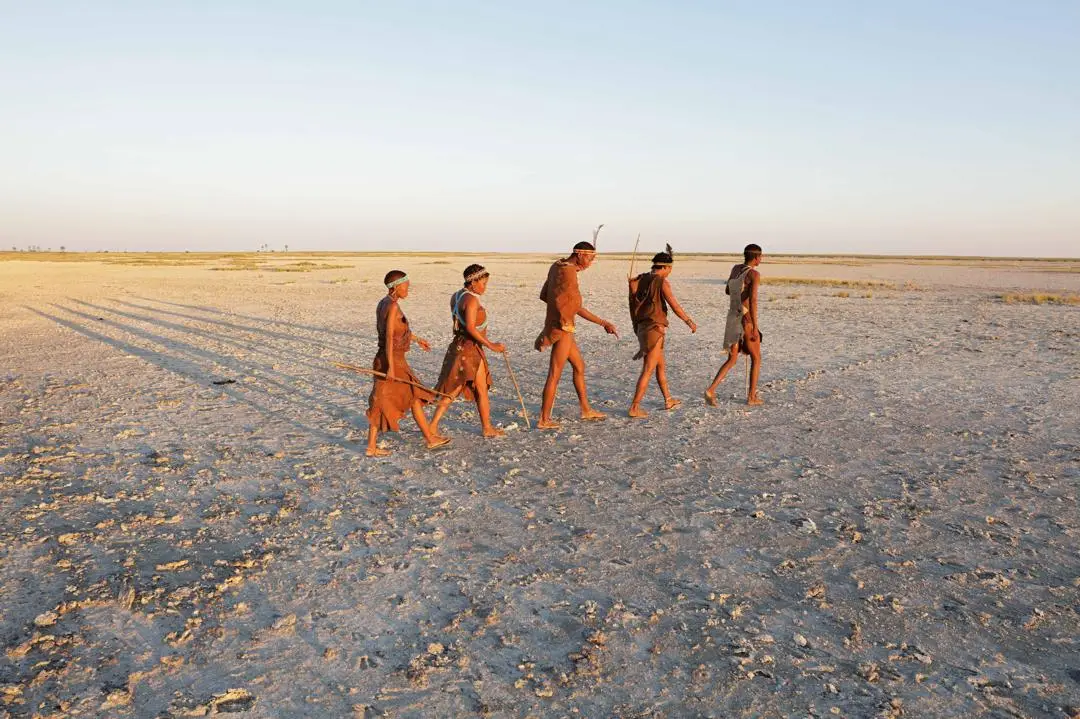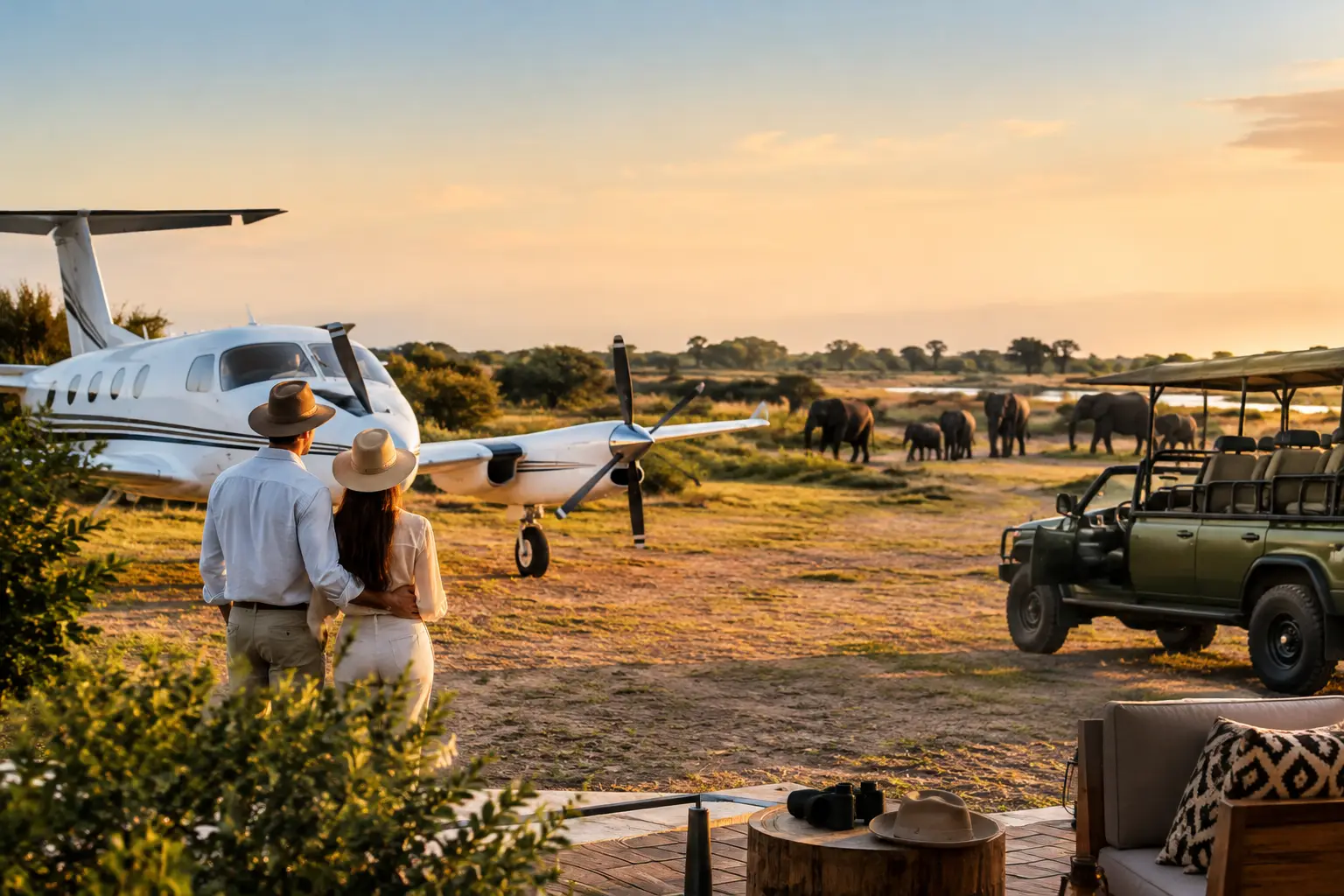
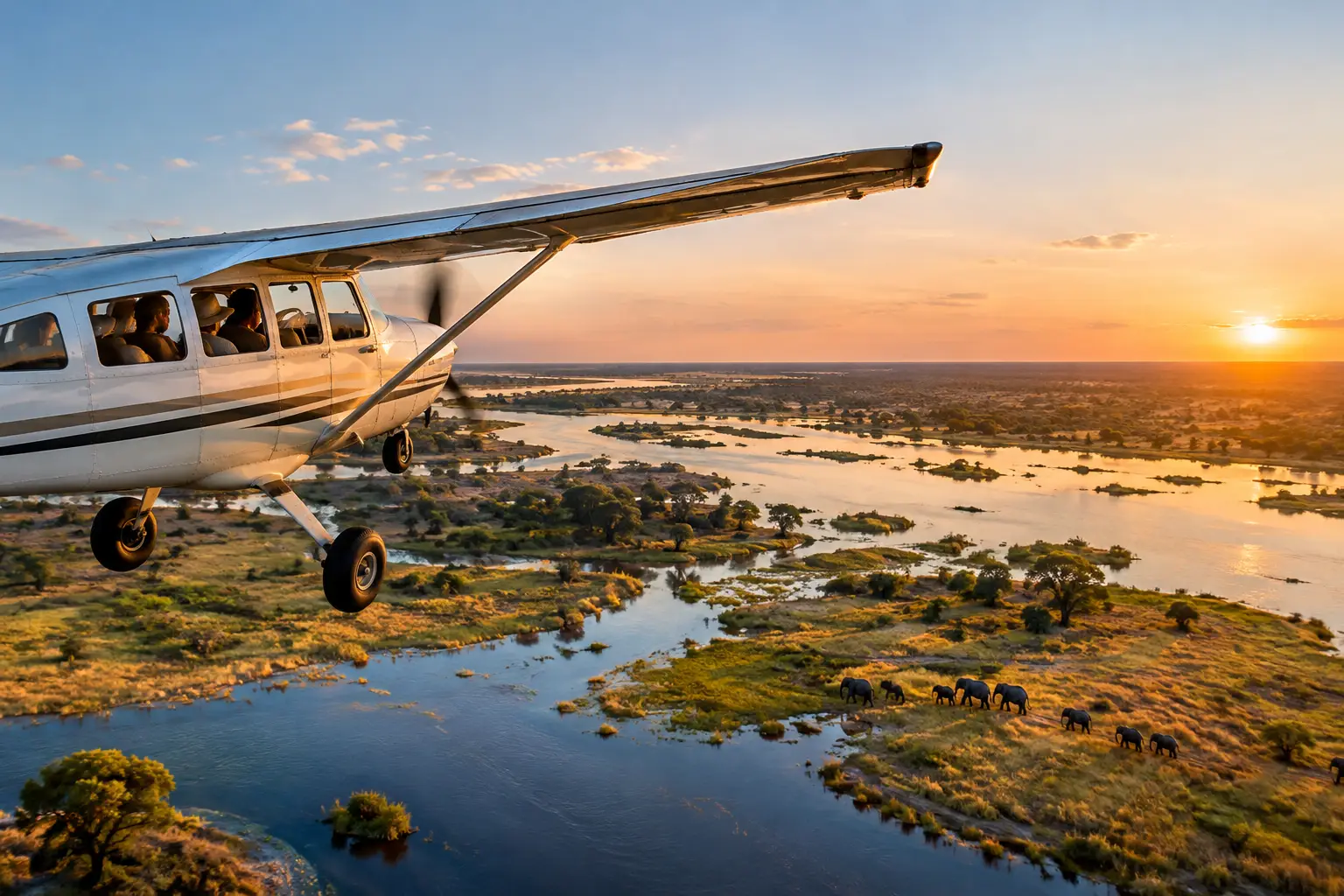
A leopard steps from the mopane woodland at first light. By lunchtime, you may be looking across the Okavango Delta from a completely different wilderness camp, reached not by a long road transfer but by a small aircraft touching down on a remote airstrip. If you are asking what is a fly in safari, this is the essential idea: it is a safari that uses light-aircraft flights to connect selected camps, lodges, and wilderness regions.
In Botswana, where water channels, seasonal floodplains, sandy tracks, and vast protected areas shape the landscape, flying is often the most comfortable and time-efficient way to travel. It also turns the journey between camps into part of the experience. From the air, the Delta’s islands, elephant paths, and winding waterways reveal the scale of a landscape that cannot be understood from ground level alone.
What Is a Fly-In Safari?
A fly-in safari combines wildlife experiences on the ground with scheduled or private light-aircraft transfers between remote destinations. Travelers usually arrive in Maun or Kasane, then board a small plane for a short flight to an airstrip near their camp. A guide or camp host meets them on arrival, often with the first game drive beginning before they reach the lodge.
The term can occasionally cause confusion. A guest may refer to “a fly” when they mean one inter-camp flight, while “fly-in safari” describes the full itinerary built around these flights. It is not necessarily a sightseeing flight, although the views are often extraordinary. Nor does it mean that the entire safari takes place in the air. The heart of the journey remains the guided game drives, mokoro excursions, boat safaris, walking experiences, and unhurried time at camp.
A fly-in itinerary is especially valuable in Botswana’s northern safari circuit. The Okavango Delta, Moremi Game Reserve, Khwai, Savuti, Chobe, and the Linyanti region each offer distinctive habitats and wildlife rhythms. Flying makes it possible to pair them without sacrificing precious safari time to extended road journeys.
Why Flying Changes a Botswana Safari
Botswana’s most rewarding camps are often intentionally remote. Their setting protects a sense of privacy and helps limit the pressure on fragile ecosystems. The trade-off is that access by road can be slow, seasonal, or simply impractical, particularly during the Delta flood season.
A light-aircraft transfer can reduce what might otherwise be a full day of travel to a flight of 20 to 60 minutes. That matters on a tailor-made journey where every night has been chosen for a reason. You can wake in a water-based Delta concession, fly over the channels after breakfast, and arrive in a dry woodland landscape where wild dogs, lions, or large elephant herds may define the afternoon’s game drive.
The aerial perspective is another quiet advantage. Looking down over the Okavango, you may see a mosaic of silver water, green papyrus, palm islands, and pale sand. Over Chobe or Linyanti, the wide river systems and animal trails make visible the connections between habitat, water, and wildlife movement. It is a beautiful transition, but it is also a useful introduction to the geography of the safari ahead.
For honeymooners, families, and travelers who prefer a more relaxed pace, flying can make a multi-region itinerary feel measured rather than rushed. The value is not only speed. It is the ability to preserve energy for the experiences that brought you to Africa in the first place.
What to Expect on Safari Flights
Safari aircraft are generally small fixed-wing planes, commonly seating between five and 12 guests depending on the route and aircraft type. Flights are shared on many lodge-to-lodge routes, so there may be brief stops to collect or drop off other guests. Private charter flights can also be arranged when privacy, timing, family needs, or a highly tailored route calls for it.
There are no formal airport terminals at most bush airstrips. The experience is simple and personal. Your luggage is weighed, you meet the pilot, and you board directly from the airstrip. On arrival, a guide typically welcomes you and transfers you to camp in an open safari vehicle. It is entirely possible for that transfer to become an unscheduled wildlife encounter.
The flights are usually conducted during daylight hours and are dependent on weather and safe operating conditions. Botswana’s rainy season can bring dramatic skies and occasional adjustments to flight schedules. A well-designed itinerary allows sensible flexibility, and experienced ground handling teams remain in close contact with camps and aviation partners when conditions change.
Guests who are uneasy about small aircraft should share this when planning. The aircraft are practical rather than luxurious in the conventional sense, and cabin space is compact. Yet for many travelers, any initial nerves quickly give way to fascination once the landscape opens beneath them. Your safari designer can also advise whether a road transfer, private charter, or a different camp combination may suit you better.
Luggage Rules Matter More Than Usual
Light aircraft have strict baggage limits because weight and space are carefully managed. On many Botswana fly-in safaris, the typical allowance is around 44 pounds or 20 kilograms per person, including hand luggage, though this varies by operator, route, and seat configuration.
Soft-sided duffel bags are strongly preferred. Hard-shell suitcases and bags with rigid frames are difficult to load into small aircraft holds, even when they fall within the weight allowance. If a traveler needs to carry camera equipment, medical items, or extra luggage, this should be planned in advance rather than managed at the airstrip.
For photographers, a fly-in safari remains very workable. The key is to discuss camera gear, lenses, batteries, and any support equipment with your travel specialist early. In some cases, an additional seat or aircraft arrangement may be appropriate. Thoughtful planning protects both your equipment needs and the ease of every transfer.
Where Fly-In Safaris Work Best
The Okavango Delta is the classic setting for a fly-in safari. Its watery heartland is vast, seasonal, and dotted with remote camps accessible most naturally by air. A flight from Maun can place you close to permanent channels for boating and mokoro excursions, or in a land-based area known for game drives and predator viewing.
Combining the Delta with the Chobe, Savuti, or Linyanti areas creates a compelling contrast. Chobe is renowned for its elephant-rich riverfront, while Savuti’s grasslands and woodlands have long been associated with dramatic predator-prey interactions. Linyanti offers riverine beauty, excellent elephant viewing, and a particularly secluded feel. The precise best combination depends on the season, preferred activities, desired level of privacy, and how many nights you have available.
Fly-in travel also works beautifully for travelers extending beyond Botswana. A carefully paced itinerary may connect a Botswana safari with Victoria Falls in Zimbabwe or Zambia, Cape Town and the Winelands in South Africa, Namibia’s desert landscapes, or a beach stay in Mozambique or Mauritius. Not every regional flight is a bush-plane transfer, but the same principle applies: intelligent routing can make a complex African journey feel calm and beautifully connected.
Is a Fly-In Safari Right for You?
For most guests seeking a high-comfort, wildlife-focused Botswana journey, the answer is yes. It is particularly well suited to travelers who want to visit more than one ecosystem, value time at camp, and appreciate remote settings. It can also be an excellent choice for multi-generational families, provided luggage, seating, and young children’s needs are considered carefully.
It may be less suitable for travelers with a strong fear of small planes, those carrying unusually heavy or rigid luggage, or anyone who wants the road journey itself to be a major part of the adventure. A private guided safari by vehicle offers a different kind of freedom and can be the right choice for certain routes. Neither approach is inherently better. The best safari is the one designed around how you want to experience the land.
There is also a responsible travel dimension. Aircraft transfers have an environmental footprint, and no safari should pretend otherwise. At the same time, carefully managed low-volume tourism in remote concessions can support conservation areas, local employment, anti-poaching efforts, and community partnerships that depend on the value of protected wilderness. Choosing respected camps, appropriate routing, and longer stays rather than unnecessary movement helps make the journey more purposeful.
At Chloorokop Travel & Tours, fly-in logistics are considered alongside the experiences between flights: the guide who knows a leopard’s territory, the camp positioned for your preferred activities, the quiet afternoon left open for rest, and the onward connection that works without stress. The plane is only one part of the design.
A fly-in safari is ultimately an invitation to travel across Botswana as its landscapes ask you to: lightly, patiently, and with enough time to notice what lies below and what waits ahead.