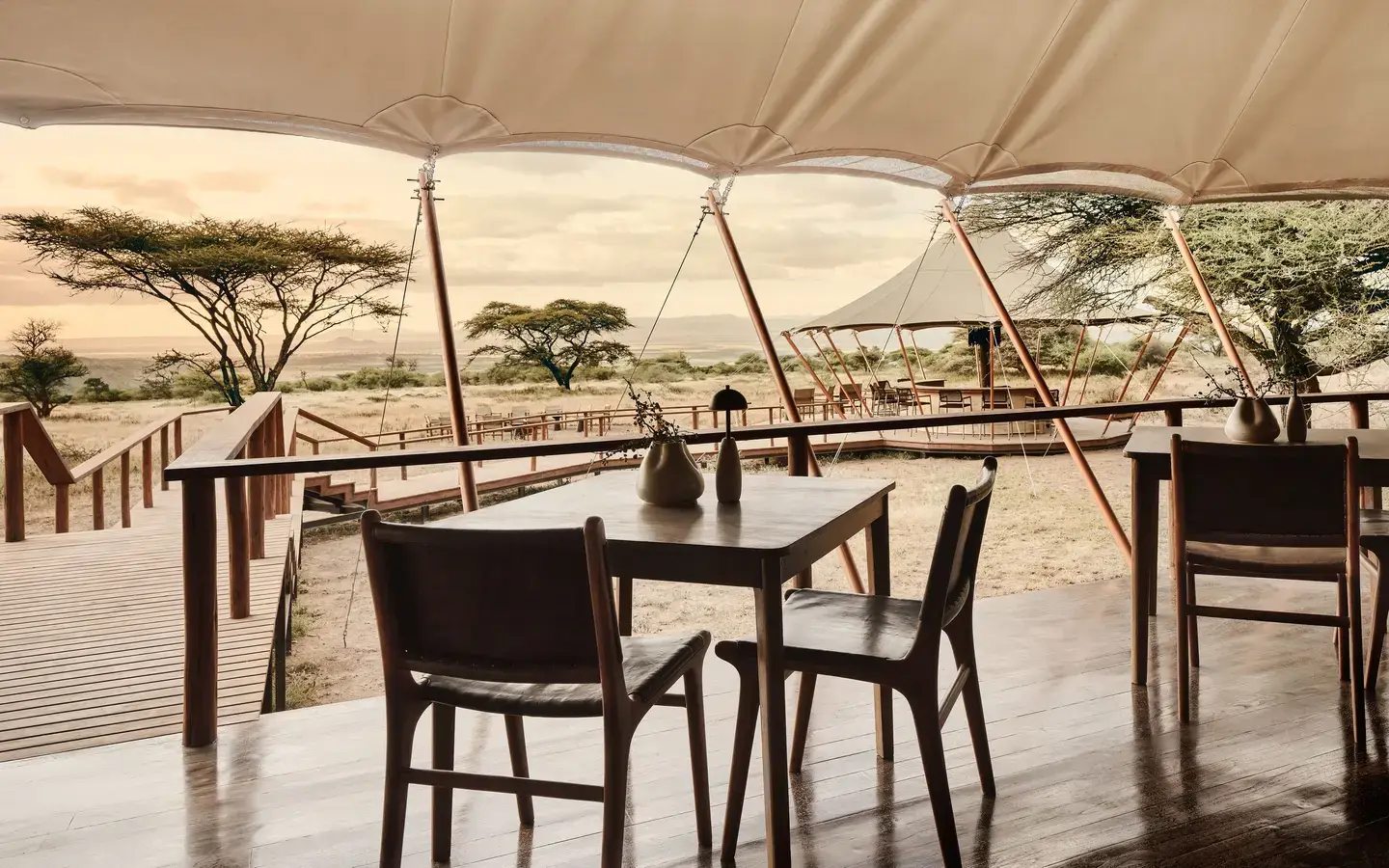
A glowing review can tell you that a camp has beautiful tents and excellent food. It cannot always tell you whether its location suits the migration when you travel, whether the guiding is genuinely attentive, or how a busy shared vehicle may feel after a long-haul journey. Tanzania luxury camp reviews are most useful when read as evidence of fit, not as a simple scorecard.
For travelers planning a refined East African extension alongside Botswana or a wider African journey, Tanzania offers a very different kind of safari scale. The Serengeti’s open grasslands, the Ngorongoro Conservation Area’s dramatic crater, and quieter landscapes such as Ruaha, Nyerere, and Mahale reward careful camp selection. The right camp shapes not only where you sleep, but how you experience wildlife, privacy, pace, and place.
How to Read Tanzania Luxury Camp Reviews
The most revealing reviews tend to describe moments rather than use superlatives. Look for details about how the guide handled a changing wildlife sighting, whether guests could tailor the rhythm of the day, and what happened when rain altered a planned activity. These observations reveal the quality of the operation behind the polished photographs.
A review written in the same season as your intended trip carries particular weight. Tanzania’s landscapes change dramatically with rainfall and wildlife movement. A camp praised for having the migration on its doorstep in February may offer an entirely different experience in July. This is not a failing of the camp. It is the natural rhythm of a vast, living ecosystem.
Also consider the reviewer’s travel style. A honeymooning couple may value quiet dinners and a private plunge pool, while a family may place greater importance on flexible mealtimes, spacious family accommodation, and guides who engage younger travelers with patience and knowledge. A keen photographer might prioritize vehicle positioning, unhurried sightings, and camps with access to less congested areas.
Separate the camp from the itinerary
A camp can be exceptional and still be the wrong choice for a particular itinerary. The northern Serengeti is compelling during the river-crossing season, but it is a long way from the southern plains where calving typically takes place early in the year. Reviews that mention lengthy drives are worth reading in context: sometimes they signal poor planning, and sometimes they reflect a traveler trying to cover too much ground in too few nights.
For most luxury safaris, fewer transitions and longer stays create a more rewarding experience. Three nights gives you time to settle into a landscape, build rapport with your guide, and allow wildlife encounters to unfold without rushing toward the next airstrip. A well-designed itinerary uses light aircraft, road transfers, and camp locations thoughtfully, protecting both your comfort and your time in the wilderness.
What Great Tanzania Camp Reviews Reveal
The strongest reviews usually point to five connected qualities: location, guiding, hosting, privacy, and purpose. Each deserves more attention than a general comment about luxury.
Location is more than a view
In Tanzania, location determines access. A camp inside a national park or reserve may place you closer to early-morning wildlife activity, while a camp on a private concession may offer more flexibility, depending on the area and local regulations. In the Serengeti, mobile camps that follow wildlife movement can provide an immersive seasonal experience, while permanent camps may offer larger suites, more extensive amenities, and a settled sense of place.
Neither style is automatically better. Mobile camps appeal to travelers who value proximity to the action, intimate tented accommodation, and the romance of a lighter footprint. Permanent camps often suit those seeking greater space, elevated design, and a more expansive wellness or dining offering. Reviews should help you understand which experience is being promised, rather than persuade you that one definition of luxury fits everyone.
Guiding defines the safari day
Luxury in the bush is not measured only by thread count. It is also the confidence of a guide who can read elephant behavior, explain the relationship between predators and prey, and know when silence is the most respectful response to a sighting.
Look for reviews that name guides or describe their interpretation of the landscape. Comments about excellent animal sightings are encouraging, but wildlife is never guaranteed. More meaningful feedback speaks to a guide’s fieldcraft, communication, curiosity, consideration of guest interests, and ability to make every drive feel personal.
For specialist travelers, this becomes even more important. Birders may want a guide with strong regional bird knowledge. Photographers may need patient positioning and realistic advice on light. Families benefit from a guide who can turn tracks in the dust, dung beetles, and termite mounds into stories that stay with children long after the safari ends.
Service should feel personal, not performative
The most credible Tanzania luxury camp reviews describe ease. Guests remember that staff anticipated dietary needs without making a ceremony of it, adjusted a schedule after an early departure, or arranged a private meal because it felt right for the moment.
Personal service is especially valuable in remote settings, where logistics are intricate. Light aircraft schedules, luggage limits, seasonal airstrip conditions, and onward connections require close coordination. A beautifully designed camp experience can lose its shine if the wider journey feels fragmented. This is why a knowledgeable DMC considers every handover, from airport welcome to camp departure, as part of the guest experience.
Privacy has practical dimensions
Many travelers ask for privacy but define it differently. For some, it means a villa with a private deck and plunge pool. For others, it means a private vehicle, the freedom to linger at a leopard sighting, or a camp with only a handful of suites and no pressure to socialize.
Reviews can clarify whether privacy is truly delivered. Notice references to vehicle sharing, the number of guests at meals, suite spacing, and the atmosphere around common areas. During peak migration periods, even excellent camps can feel more active. A private guide and vehicle may be the better investment for travelers who want flexibility and an unhurried photographic or honeymoon experience.
Tanzania Luxury Camp Reviews and Responsible Travel
A luxury camp’s conservation story should be visible in its actions, not only its language. Thoughtful reviews may mention local employment, guiding careers, community partnerships, plastic reduction, water stewardship, or support for wildlife research and habitat protection. These details matter because Tanzania’s safari landscapes depend on enduring relationships between conservation areas, neighboring communities, and responsible tourism partners.
It is reasonable to ask how a camp manages water and energy in a remote setting, how it handles waste, and whether its community initiatives are locally meaningful. The aim is not perfection or a checklist. It is to choose a stay where the privilege of being in wild places is matched by care for the people and ecosystems that sustain them.
Responsible travel can also deepen the guest experience. A visit that includes a respectfully arranged cultural encounter, a conversation with local conservation staff, or insight into the work behind protecting a migration corridor gives the safari greater context. These experiences should never feel staged or extractive. The best are introduced at the right pace, with consent, sensitivity, and genuine benefit to the host community.
Questions Worth Asking Before You Book
Reviews are a valuable starting point, but a tailored conversation is where the real decisions happen. Ask whether the camp is best for the dates you have in mind, how many nights are appropriate, and whether the area offers the wildlife experience you most hope to have. Clarify the likely drive times, flight connections, vehicle arrangements, suite configuration, and the degree of flexibility available each day.
It is also wise to share what you do not want. Perhaps you prefer fewer camp moves, do not enjoy long drives, need interconnecting family tents, or want to combine a classic Serengeti safari with the quieter waterways of Nyerere or a restorative beach stay. Those preferences are not minor details. They are the foundation of an itinerary that feels considered rather than assembled.
At Chloorokop Travel & Tours, we view Tanzania as part of a wider African journey, planned with the same care we bring to our Botswana home. A Serengeti camp can pair beautifully with the Okavango Delta, Victoria Falls, Rwanda’s gorilla forests, or the Indian Ocean, but only when the timing, transfers, and pace allow each destination to retain its character.
The best review is ultimately the one that helps you ask better questions. Choose a camp not because it is praised by everyone, but because its landscape, people, guiding, and values are right for the way you want to experience Africa. Travel beautifully. Leave meaningfully.